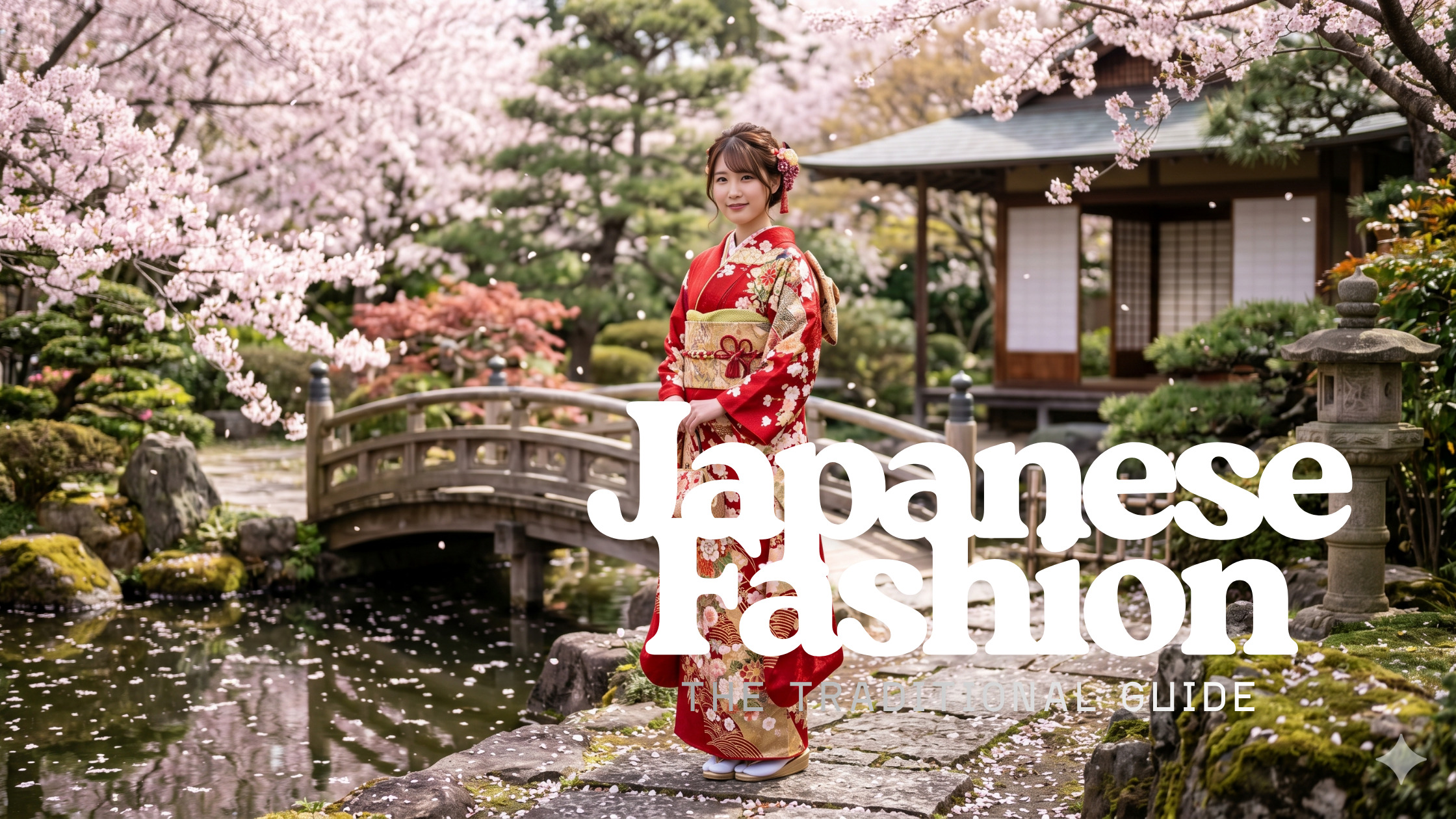
What Makes Japanese Fashion “Traditional”?
Japan has one of the world’s most sophisticated textile and clothing cultures — stretching back over 1,000 years. Unlike Western fashion which reinvents itself every decade, Japanese traditional clothing has evolved slowly and intentionally, carrying deep meaning in every fold, color, and pattern.
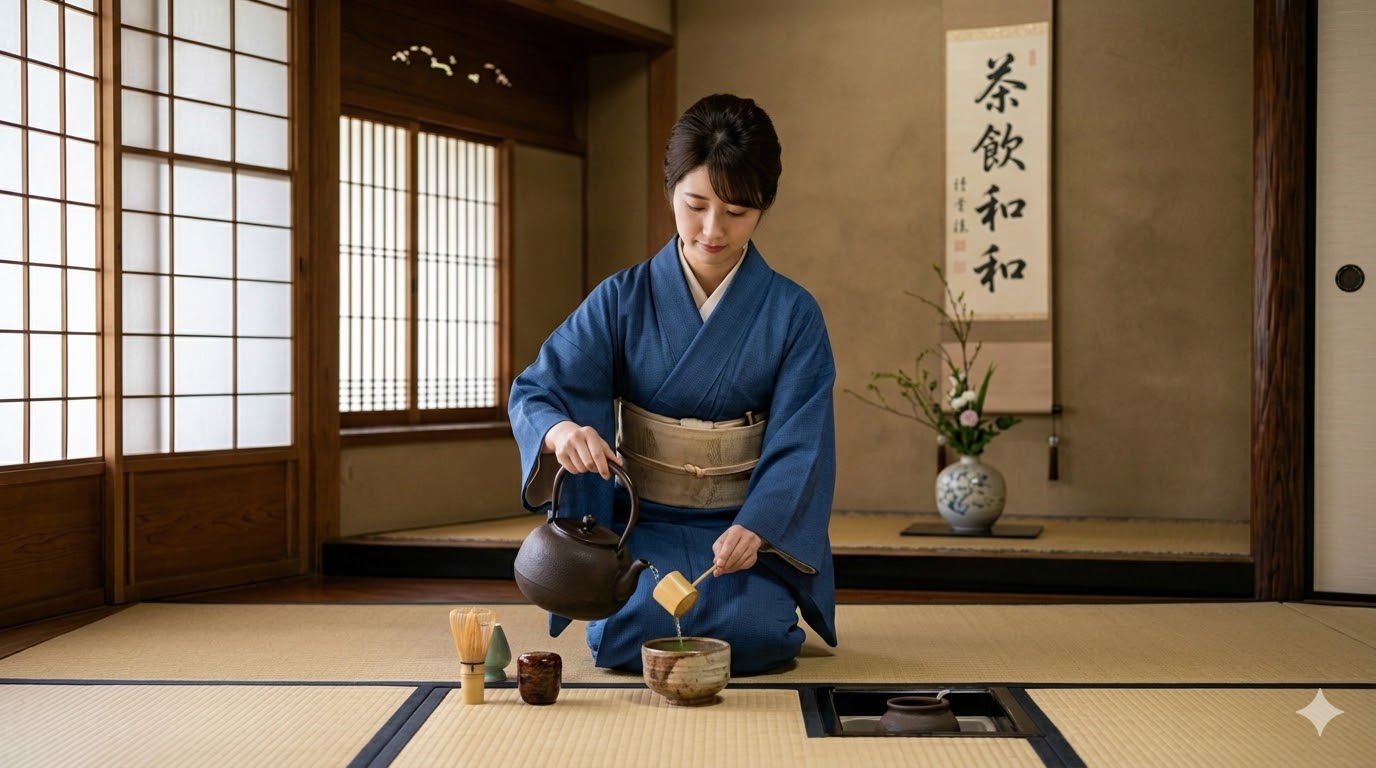
The key thing to understand? Traditional Japanese garments aren’t just costumes for tourists. They are worn at weddings, Coming-of-Age ceremonies, tea ceremonies, festivals, and even everyday life by those who love the culture.
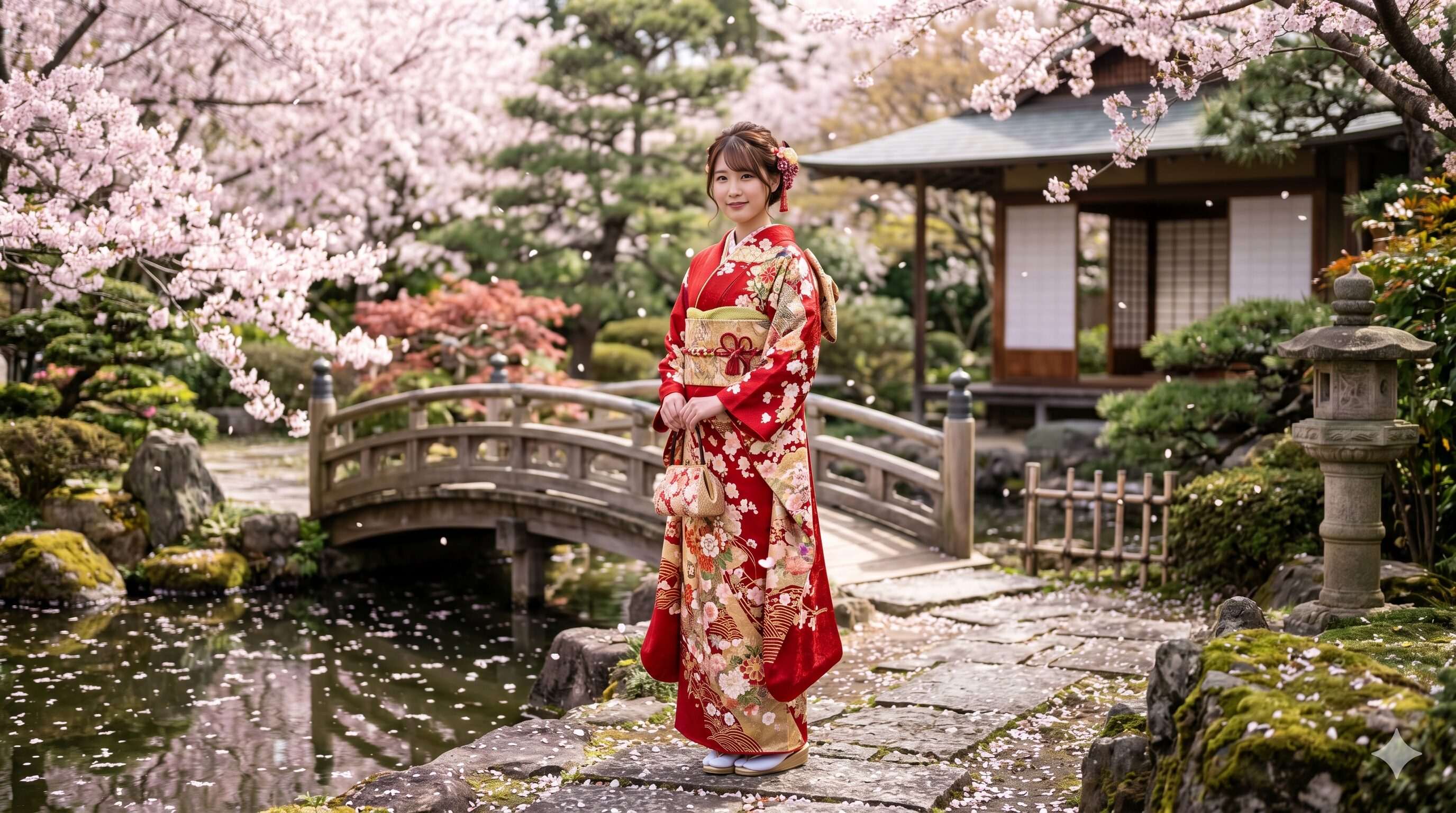
Kimono
着物The iconic T-shaped robe. Worn for formal occasions and daily life.
Yukata
浴衣Casual cotton kimono for summer festivals and fireworks.
Hakama
袴Wide pleated trousers worn over kimono for ceremonies.
Obi
帯The wide sash that ties the whole outfit together.
The Kimono — Japan’s Most Iconic Garment
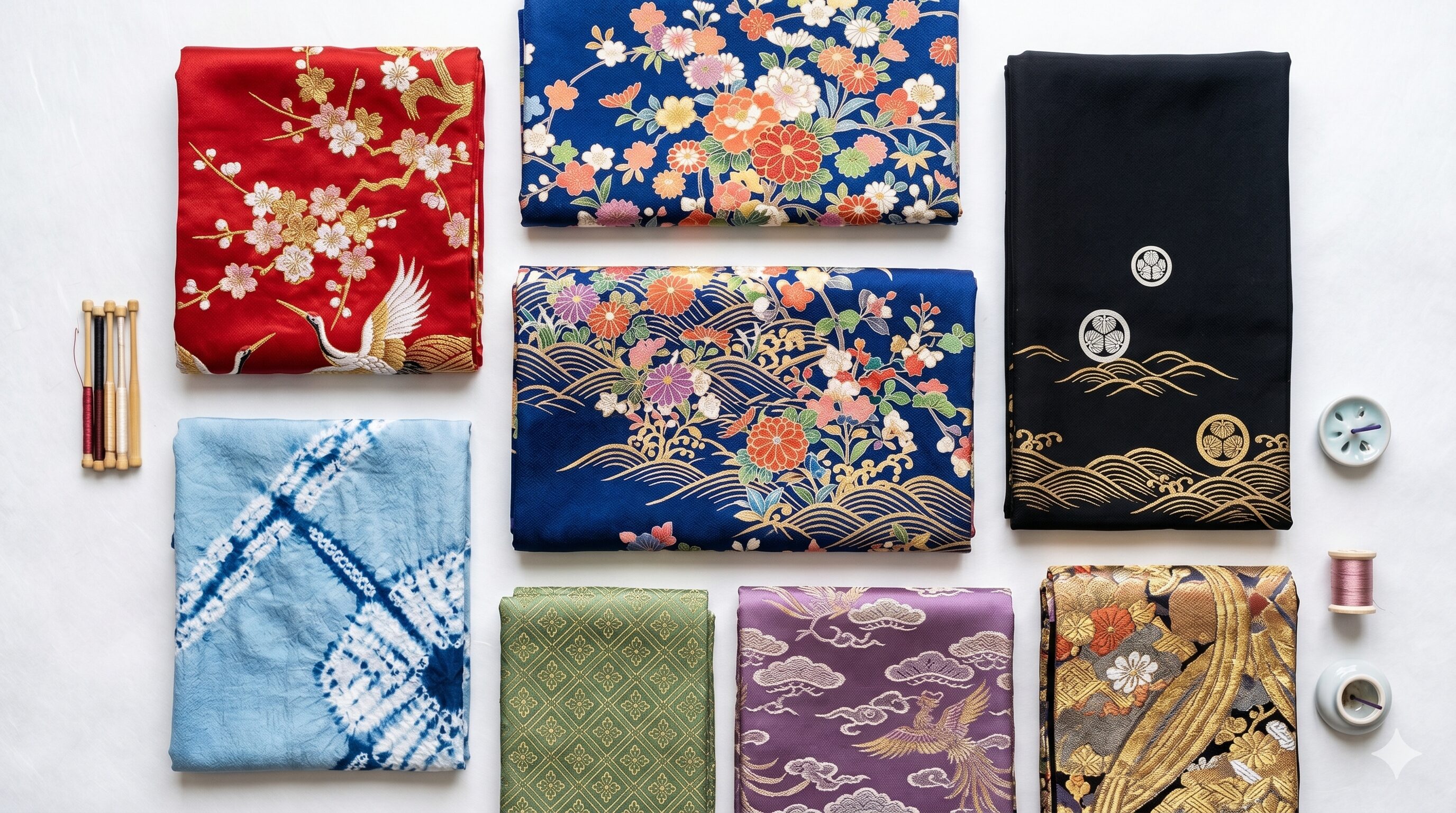
The word kimono (着物) literally means “thing to wear.” It’s a T-shaped robe with straight seams, wide sleeves, and is always worn left side over right (right over left is only for funerals). The kimono is secured by an obi — a wide sash tied at the back.
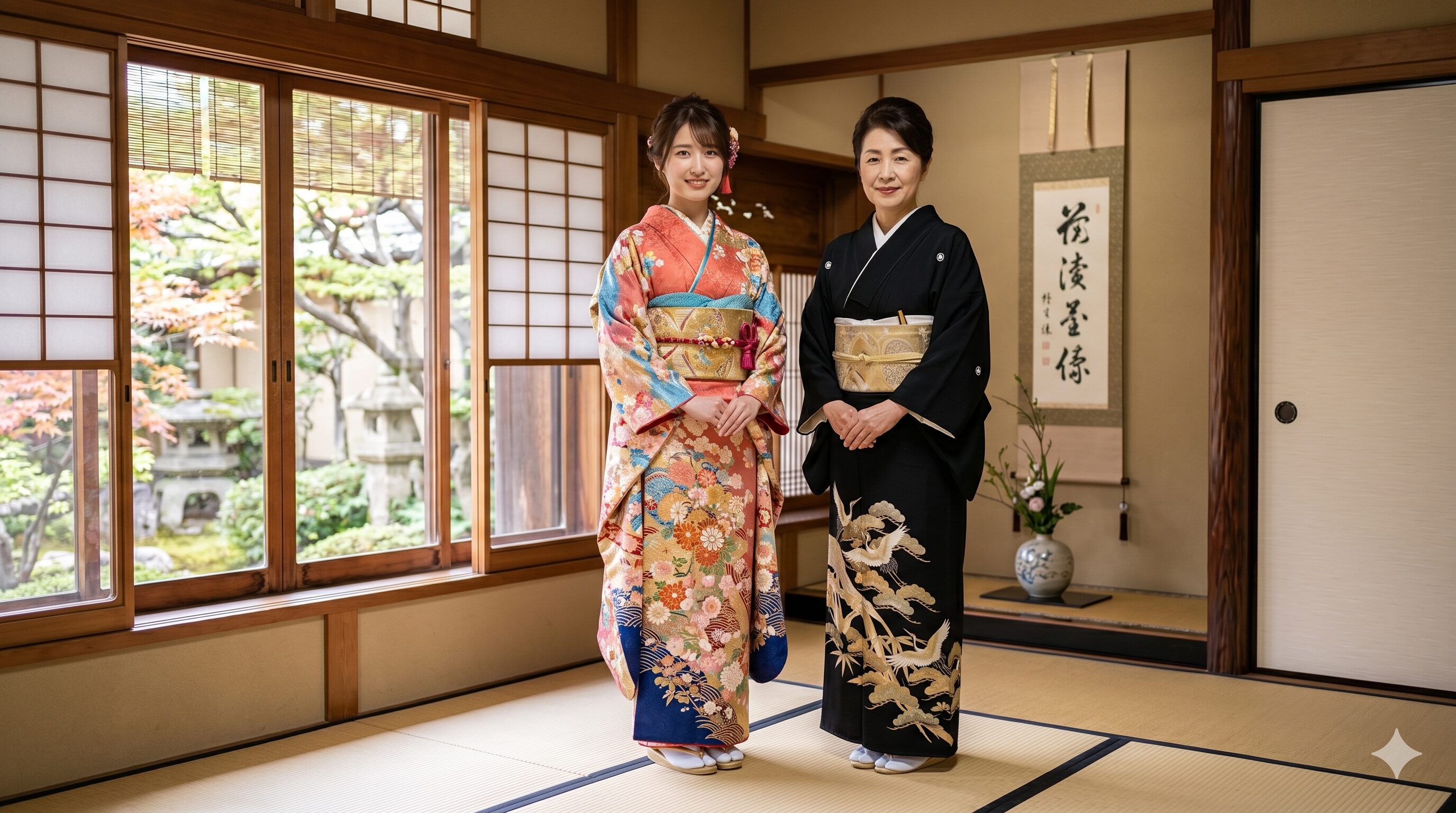
There are many types of kimono, each with its own rules and occasions:
| Type | Who wears it | When |
|---|---|---|
| Furisode (振袖) | Unmarried women | Coming-of-Age, weddings |
| Kurotomesode (黒留袖) | Married women | Children’s weddings |
| Iromuji (色無地) | Anyone | Tea ceremony, formal events |
| Komon (小紋) | Anyone | Casual outings, everyday |
| Montsuki (紋付) | Men | Formal ceremonies |
🌸 Did you know?
A single high-quality silk kimono can take months to hand-weave and hand-paint. That’s why antique kimono are treasured as heirlooms — they’re works of art you can wear.
Yukata — The Casual Summer Cousin
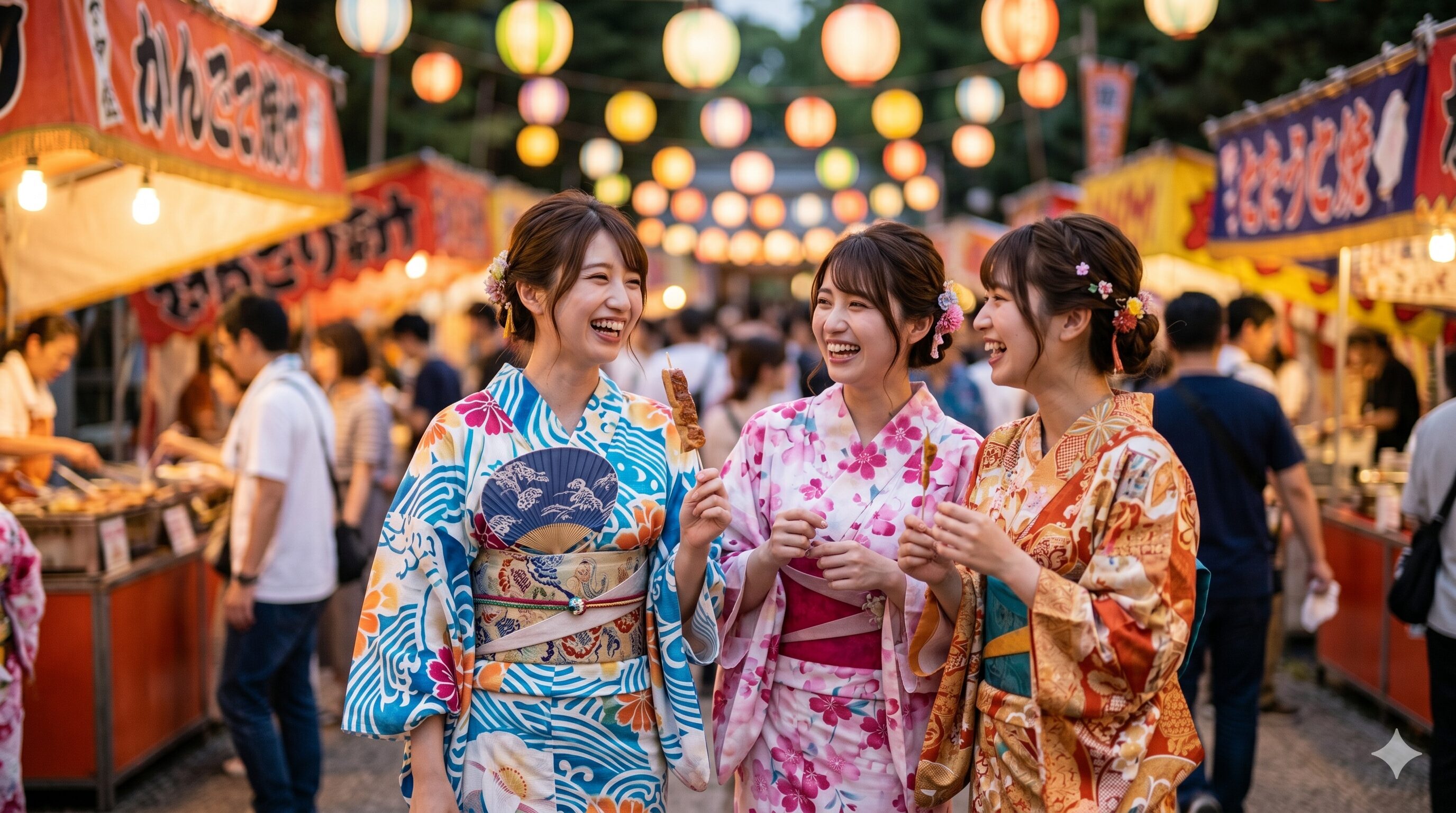
If kimono is the formal gown, yukata (浴衣) is the sundress. Originally a bathrobe worn after bathing, yukata evolved into the go-to summer garment for festivals, fireworks, and casual outings. They’re made of lightweight cotton or synthetic fabric — easy to wear, easy to wash.
| Kimono | Yukata | |
|---|---|---|
| Fabric | Silk, wool, synthetic | Cotton, polyester |
| Lining | Usually lined | Unlined |
| Season | Year-round | Summer only |
| Occasion | Formal to casual | Casual / festivals |
| Price | ¥10,000–millions | ¥3,000–¥30,000 |
🎆 When to wear yukata
Summer festivals (matsuri), fireworks shows (hanabi), bon odori dancing, ryokan stays, and casual summer outings. The season runs roughly July to August.
Hakama — Elegant Formal Trousers
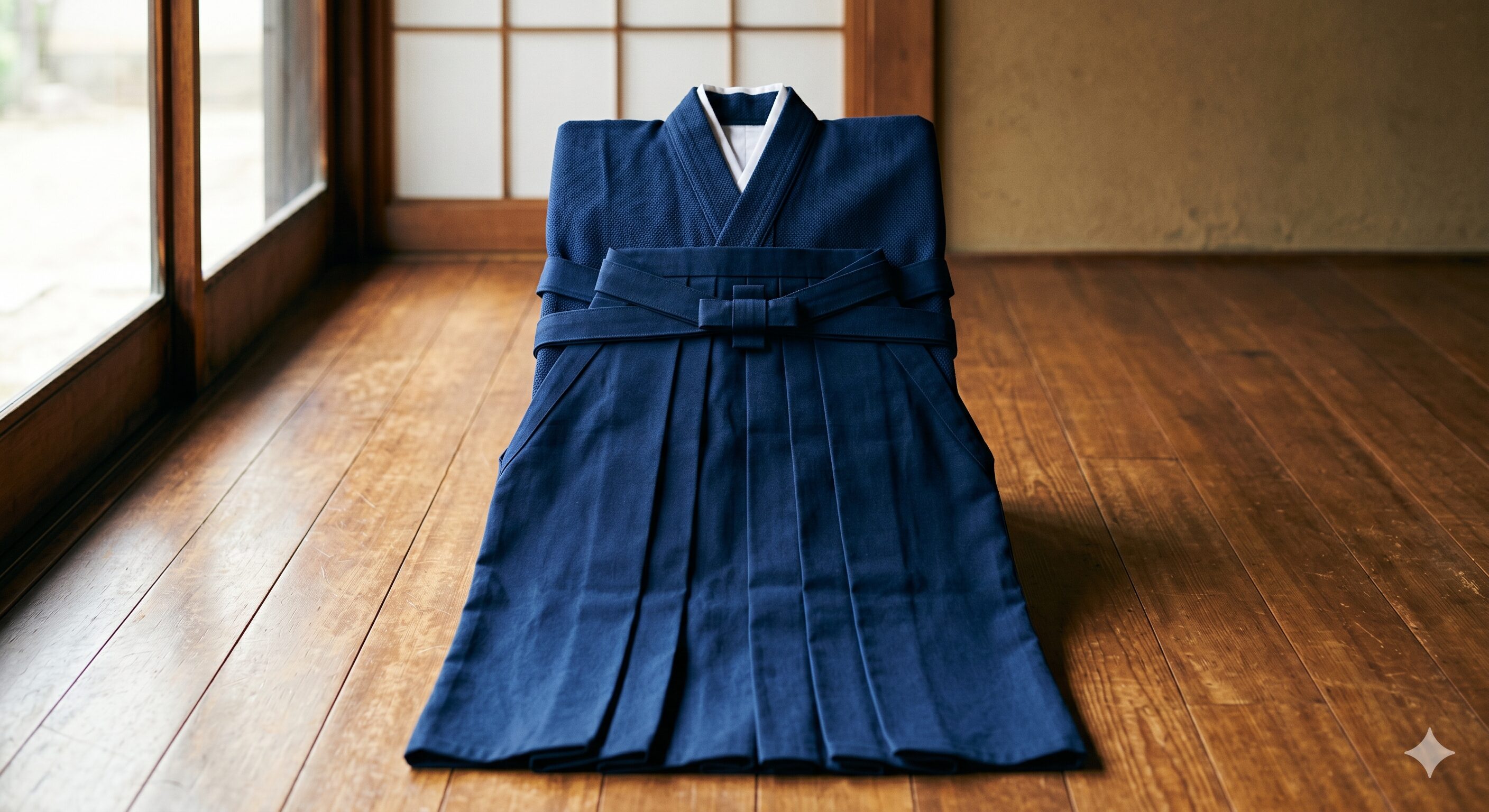
Hakama (袴) are wide, pleated trousers worn over a kimono. Originally a garment for samurai and court nobles, hakama today are most commonly seen at graduation ceremonies, martial arts practice (kendo, aikido), and Shinto shrine ceremonies.
There are two main styles of hakama:
- 1Umanori (馬乗り) — divided like trousers, originally for horse riding. Common for men.
- 2Andon-bakama (行灯袴) — undivided, skirt-like. The style worn by women at graduation ceremonies.
🎓 Graduation hakama
In Japan, university graduation ceremonies are famous for women wearing furisode kimono with hakama, often paired with boots (a Taisho-era style revival). It’s one of the most photographed fashion moments in Japanese culture.
The Obi Belt — The Art Within the Art
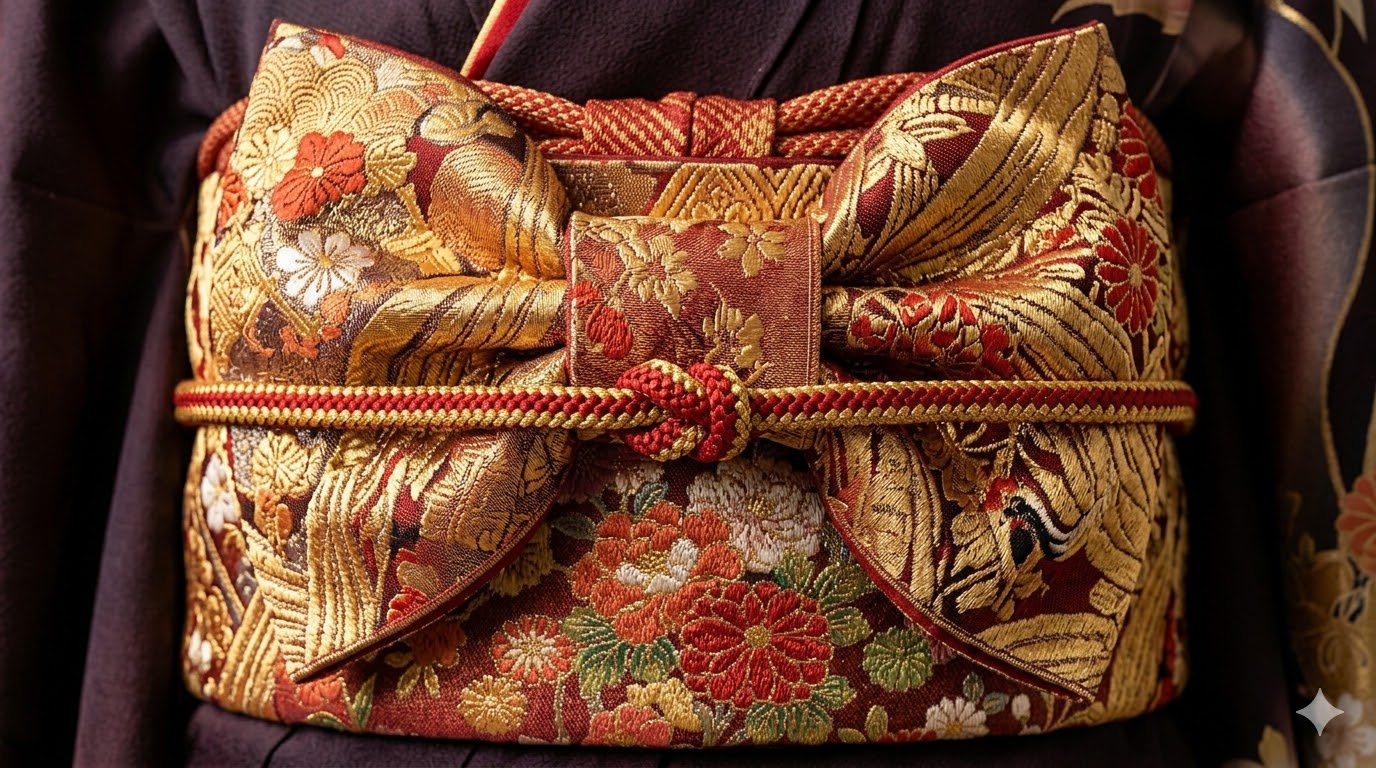
The obi (帯) is arguably the most expressive part of a kimono outfit. This wide sash wraps around the waist and is tied in an elaborate knot at the back — and the style of that knot tells a story about the wearer’s age, occasion, and personality.
| Obi type | Width | Used for |
|---|---|---|
| Fukuro obi (袋帯) | Wide | Formal occasions, weddings |
| Nagoya obi (名古屋帯) | Medium | Semi-formal, everyday |
| Hanhaba obi (半幅帯) | Narrow | Yukata, casual kimono |
💡 Obi accessories
The complete obi look includes an obijime (cord tied over the obi), obiage (silk scarf tucked at the top), and sometimes an obidome (decorative clasp). Every detail matters.
Seasonal Fashion Guide
Japan’s fashion culture is deeply tied to the four seasons. There are specific fabrics, colors, and patterns for each season — and wearing a spring pattern in autumn would be considered a fashion mistake.
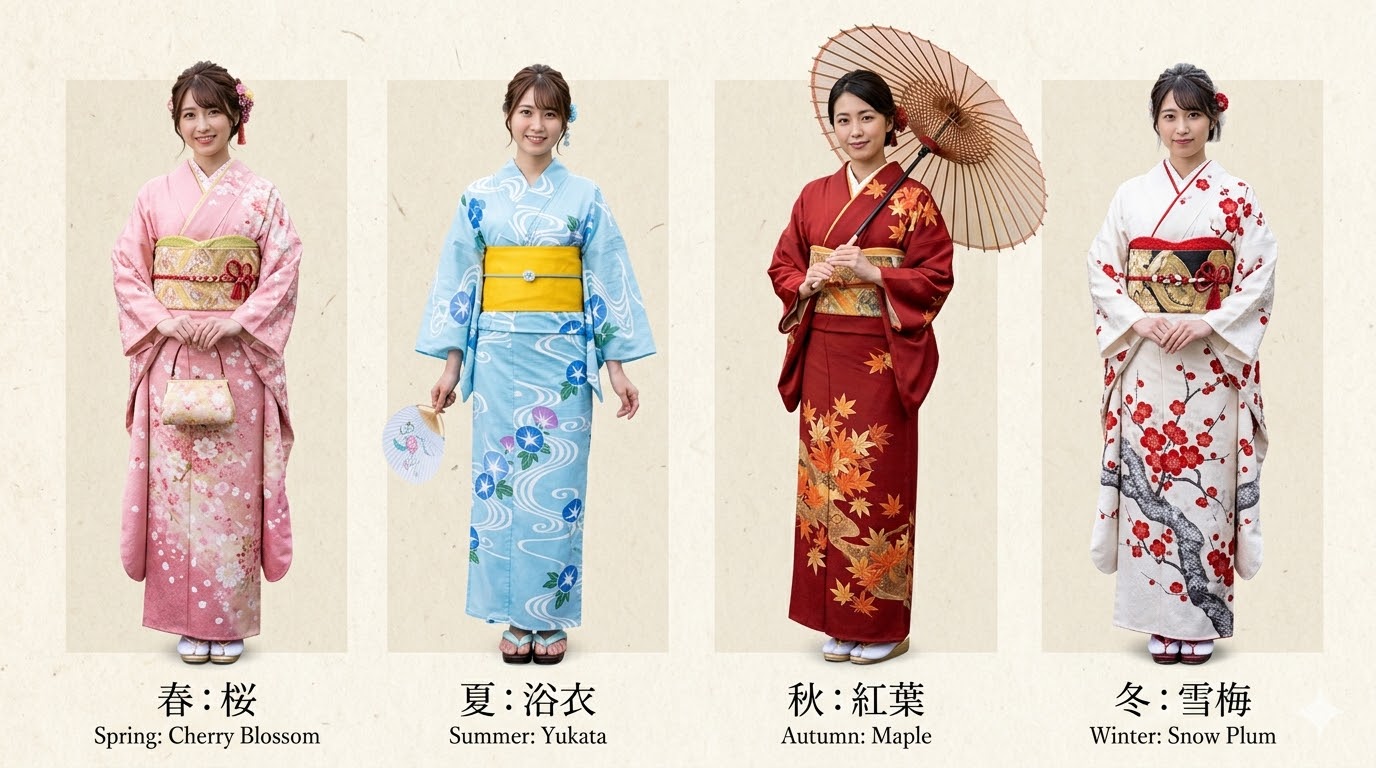
🌸 Spring
Hitoe (unlined kimono). Soft pastels, cherry blossom patterns, lightweight silk.
☀️ Summer
Yukata / Ro / Sha. Cotton, gauze weaves, cool blues and whites, morning glory patterns.
🍂 Autumn
Awase (lined kimono). Maple leaf motifs, warm golds and reds, heavier silk weaves.
❄️ Winter
Awase + haori coat. Wool, velvet obis, snow plum and pine patterns.
| Season | Garment Type | Fabric & Details |
|---|---|---|
| 🌸 Spring | Hitoe (unlined) | Soft pastels, cherry blossom, lightweight silk |
| ☀️ Summer | Yukata / Ro / Sha | Cotton, gauze weaves, cool patterns |
| 🍂 Autumn | Awase (lined) | Maple leaves, chrysanthemum, golds |
| ❄️ Winter | Awase + haori coat | Wool, velvet obis, snow plum patterns |
Modern Japanese Fashion Meets Tradition
Japan has one of the most exciting contemporary fashion scenes in the world — and a huge part of that excitement comes from the conversation between old and new.
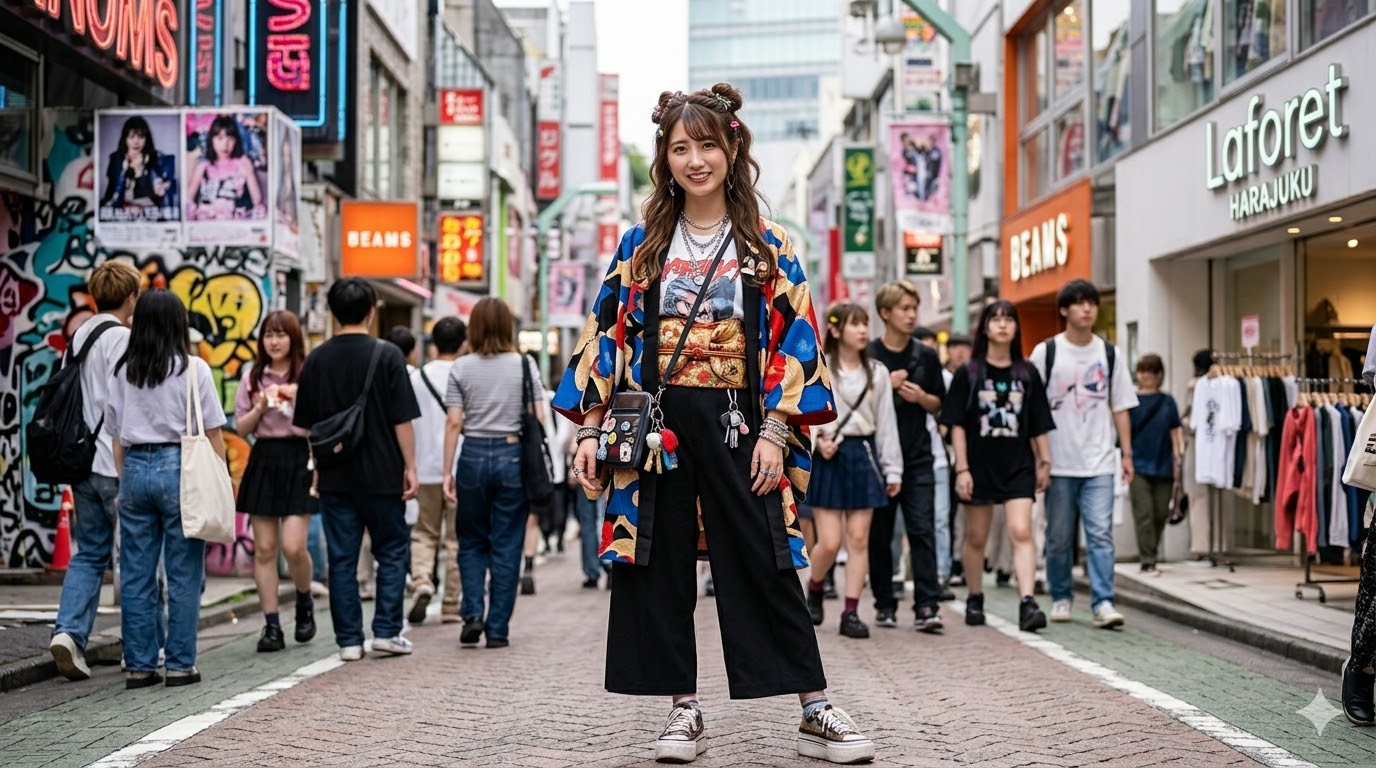
In Harajuku and Shimokitazawa, young Japanese people wear kimono with sneakers, layer yukata over t-shirts, or style hakama with modern accessories. It’s a living continuation of a tradition that has always absorbed and reinvented itself.
🔥 Trends to watch right now
- →Washable kimono — polyester kimono making the tradition far more accessible to everyday life
- →Antique kimono styling — vintage Taisho-era kimono paired with modern sneakers and accessories
- →Kimono at fashion week — obi silhouettes and kimono draping appearing in global runway collections
FAQs — Your Questions Answered
No! In Japan, foreigners wearing kimono are generally welcomed and even celebrated. Many shops in Kyoto and Tokyo offer rental kimono specifically for visitors. As long as you wear it correctly (left over right!) and treat it with care, it’s a beautiful way to connect with the culture.
It varies enormously. A high-quality hand-painted silk kimono can cost ¥500,000 to several million yen. Beautiful antique kimono can be found for as little as ¥3,000–¥10,000 at second-hand shops. Polyester kimono start at ¥10,000–¥30,000 and are very practical for everyday wear.
Most Japanese people wear Western clothing day-to-day, but traditional garments appear regularly at ceremonies, festivals, New Year shrine visits, and special occasions. Tea ceremony practitioners, geisha, and many craftspeople wear kimono regularly. The culture is alive — just context-specific.
Mainly fabric and occasion. Kimono are usually silk, more structured, suitable for formal settings. Yukata are cotton, casual, and worn in summer. Think of it as the difference between a ballgown and a sundress! For a complete side-by-side breakdown, see our full guide to the difference between a kimono and a yukata.
Absolutely. Men’s kimono tend to be muted in color (navy, gray, black, brown) with subtle patterns, paired with hakama for formal occasions. The haori (羽織) — a hip-length jacket worn over kimono — is a very stylish men’s option that has inspired modern fashion worldwide.
Japanese fashion is a conversation across centuries
Every kimono pattern, every obi knot, every seasonal color choice carries the accumulated wisdom of generations. Learning about it isn’t just learning about clothes — it’s learning how a culture sees the world, celebrates change, and finds beauty in the smallest details.