Have you ever wondered about the difference between furisode vs kimono? Or why some Japanese kimonos have those gorgeous, floor-sweeping long sleeves? Today, we’re diving deep into the world of furisode kimonos — the most formal and breathtaking style of traditional Japanese fashion for young women.
What Is a Furisode Kimono?
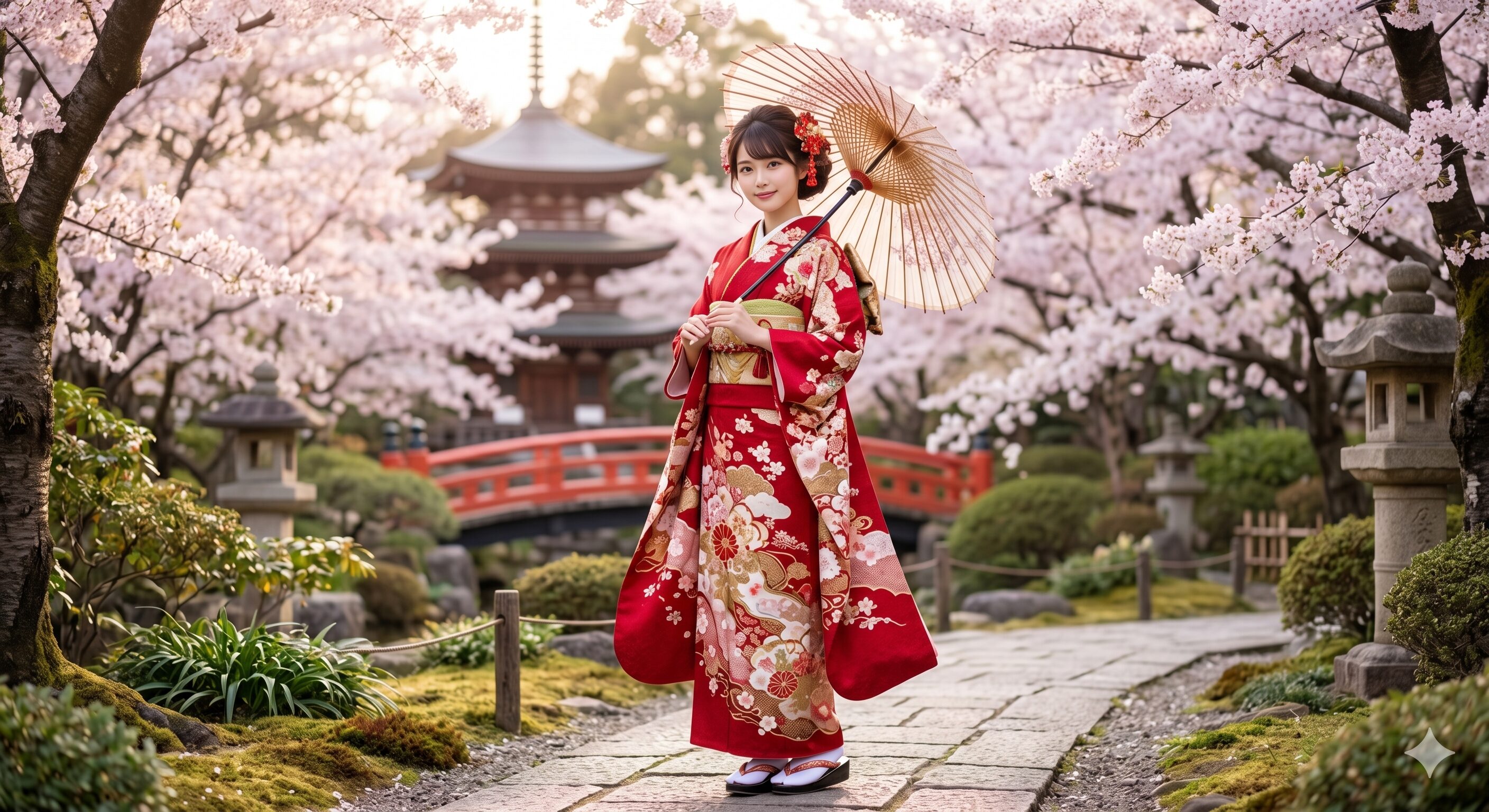
A furisode (振袖) is the most formal style of kimono worn by unmarried young women in Japan. The name literally means “swinging sleeves” — and those sleeves are the defining feature, ranging from 95cm to over 110cm in length. They swing gracefully with every movement, creating a visual impact unlike any other garment in the world.
Furisode kimonos are always made from the finest silk, hand-painted or woven with elaborate patterns — cranes, peonies, wisteria, cherry blossoms — and are considered among the most expensive and prestigious garments in all of Japanese fashion.
Furisode patterns are rich with hidden meaning — cranes for long life, cherry blossoms for youth. For a closer look at furisode motifs, colors, and their symbolism, see our guide to furisode patterns and colors.
The Romantic History of Furisode
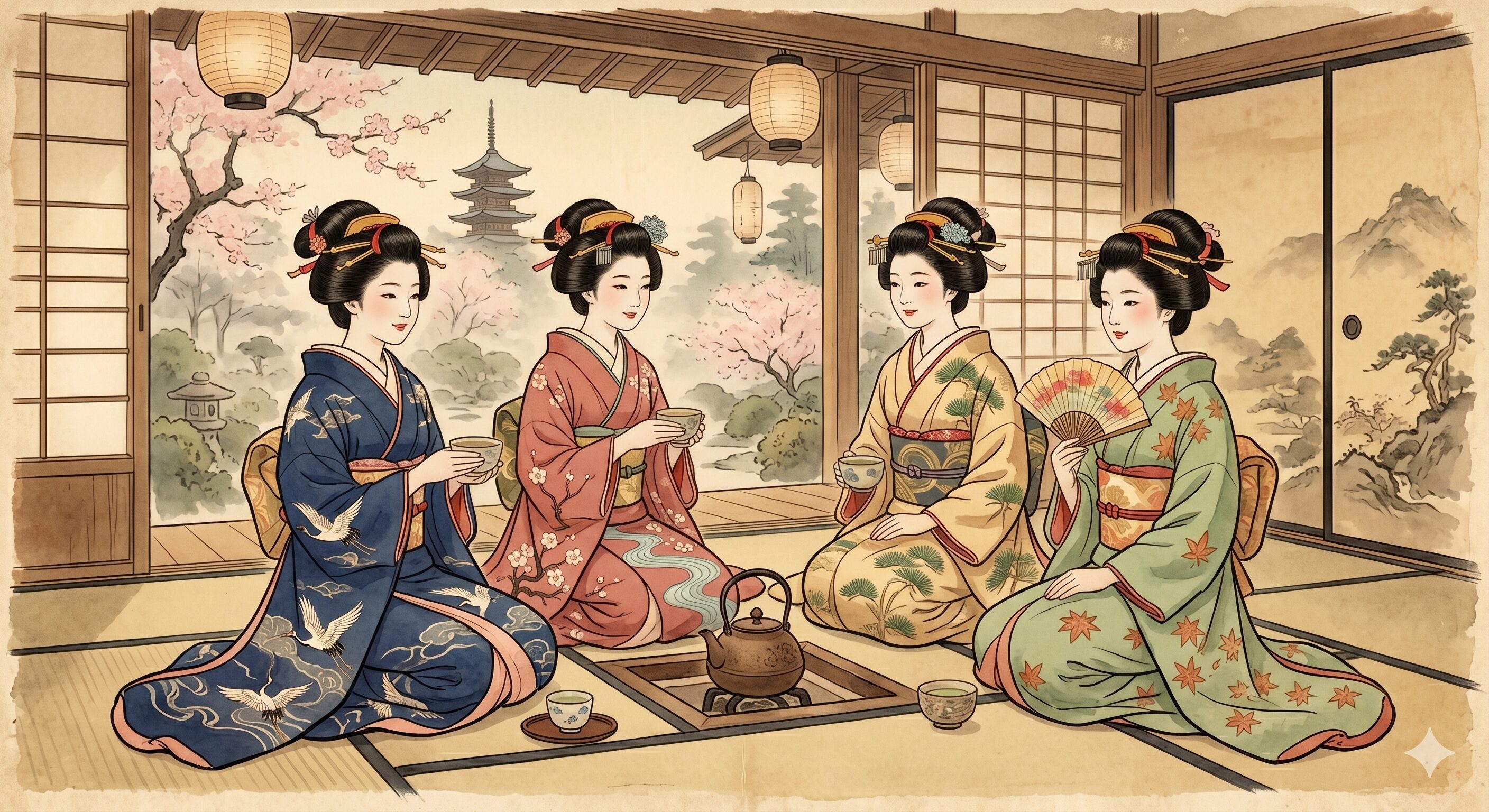
The history of furisode is, at its heart, a love story. During the Edo period (1603–1868), young unmarried women would wave their long sleeves to express their feelings to someone they loved — a silent, graceful signal of romantic interest. This is why furisode became associated with youth, beauty, and the unmarried status of women.
Originally, all kimono had long sleeves. Over time, married women began tucking and shortening their sleeves, while young unmarried women kept the flowing long sleeves as a symbol of freedom and vitality. By the late Edo period, furisode had evolved into the elaborate, silk-embroidered masterpieces we know today.
📜 Furisode timeline
- Muromachi period (1336–1573) — Long-sleeved kimono first appear among young women and children
- Edo period (1603–1868) — Furisode becomes associated with unmarried women; sleeve-waving as romantic signal
- Meiji period (1868–1912) — Western fashion arrives; furisode becomes reserved for special occasions
- Modern day — Furisode worn at Coming-of-Age, weddings, and graduations; a symbol of precious youth
Furisode vs Kimono — What’s the Difference?
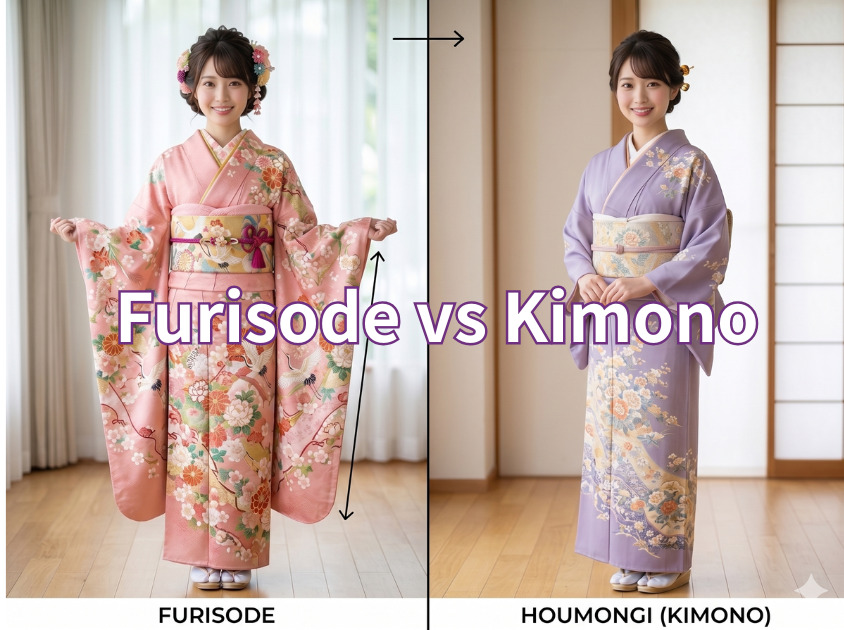
This is the question I get asked most often! When people say furisode vs kimono, they’re really asking: how is this special style different from a “regular” kimono? The answer comes down to three key things: sleeve length, who wears it, and the occasion.
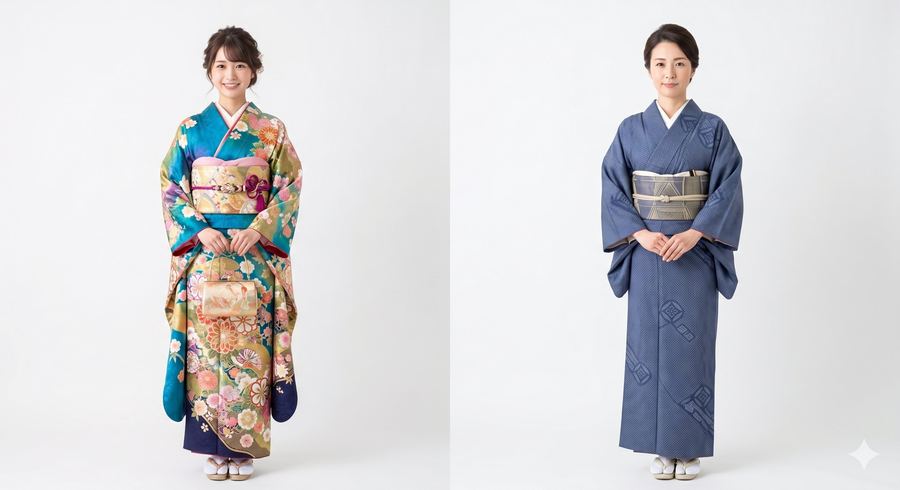
👘 Furisode Kimono
- Sleeves: 95–114cm long
- Worn by: unmarried young women
- Occasion: Coming-of-Age, weddings, graduation
- Fabric: fine silk, elaborate patterns
- Formality: highest level
- Price: ¥300,000–¥3,000,000+
👘 Standard Kimono
- Sleeves: 45–60cm (shorter)
- Worn by: women of any age/status
- Occasion: varies widely by type
- Fabric: silk, cotton, polyester
- Formality: varies (casual to formal)
- Price: ¥10,000–¥1,000,000+
Understanding the Parts of Furisode Kimonos
One of the things that makes furisode kimonos so fascinating is how many individual elements come together to create the final look. It’s not just one garment — it’s an entire coordinated ensemble, and each part has its own name, purpose, and beauty.
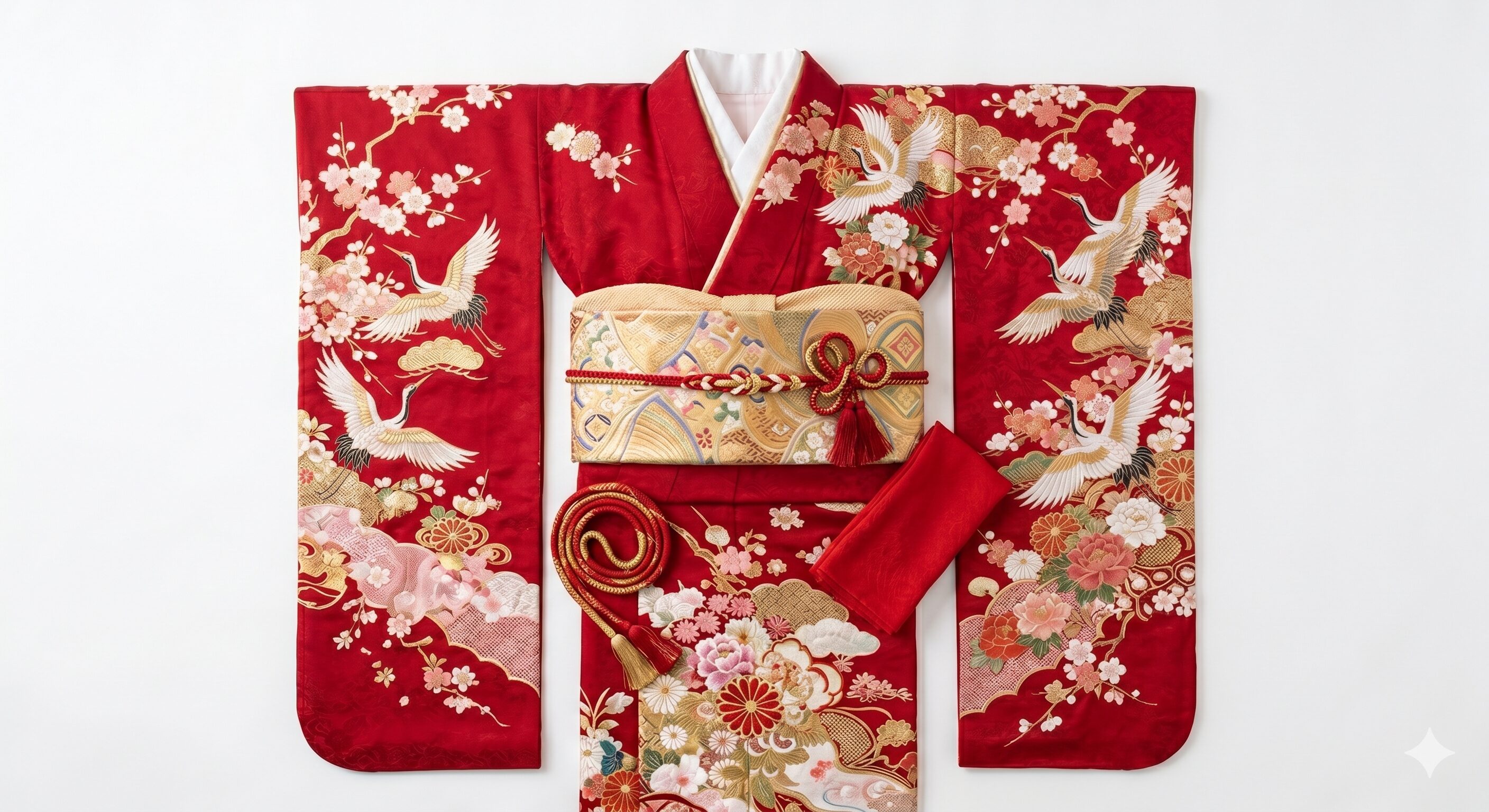
Furi / Long Sleeves
振り袖The defining feature — these extra-long sleeves (95–114cm) swing gracefully and signal unmarried status.
Obi Belt
帯The wide sash tied at the back. For furisode, an elaborate fukuro obi in gold brocade is standard.
Obiage
帯揚げA silk scarf tucked into the top of the obi. Adds color and keeps the obi padding in place.
Obijime
帯締めA decorative cord tied around the obi. Comes in many colors — it’s the kimono’s “jewelry.”
Eri / Collar
衿The collar showing at the neckline. Usually white — always worn left over right.
Hakoseko
筥迫A decorative purse tucked into the chest. Originally practical; now purely ornamental.
When to Wear Furisode Kimonos
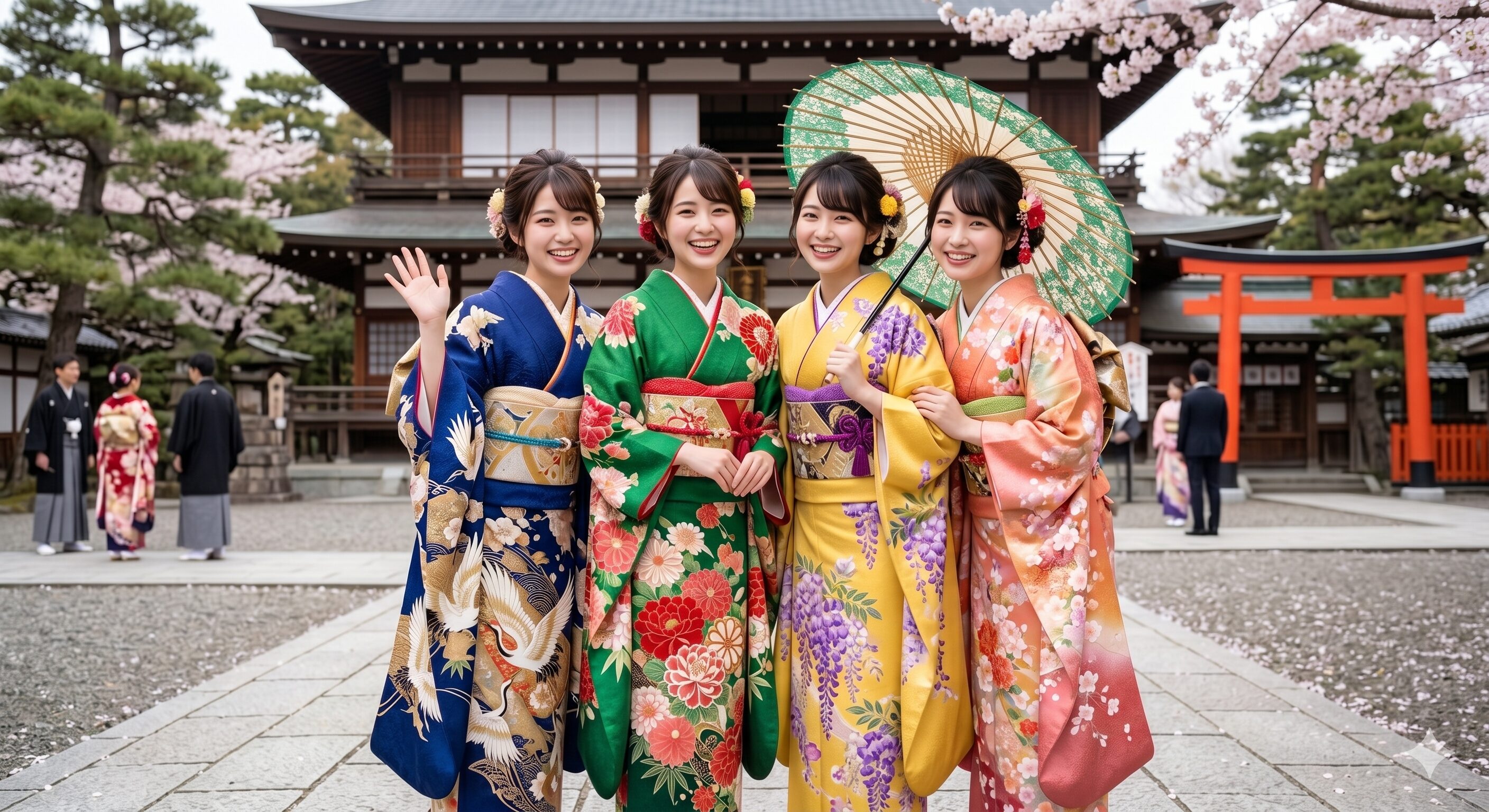
Furisode kimonos are reserved for life’s most meaningful moments. Because they represent youth, beauty, and the unmarried state, they’re worn at celebrations that mark important milestones.
Coming-of-Age Day
成人式Every January, young women across Japan turn 20 wearing their finest furisode to celebrate adulthood.
Wedding Guest
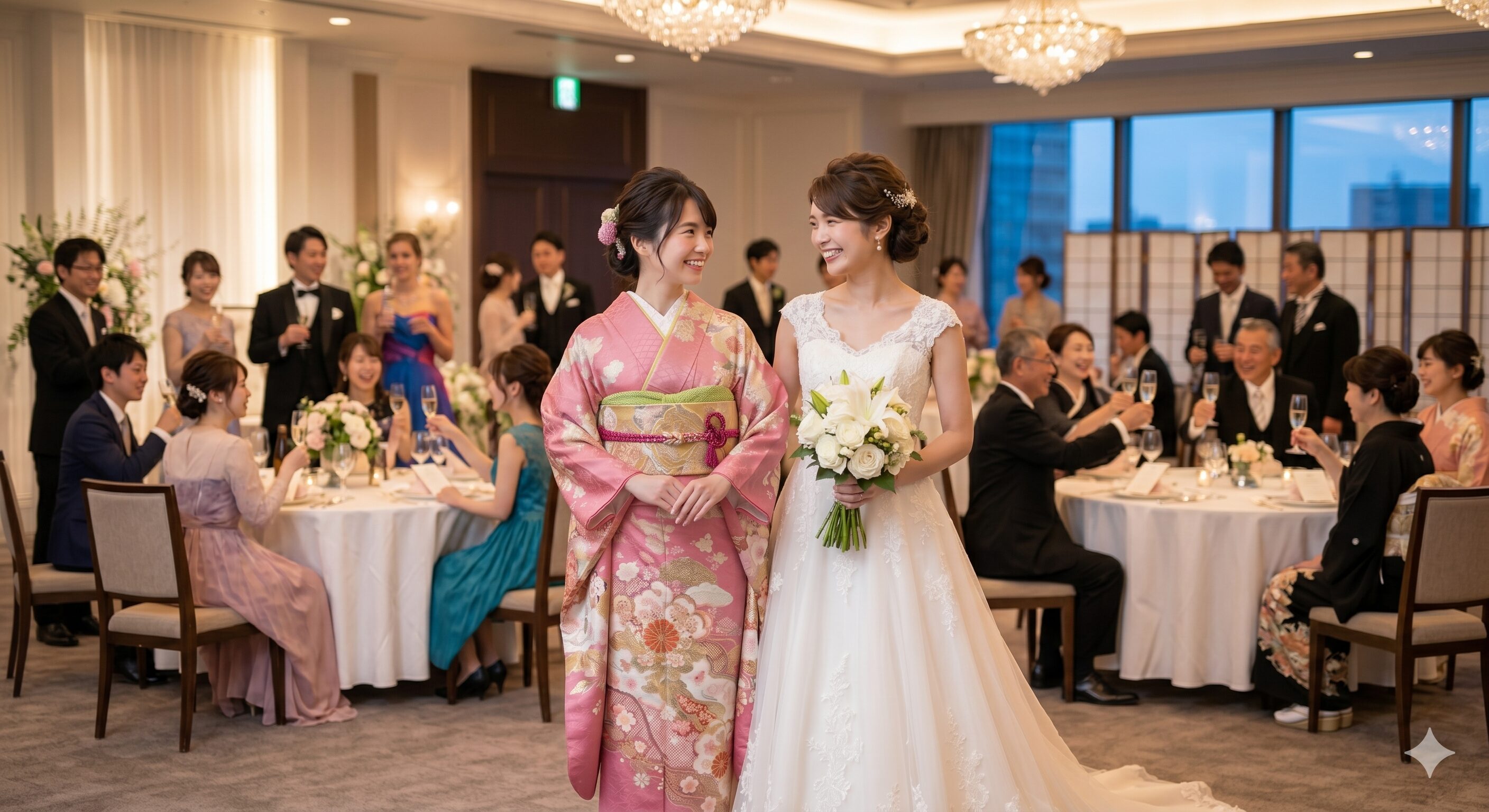
結婚式Unmarried female guests often wear furisode to weddings — a celebratory gift of color and elegance.
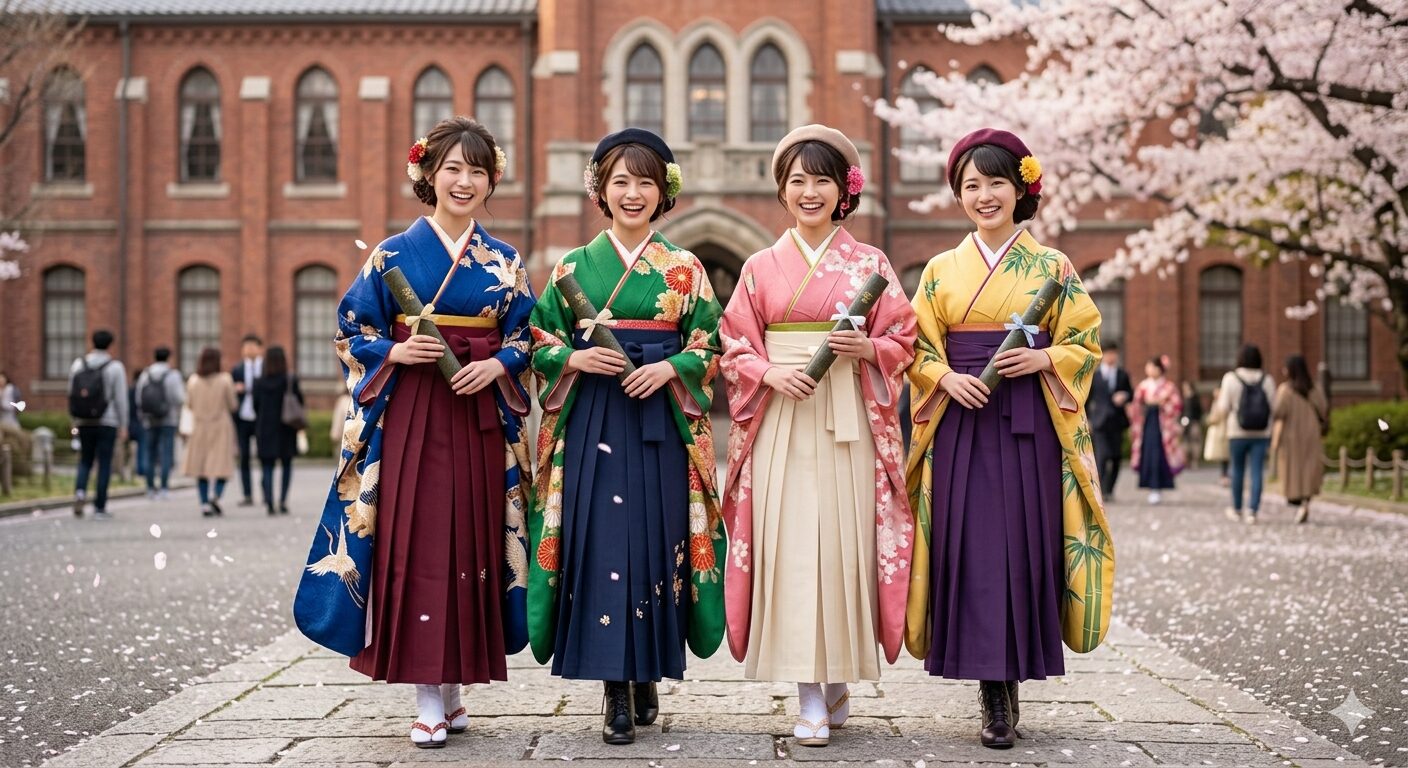
Graduation
卒業式University graduates pair furisode with hakama trousers for a distinctly Japanese graduation look.
New Year / Shrine Visit
初詣The new year is a beautiful occasion to wear furisode for a first shrine visit.
FAQs About Furisode Kimonos
Absolutely! Many kimono rental shops in Kyoto, Tokyo, and other cities offer furisode for visitors. Wearing one is a wonderful way to experience Japanese culture. Just make sure: left side over right!
A new furisode ranges from ¥200,000 for polyester to over ¥3,000,000 for hand-painted silk. Rental sets typically cost ¥50,000–¥150,000 including all accessories. Second-hand furisode can be found for ¥20,000–¥100,000.
Very different! Furisode is formal silk for major life events. Yukata is casual cotton for summer festivals — think ballgown vs sundress. Since people often mix up all the styles, here’s a full breakdown of the difference between a kimono and a yukata, compared side by side.
Traditionally, furisode is for unmarried women. In modern Japan this rule has relaxed, but most Japanese women follow the tradition of switching to tomesode after marriage.
Red has always been the most classic choice — it symbolizes vitality and youth. Pink is sweet and popular. Blue feels sophisticated. Recently green and yellow have become trendy too.
Furisode kimonos carry centuries of beauty and meaning
Every long sleeve that swings, every hand-painted crane that soars across the silk — it all carries the weight of centuries of Japanese culture, romance, and celebration. I hope this guide brought you a little closer to understanding why furisode kimonos are truly something special.
— Mio-chan ✨