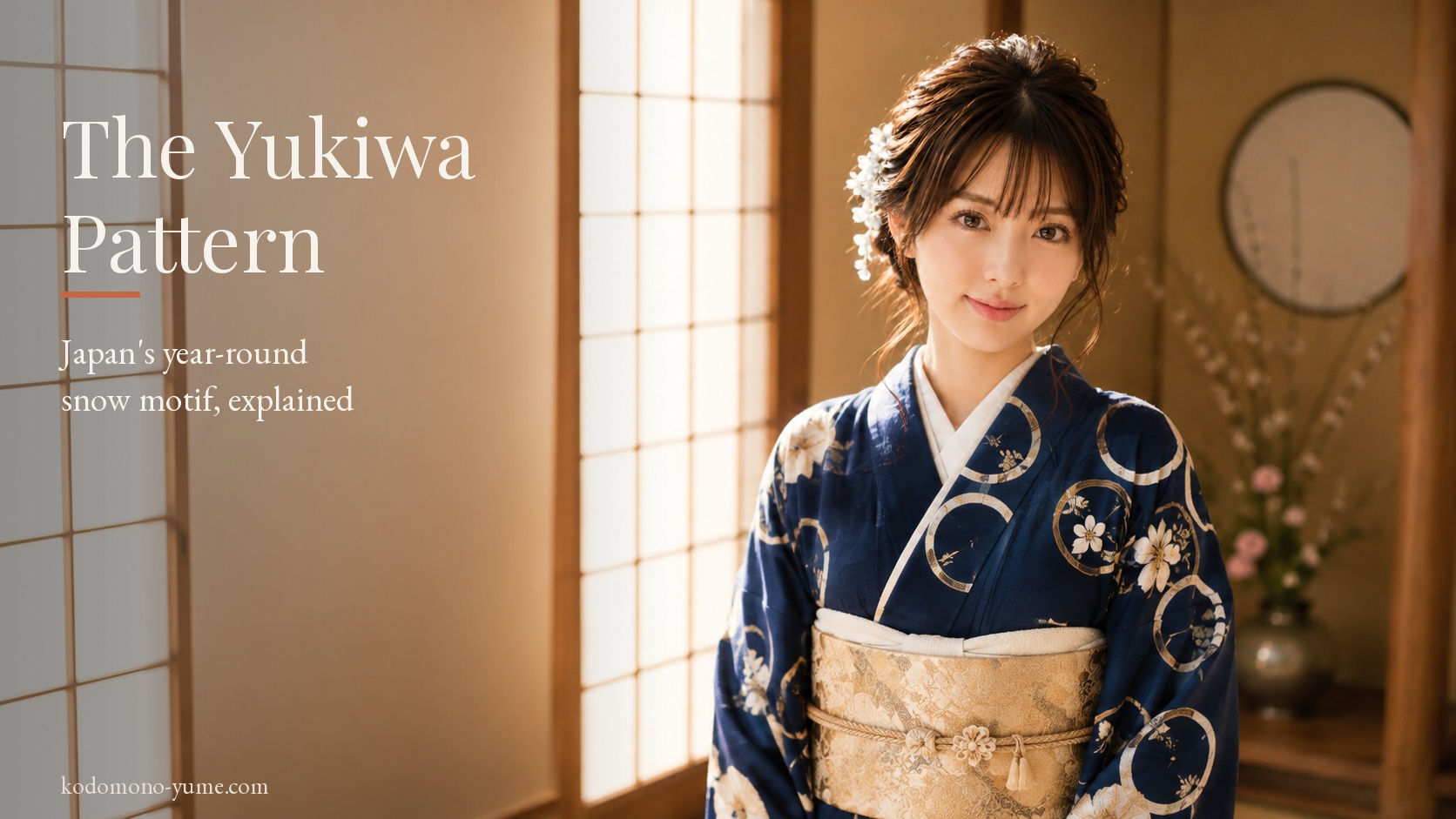
Yukiwa: The Meaning Behind Japan’s Snow-Ring Kimono Pattern
Why a soft, imperfect circle became one of Japan’s most beloved symbols of good fortune
Picture a snowflake, but soft. Not sharp and geometric, but round, plump, with gentle scalloped edges — almost like a cloud learned to be a circle. That is yukiwa (雪輪), one of the most beloved patterns in Japanese textile design, and one of the few that quietly breaks the seasonal rules kimono are famous for.
If you have browsed kimono or obi online, there is a good chance you have already seen yukiwa without knowing its name. It shows up constantly — on formal furisode, on summer yukata, tucked into obi linings, printed on furoshiki wrapping cloths. Once you learn to recognize it, you will start spotting it everywhere.
What Does Yukiwa Actually Look Like?
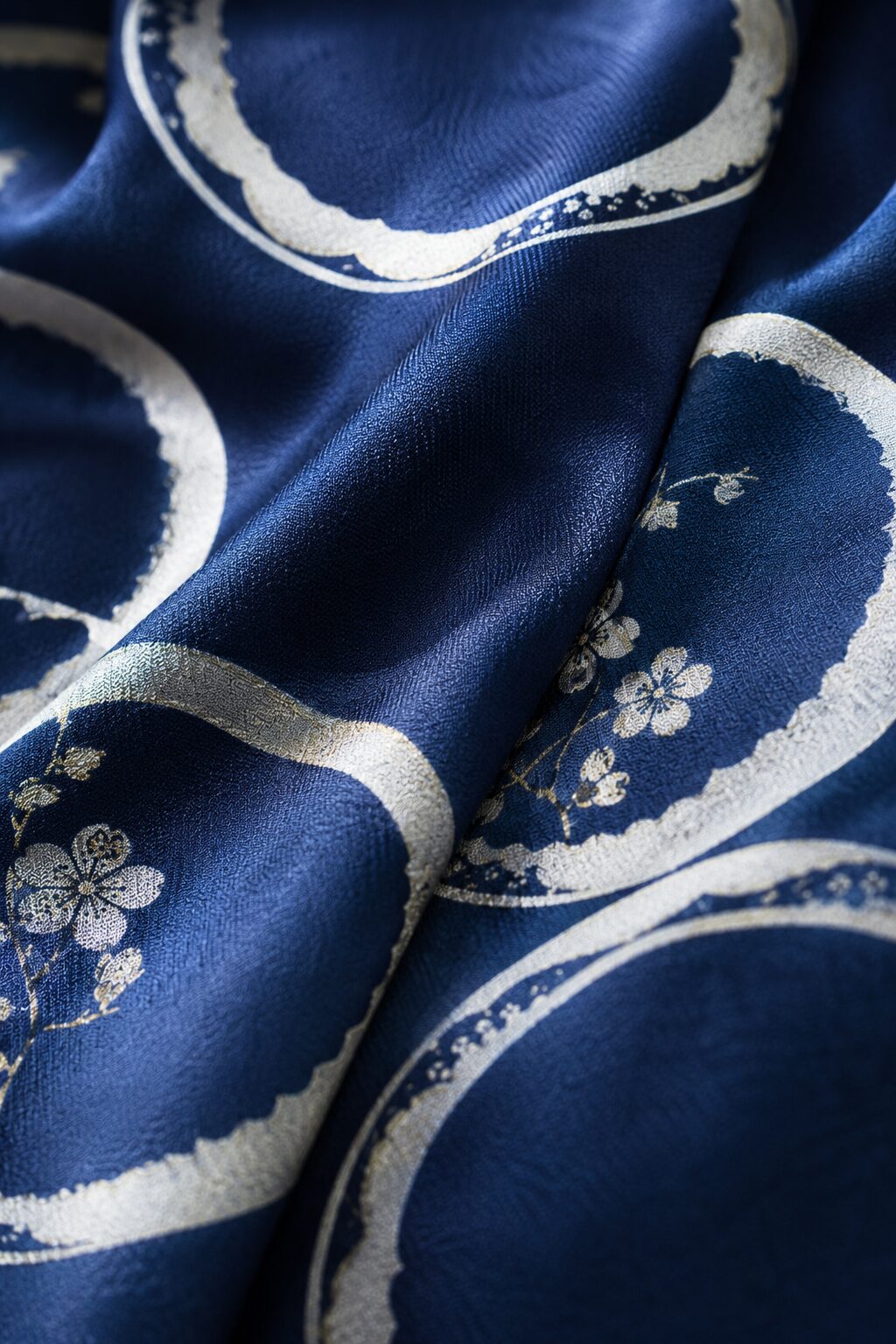
The name yukiwa translates literally to “snow ring” or “snow circle.” The design takes the six-sided shape of a real snow crystal and softens it into a round form with six gentle indentations around the edge, like a circle that has been very delicately nibbled at even intervals.
This is different from another snow-inspired pattern called sekka (雪華), which renders the snow crystal in sharp, geometric detail, closer to what you would see under a microscope. Yukiwa is the opposite approach: soft, rounded, almost playful. Where sekka is precise, yukiwa is inviting.
A Pattern with Roots in the Heian Court
Yukiwa’s history stretches back to the Heian period (794–1185), making it one of the older patterns still in everyday use today. It grew in popularity through the Muromachi period and then exploded during the Edo period, when it became a favorite motif for women’s kosode (an early form of kimono) and obi.
Part of that popularity came from pure design flexibility. Because yukiwa is essentially a soft circular frame, it works beautifully as a container for other patterns. Kimono artisans would often place seasonal flowers, other traditional motifs, or delicate linework inside the snow ring itself, turning a single yukiwa into a small scene of its own.
Why Snow Means Good Fortune
It might seem strange that a symbol of winter’s harshness became an auspicious motif, but the logic is rooted in agriculture. In Japan, a heavy snowfall in winter was traditionally seen as a good sign, not a bad one. Deep snow in the mountains means abundant snowmelt in spring, and abundant snowmelt means well-irrigated rice paddies and fields.
Snow was therefore often called gokoku no sei, the “essence of the five grains,” and a snowy winter was read as a forecast of a plentiful harvest. Yukiwa carries that entire hope in a single soft circle: good fortune, abundance, and a bountiful year ahead.
There is a second, quieter layer of meaning as well. Because the circle of a yukiwa is never quite complete — it is always interrupted by those six soft indentations — some interpret the pattern as a symbol of humility. An imperfect circle, deliberately left unfinished, has long been read in Japanese aesthetics as a gentle reminder: nothing in nature, and no one in life, is ever fully complete.
A Word to Know
Gokoku Hojo (五穀豊穣) — literally “abundance of the five grains,” this is the traditional wish for a bountiful harvest that sits at the heart of yukiwa’s symbolism. You will see this same hope embedded in many of Japan’s nature-based auspicious patterns.
The Pattern That Ignores the Calendar
Kimono culture in Japan usually follows strict seasonal etiquette — certain motifs are meant for spring, others only appear in autumn, and wearing the wrong seasonal pattern at the wrong time is considered a small fashion misstep. Yukiwa is one of the rare exceptions.
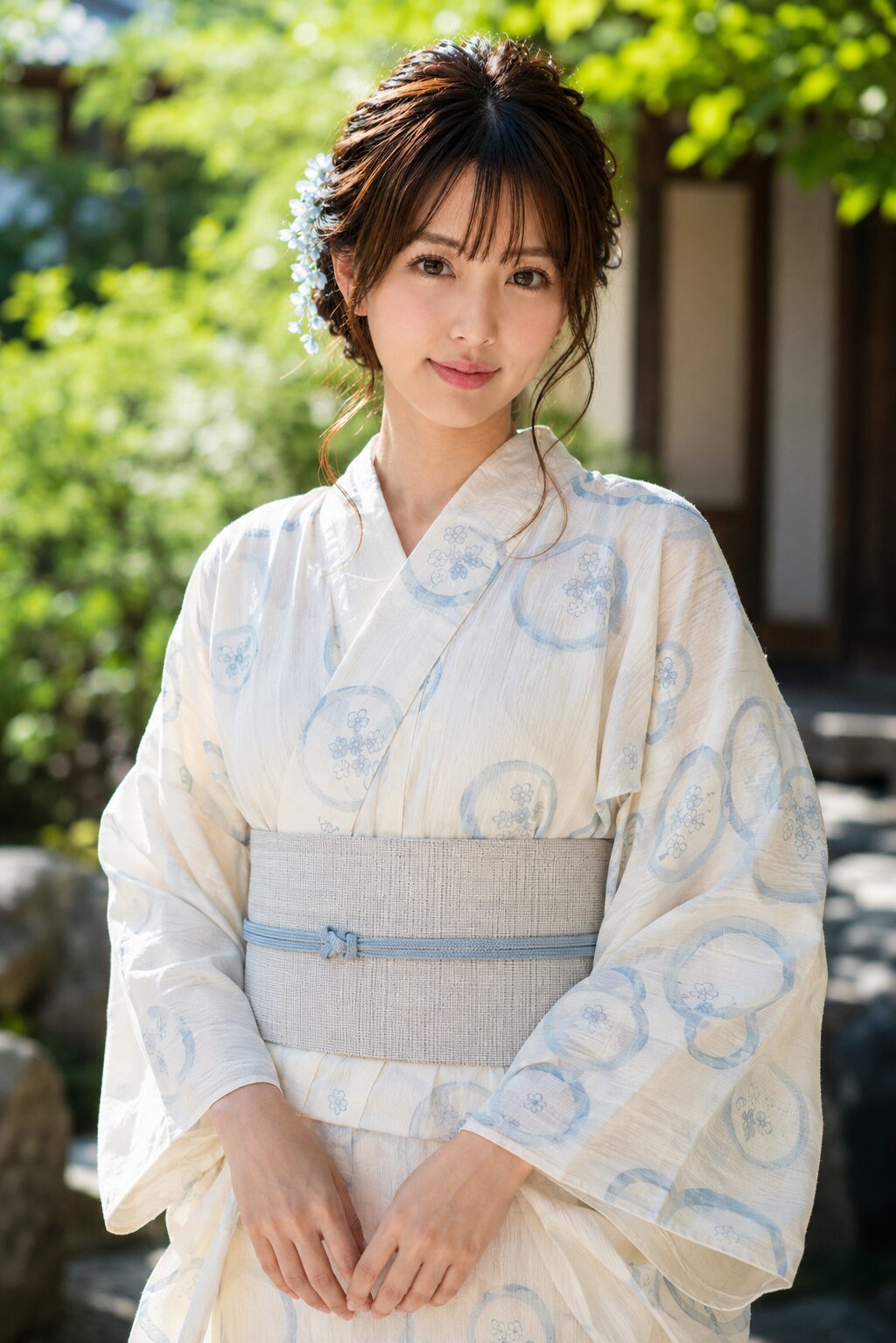
Because the design has become so abstracted from an actual snowflake, it is treated as a year-round pattern rather than a strictly winter one. In fact, yukiwa is especially popular on lightweight summer kimono and yukata, where the visual coolness of “snow” offers a refreshing contrast to the summer heat. It is one of the few patterns you can wear confidently in both January and August.
Yukiwa as a Frame for Other Patterns
One of the most charming things about yukiwa is how often it is used not as a standalone motif, but as a decorative frame for something else. Kimono and obi designers frequently fill the inside of each snow ring with a second pattern, creating a layered design with even richer meaning. Some classic pairings include:
- Yukiwa with asanoha (hemp leaf) — combining the wish for a good harvest with asanoha’s meaning of healthy growth and protection.
- Yukiwa with ichimatsu (checkerboard) — pairing abundance with ichimatsu’s symbolism of prosperity and continuity.
- Yukiwa with uroko (scales) — blending a wish for good fortune with uroko’s protective, ward-off-misfortune meaning.
- Yukiwa with shippou (interlocking circles) — layering harvest wishes with shippou’s symbolism of harmony and connection.
This layering tradition is part of why yukiwa still feels fresh centuries later. No two yukiwa designs need to look alike, because the snow ring is really just the beginning of the pattern, not the end of it.
Where You Will See Yukiwa Today
Yukiwa’s range is part of its lasting appeal. It appears on:
- Furisode — often rendered large and elaborate, filled with seasonal flowers, for a formal, celebratory look
- Houmongi and tomesode — used more subtly, as a refined background texture
- Summer yukata — simplified and scattered across the fabric for a light, breezy effect
- Obi and obi linings — frequently used as a repeating geometric motif
Whether bold or subtle, yukiwa tends to soften whatever it touches. Even on a formal, richly decorated kimono, the rounded shape keeps the overall design feeling gentle rather than rigid.
The Takeaway
Yukiwa is proof that a pattern does not need to be complicated to be meaningful. A simple soft circle, born from watching snow fall centuries before anyone had seen a snowflake up close, carries centuries of hope for abundance, a quiet lesson in humility, and enough visual flexibility to be worn in the depths of winter or the height of summer. It is a small, round reminder of why Japanese textile patterns reward a closer look.