When you picture a kimono, what comes to mind? Probably the dazzling furisode at a coming-of-age ceremony, or one of those formal pieces worn to a wedding — something special, worn only on big occasions, with someone else helping you into it.
But here’s the thing: the kimono world also has a piece you can slip on as easily as a casual dress. Meet today’s star, the komon. Perfect for a stroll, a coffee date, or a relaxed wander around town, it’s the most approachable, low-pressure everyday kimono there is, and an ideal first kimono.
Kimono come in levels of formality, and the komon is one of the most common everyday kimono. If you’re wondering “how many types of kimono are there, anyway?”, start with A Complete Guide to Kimono Types — it’ll make the komon’s place in the lineup click instantly.
What exactly is a komon?
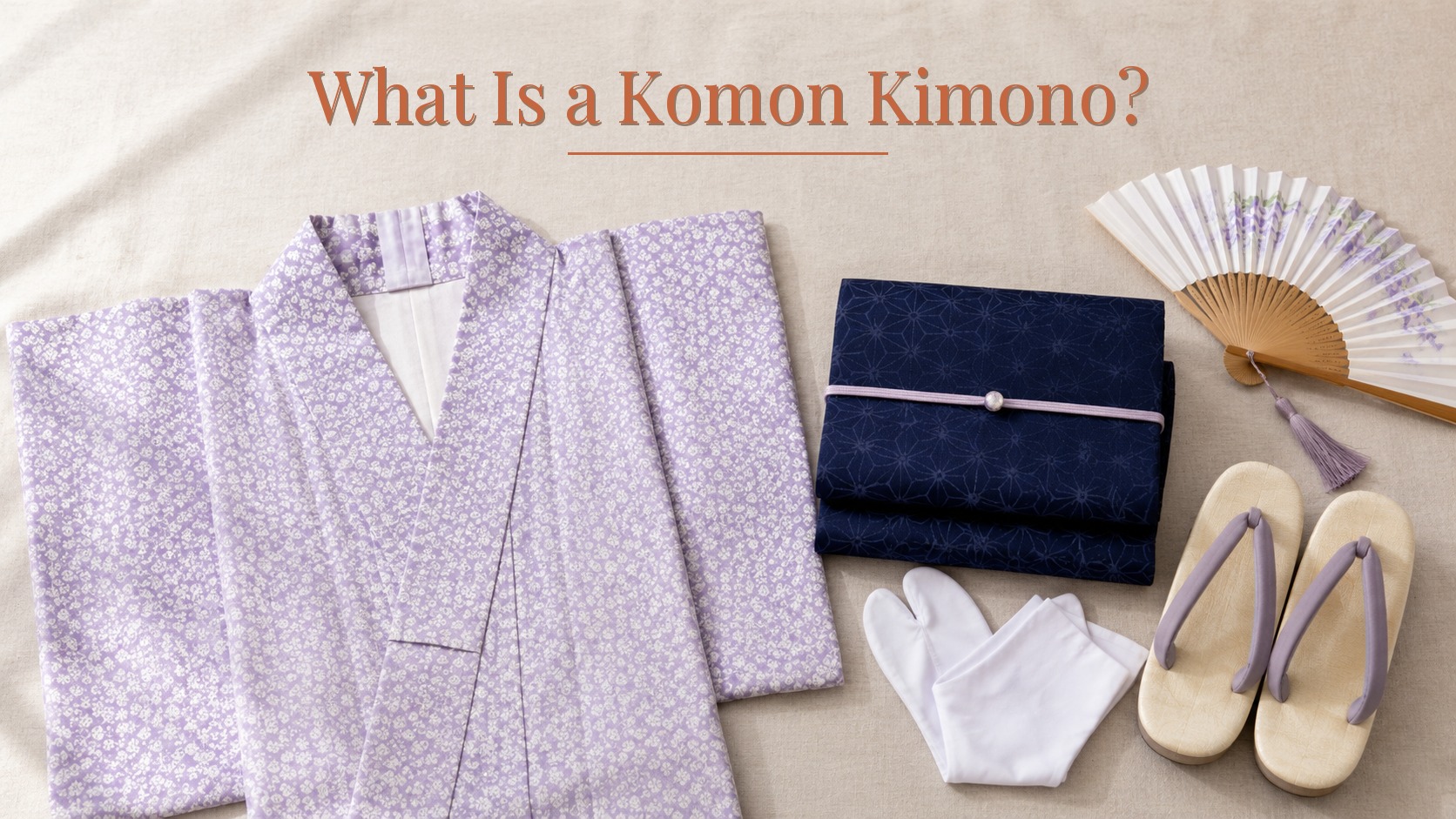
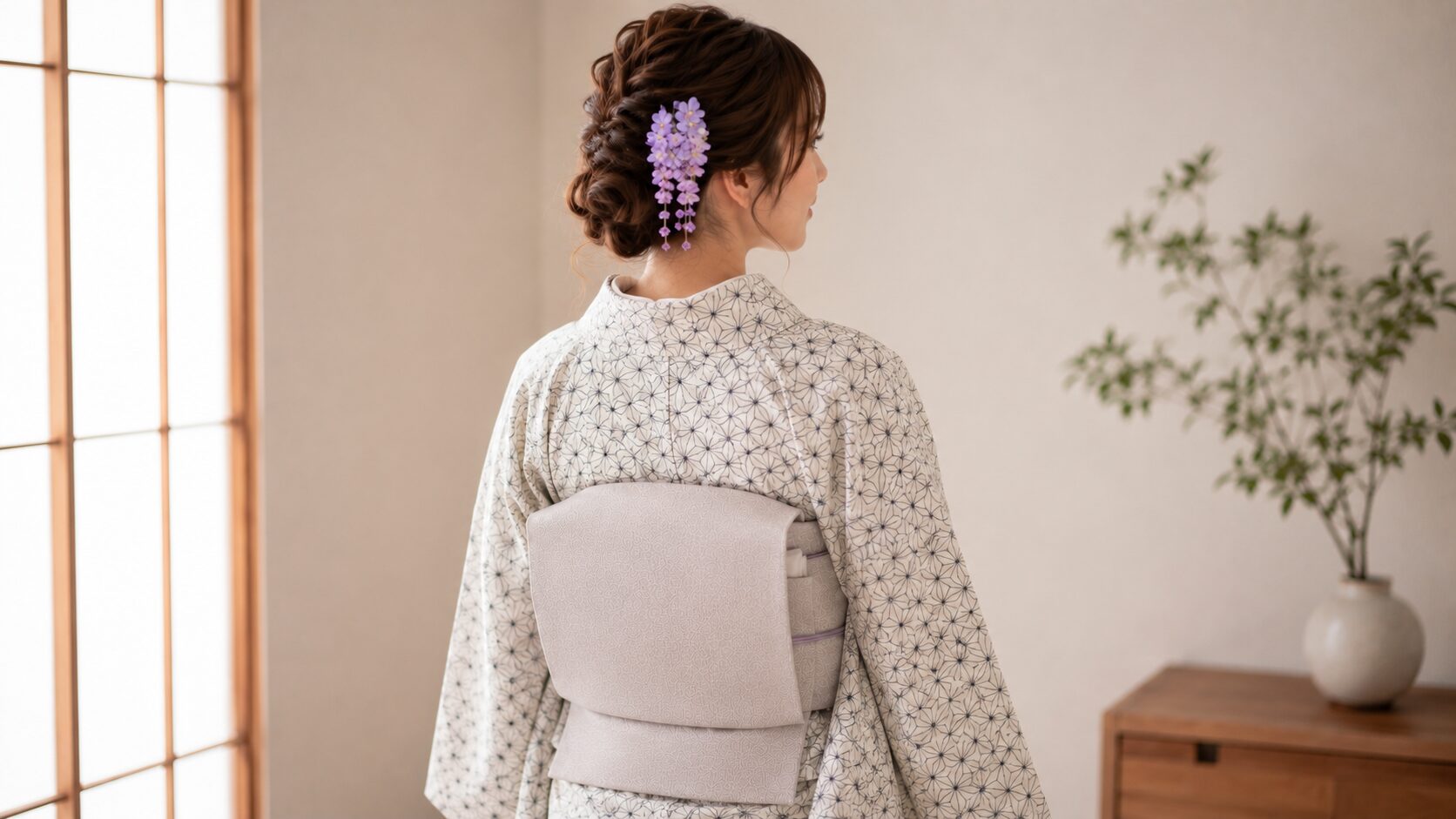
So what is a komon, exactly? In one line: a kimono with the same small motif repeated all over the fabric.
That’s the key. Whether it’s flowers or little geometric shapes, a tiny motif is scattered across the whole cloth in the same direction and rhythm. This all-over repeating pattern is the hallmark of a komon. It’s a completely different design idea from a furisode or houmongi, where the pattern flows like a single painting from hem to shoulder.
And it’s this repeating pattern that’s tied to the komon’s level of formality.
Why komon is casual
As we covered in the pillar article, a kimono’s formality is decided mainly by things like how the pattern is placed and whether it carries a crest (mon), among a few other factors.
Roughly speaking: the more a pattern is composed and placed like a single picture, the more formal it is; the more it repeats evenly across the whole fabric, the more casual it tends to be. The komon is the classic example of the latter, and that all-over repeating pattern is one of the reasons komon are considered casual. So the komon sits in the “everyday, around-town” category, and isn’t suited to formal ceremonies.
A comparison from a Western wardrobe might help: a printed day dress is your “out and about” outfit, while a one-of-a-kind embroidered evening gown is “formal.” The feeling is something like that.
Casual, everyday, and easy to wear — does that sound familiar? It’s worth noting that a komon is still a kimono, not a yukata, even though both are relaxed, low-pressure pieces. If the two get blurry in your mind, our guide to the difference between kimono and yukata lays out exactly where the line is.
The exception: Edo komon
Now, after all that, you might be thinking, “okay, so every komon is casual.” But there’s one exception: the Edo komon.
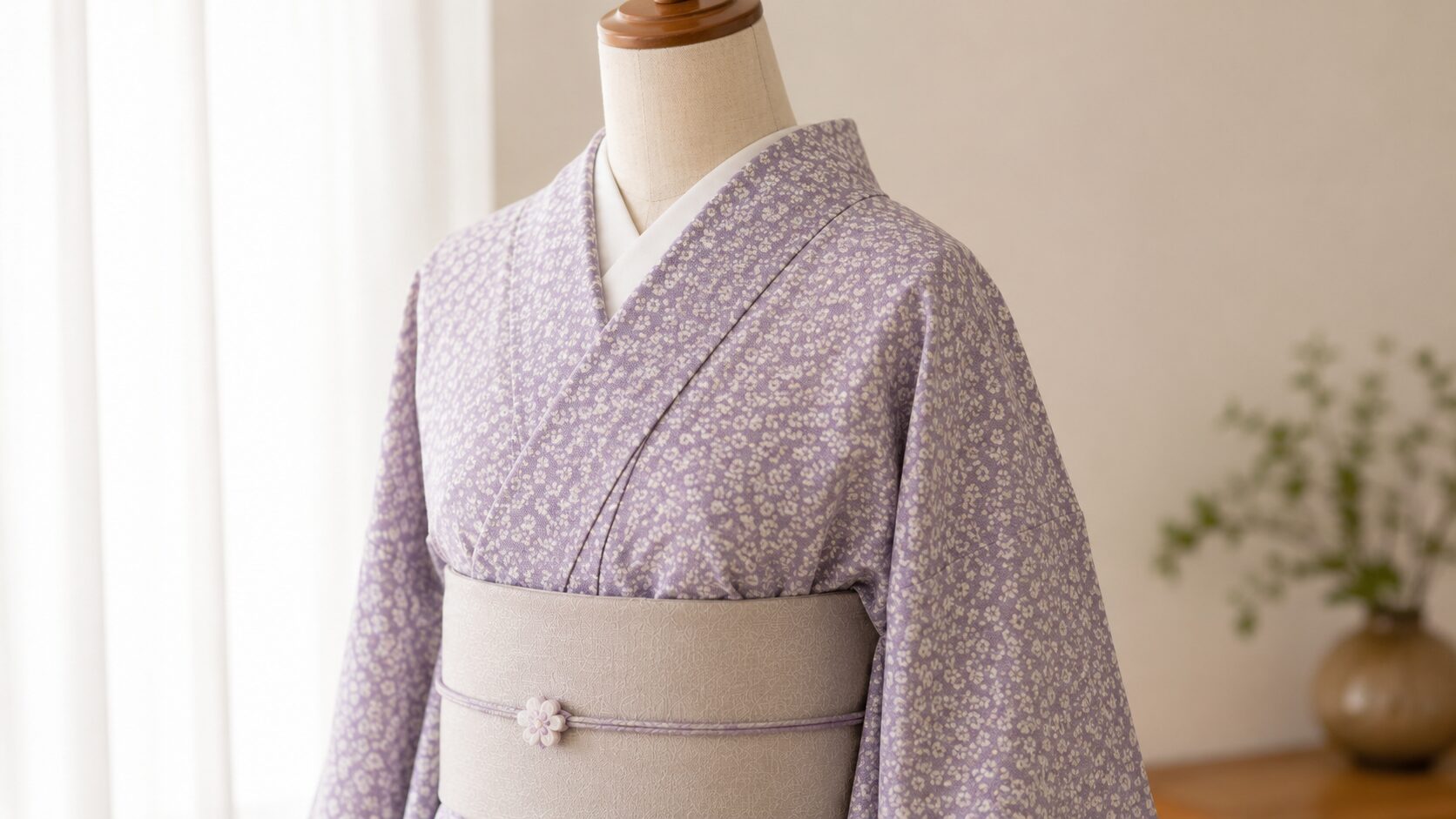
The Edo komon’s pattern is so fine that from a short distance away it looks almost like a solid color. Thanks to this “solid from afar” quality, a high-grade Edo komon with a single crest (mon) can sometimes be worn semi-formally, in a way that’s close to an iromuji (a solid-color kimono).
In other words: “komon equals casual” is the basic rule, but the Edo komon is the exception. Keep that in mind and you’ve got it down. (We’ll look at why solid-style kimono can shift in formality in the iromuji article.)
When to wear a komon
So when do you actually wear a komon? Here are the kinds of relaxed, no-pressure occasions it’s perfect for:
- A walk around town, or a little shopping
- Coffee, lunch, or tea with friends
- A trip to the theater or a museum
- Casual parties and get-togethers
- And — as your very first kimono
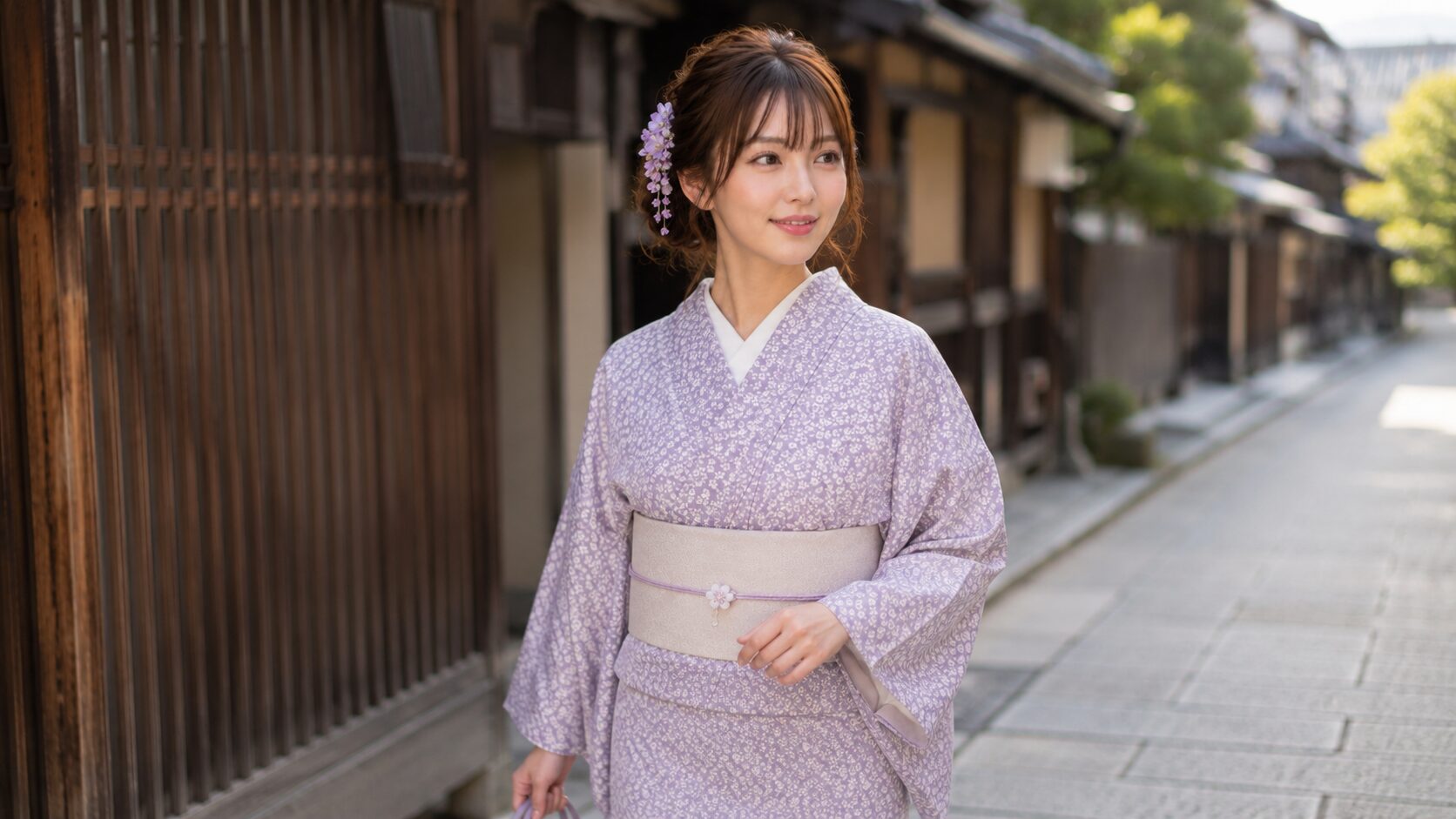
That last one is my favorite suggestion. The komon is forgiving and unintimidating, so it’s the piece a lot of people reach for as their very first kimono. (For a step-by-step on actually putting one on, see How to Wear a Kimono.)
And here’s the lovely part: by choosing the right fabric — lighter for summer, lined for winter — you can enjoy a komon all year round. Being able to pick a piece to suit the season is one of the quiet joys of an everyday kimono.
What to pair it with
A casual komon calls for a casual obi to match.
The most common everyday pairing is the Nagoya obi, and the even more relaxed hanhaba obi works beautifully too. Instead of tying it stiffly, you’re going for an easy, comfortable look. The fukuro obi, on the other hand, is mostly made for formal wear, so it isn’t often paired with a komon — here again, the idea is to match formality levels. (We’ll cover obi and what goes underneath in more detail in a separate article.)
Komon vs. other kimono types
Let’s also sort out the kimono that are easiest to mix up with the komon.
- Versus the houmongi: a houmongi has a pattern that flows from shoulder to hem (a style called eba), and it’s semi-formal. A komon is all-over patterned and casual.
- Versus the tomesode: the tomesode sits at the very top of the formality scale, worn by married women at weddings and major ceremonies. It’s the exact opposite end from the komon, which makes the two a useful pair to compare.
- Versus the iromuji: an iromuji is a solid color with no pattern — a versatile piece whose formality shifts depending on the obi. The Edo komon sits close to this iromuji.
- Versus the yukata: a yukata is the even more casual summer piece, worn with bare feet and no juban underneath. A komon is a true kimono, worn with a juban and tabi socks.
Trying komon as a traveler
Buying a kimono outright can feel like a big leap. If that’s you, renting one while you travel is what I’d recommend most.
Kimono rental shops in places like Kyoto offer plenty of komon-style kimono. You slip one on for the day, wander the streets, and hand it back in the evening. You get to experience “a day in kimono” without buying anything, which makes it perfect for a first komon experience. (For how rentals work, see the Kyoto Kimono Rental Guide.)
FAQ
- Should a kimono beginner start with a komon?
- Yes, highly recommended. It’s easygoing and forgiving, and there are so many places you can wear it, which is why it’s such a popular choice for a first piece.
- Can I wear a komon to a wedding?
- Generally, it isn’t recommended. The komon is a casual everyday kimono, so for a wedding it’s safer to choose something more formal — a houmongi for a guest, or a tomesode if you’re a close relative of the couple. That said, a high-grade Edo komon with a single crest may be acceptable depending on the occasion.
- What’s the difference between a komon and a yukata?
- A yukata is the most casual piece of all, worn in summer with bare feet and no juban underneath. A komon is a year-round kimono, worn with a juban and tabi socks.
Wrap-up
A kimono isn’t always a tense, special-occasion piece. There are kimono — like the komon — that you can simply relax into and enjoy.
If you’ve been thinking, “I’d love to try wearing a kimono, but where do I even start?”, the komon is the perfect first piece. Begin your kimono journey with an easygoing everyday one.
Once the komon feels familiar, the next steps up the formality scale are the houmongi and the tomesode — and whenever you’d like to compare all the types side by side, come back anytime to A Complete Guide to Kimono Types.)