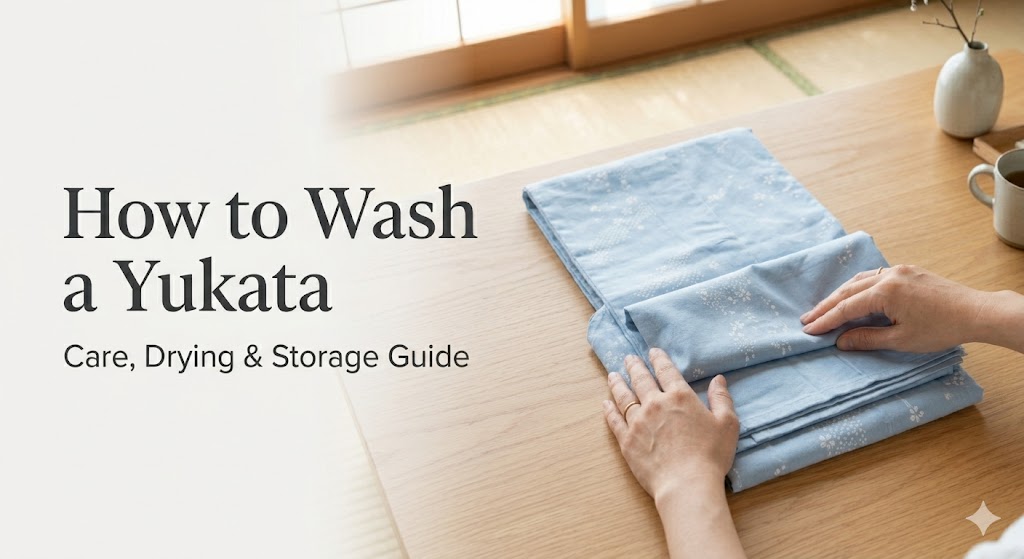
Can You Wash a Yukata at Home?
Wondering how to care for your favorite yukata after a sweaty summer night? Good news: most yukata can be washed at home. With the right washing and storage, yours will stay beautiful for many summers to come. This guide walks you through everything — from what to check before washing to cleaning, drying, ironing, treating stains, and storing your yukata for the off-season.
Before You Wash: A Quick Check
First, make sure your yukata is safe to wash at home.
- Check the fabric. Cotton and polyester yukata can usually be washed at home. Silk-blend or higher-end yukata are safer with professional dry cleaning.
- Read the care label. If you see a “do not wash” symbol — a washtub (bucket) shape with a large X through it — don’t wash it at home; take it to a cleaner. Care symbols are largely standardized worldwide now, but older or vintage yukata may use different labels, so always look for that washtub-with-an-X mark.
- Test for color bleeding. For deep colors or indigo dyes, dampen a hidden spot and press it with a white cloth to see whether the dye transfers.
How to Wash a Yukata (Machine & Hand Wash)
Machine washing
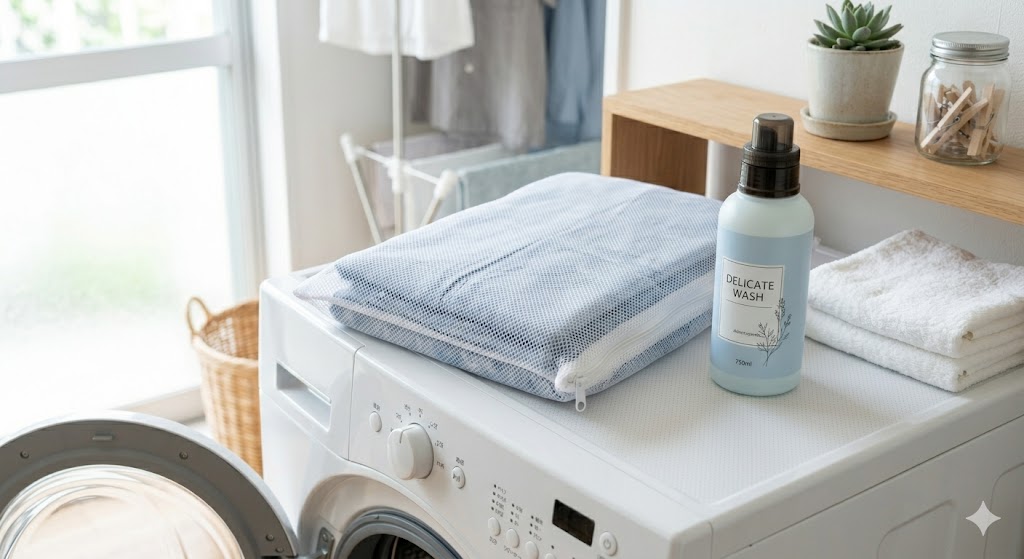
- Fold the yukata and place it in a mesh laundry net (essential for keeping its shape).
- Use a mild, delicate detergent (the kind made for delicates, such as Woolite).
- Select a gentle cycle — “hand wash” or “delicate.”
- Keep the spin short (30–60 seconds); a long spin causes wrinkles.
Hand washing
Fill a basin or tub with water, dissolve a little mild detergent, and “press wash” by gently pushing the fabric down — never scrub. After rinsing, press the water out gently without wringing.
Drying Your Yukata
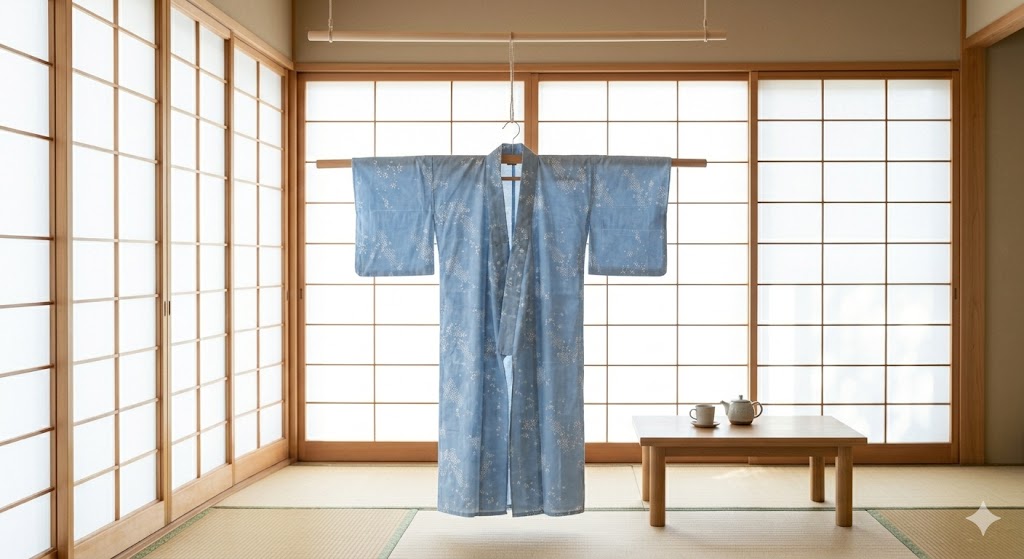
- Hang it on a kimono hanger and reshape it before drying.
- No kimono hanger? No problem. Thread the sleeves over a laundry pole, run a tension rod through a regular hanger, or use a wide bath-towel hanger — any of these work well as a substitute.
- Dry in the shade, out of direct sunlight — sun causes fading.
- While it’s still slightly damp, smooth out the wrinkles by hand to make ironing easier.
Ironing & Removing Wrinkles
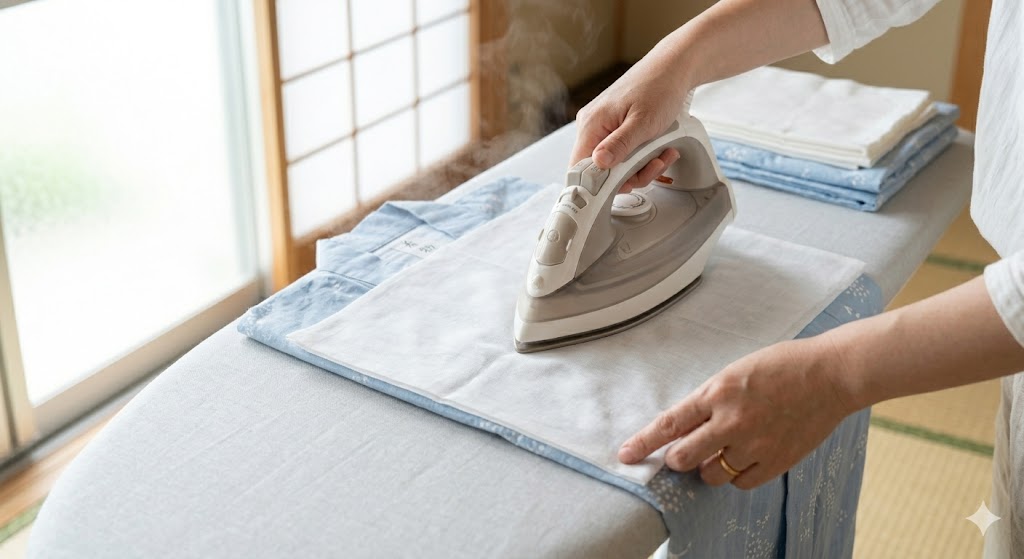
- Always use a pressing cloth and iron from the reverse side.
- Medium heat for cotton; low heat for polyester.
- Avoid placing a hot iron directly on the fabric — it can cause shine and damage.
Caring for Your Obi and Accessories
- An obi generally isn’t washed — just air it out in the shade to release moisture after a sweaty day.
- Wipe geta with a firmly wrung cloth, and gently clean the thong if it gets dirty.
- Treat half-collars and other small items according to their material.
How to Store a Yukata for the Off-Season
This is the most important step for keeping it beautiful next year.
- Make sure it’s completely dry before storing (moisture causes mold and odor).
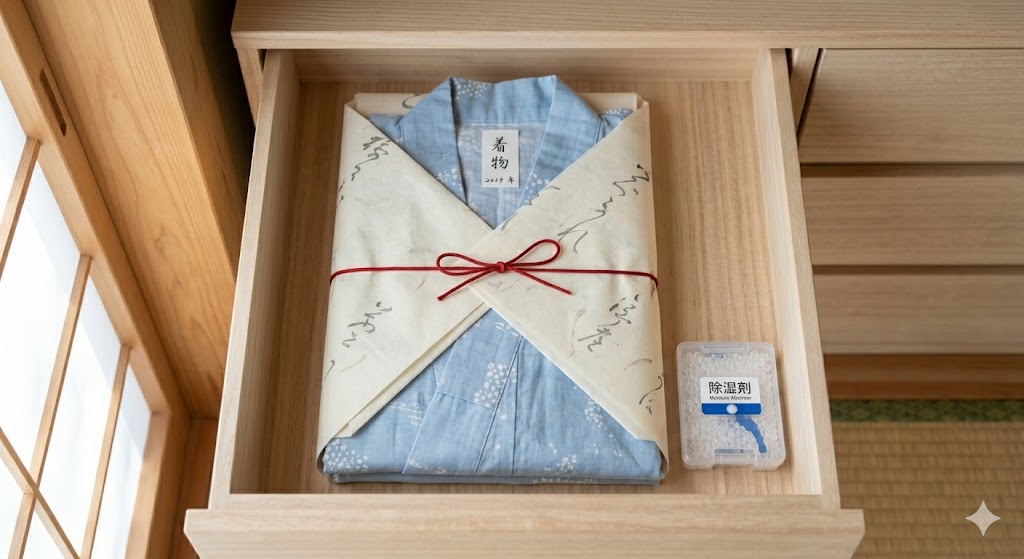
- Smooth out the wrinkles and fold it using the standard kimono fold (honedatami).
- Wrap it in tatoushi — the breathable Japanese paper made for storing kimono. If you can’t get tatoushi, a breathable non-woven fabric garment bag or a clean white cotton sheet works as a substitute. Avoid plastic bags, which trap moisture.
- Add a moth repellent and a moisture absorber (keep the repellent from touching the fabric directly).
- Store it in a well-ventilated drawer or box. A piece of Japanese wisdom: air it out in the shade on a dry, sunny day once or twice a year (this is called mushiboshi) to prevent moisture and mold — especially helpful in regions with a humid or rainy season.
Dealing with Stains and Sweat
- Treat any mark as soon as possible — blot gently, never rub.
- Sweat marks turn yellow over time, so treat them well before storing for the season.
- For stains you can’t remove yourself, or for silk-blend yukata, don’t risk it — take it to a kimono cleaning specialist.
Common Mistakes to Avoid
- Washing without a net and losing the shape — always fold it into a net.
- Drying in direct sun and fading the color — stick to the shade.
- Storing it slightly damp and getting mold or odor — confirm it’s fully dry.
- Washing a silk blend at home and shrinking it — always check the fabric label.
- Leaving sweat marks to yellow — treat them before storage.
Frequently Asked Questions
How often should I wash it?
Generally after each wear if you’ve been sweating. If you only wore it briefly, airing it out in the shade is enough.
Do I need dry cleaning?
For everyday cotton or polyester yukata, home washing is plenty. Choose a professional for silk blends, high-end pieces, or stubborn stains.
Will it shrink when washed?
Cotton can shrink a little. Keep the spin short and reshape it while damp to keep shrinkage to a minimum.
Final Thoughts
Yukata care comes down to four basics: check the fabric, wash gently in a net, dry in the shade, and store it fully dry in tatoushi. Treat it with a little care and your favorite yukata will last for years. Once you’ve enjoyed your summer, give it a proper clean and tuck it away for next year.