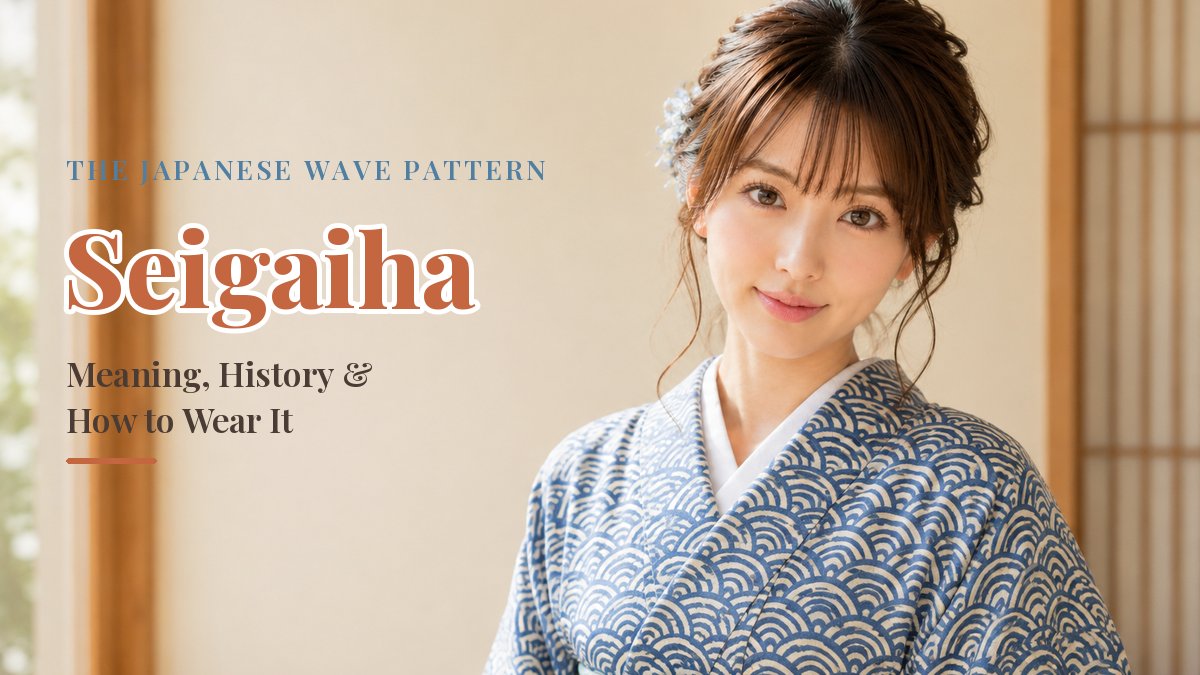
If you have ever admired a Japanese folding fan, a summer festival yukata, or a bowl of matcha resting on patterned ceramics, you have almost certainly seen seigaiha. Those calm, overlapping arcs — like ripples fanning gently across a quiet sea — are one of Japan’s most beloved traditional patterns, and the wish hidden inside them is more moving than you might expect.
What Is the Seigaiha Pattern?
Seigaiha (青海波) means “blue ocean waves,” and the design does exactly what the name promises. It is built from concentric arcs stacked in overlapping rows, each little fan of curved lines suggesting a single wave rolling toward the shore. Rank them together and they become an endless, rhythmic sea. Some people think the shapes look like fish scales or half-open fans, which is part of the pattern’s quiet charm — it reads as both water and something almost geometric.
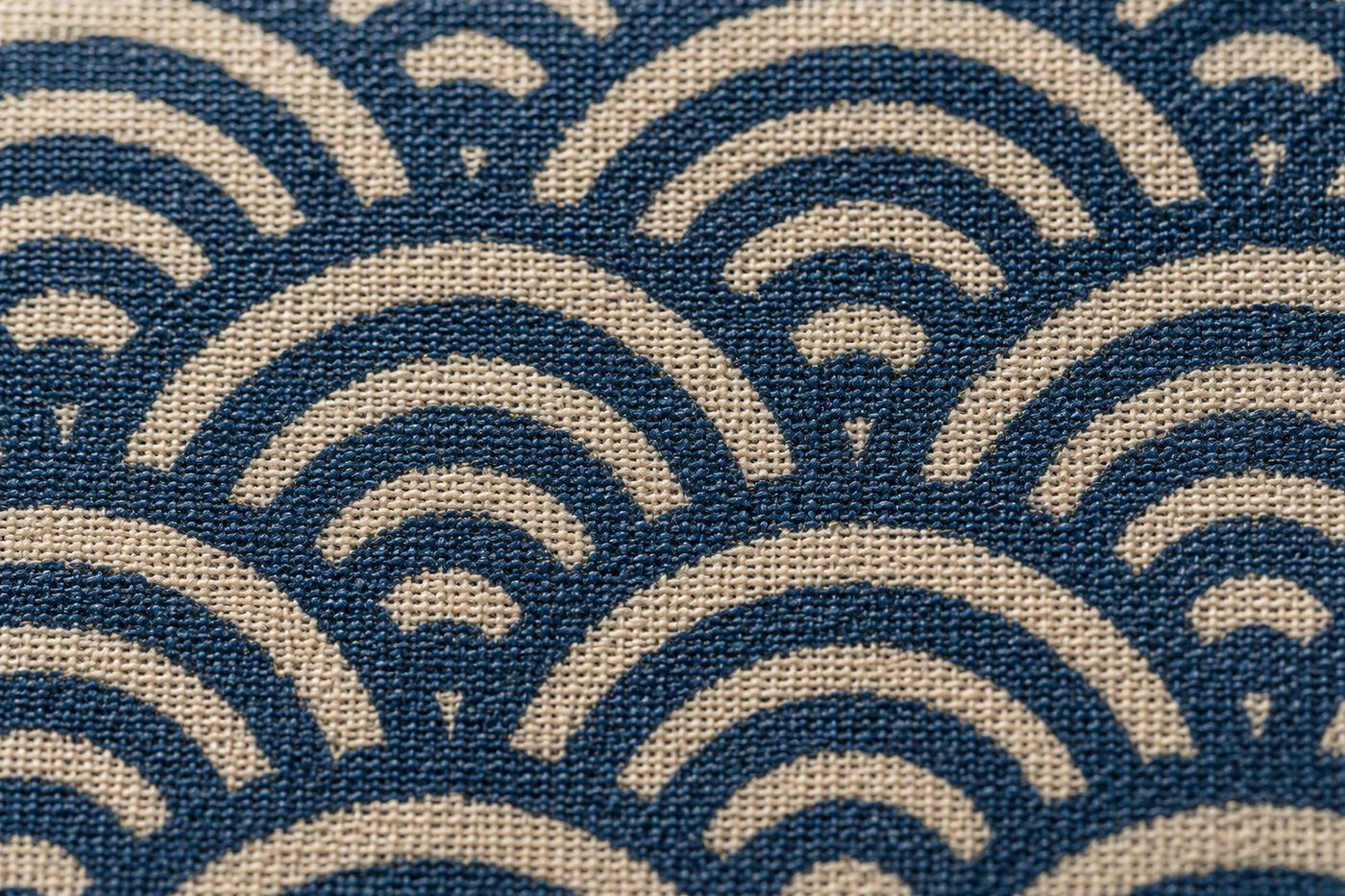
The name is pronounced roughly say-guy-ha. Traditionally it appears in deep indigo and white, the classic palette of Japanese textiles, but today you will find seigaiha in every color imaginable, from soft pastels to warm coral and gold.
The Meaning Behind the Waves
So what is the real seigaiha meaning? Seigaiha is what the Japanese call an auspicious pattern — a design chosen not only because it is beautiful, but because of what it wishes upon the person who wears it. Because the waves repeat without ever truly ending, they came to symbolize a life that flows on peacefully, generation after generation.
Calm, endless seas stand for tranquility, resilience, and good fortune that continues forever. It is why seigaiha is treasured for celebrations, weddings, and gifts — it carries a wish for lasting happiness and peaceful days ahead.
There is a gentle logic to it. Rough seas are dangerous, but calm, rolling waves mean safe passage and steady abundance. To wrap yourself in seigaiha is to wear a small, hopeful prayer for smooth sailing through whatever comes next.
A Pattern With Ancient Roots
The wave-and-arc motif is very old. Similar concentric wave designs appear in early Persian and Chinese art, and the pattern is believed to have traveled east along the Silk Road before taking root in Japan. One often-cited early example in Japan is a female haniwa — a clay funerary figure — excavated in Gunma Prefecture, whose garment is decorated with a concentric, wave-like design thought to date back roughly to the 6th century.
The pattern’s name is commonly said to be connected with an elegant court dance called Seigaiha, performed in Japan’s ancient gagaku tradition, whose costumes were decorated with the wave design. If you have read The Tale of Genji, written more than a thousand years ago, you may recall that the shining prince himself performs the “Waves of the Blue Sea” dance in one of the story’s most famous scenes. By the Edo period (1603–1868), seigaiha had become a favorite on kimono and everyday textiles — and it has stayed a well-loved classic ever since.
Where You’ll See Seigaiha Today
Once you know seigaiha, you start noticing it everywhere. In Japan it decorates kimono and yukata, obi sashes, hand towels (tenugui), wrapping cloths, ceramics, stationery, and even sake cups. Its clean, repeating rhythm also makes it a natural fit for modern design, so it turns up on phone cases, packaging, and homeware around the world.
Many people first meet these traditional patterns through Japanese pop culture and anime, where classic motifs are woven into character designs and settings. That spark of “I’ve seen that somewhere — what does it mean?” is exactly how a lot of fans discover the rich symbolism behind designs like seigaiha and the hemp-leaf asanoha pattern.
How Seigaiha Feels to Me
For me, seigaiha has never felt like an old pattern that lives only inside a museum. I still catch sight of it in everyday life — on a yukata, on a piece of pottery, even on wrapping paper — so it has always felt close and familiar to me rather than distant or formal.
When I see it, the first thing I feel is not “luck” but a kind of calm; it settles me. Since learning what the pattern is meant to wish for, though, I notice something more. Those endless, repeating waves look to me like a quiet hope that peaceful days will keep coming, one after another — and I have come to love seigaiha even more than I did before. This is only my own feeling, of course, not a rule for how anyone else should see it.
Seigaiha in Kimono and Yukata
Because seigaiha is a water motif, it carries a cool, refreshing feeling — which is why it is such a popular choice for summer yukata and lightweight kimono worn to festivals and fireworks displays. That said, the motif itself is not necessarily limited to summer. In kimono, the sense of season depends on many things — the fabric, the type of garment, and how the pattern is combined with other motifs — so where and when seigaiha feels right can vary.
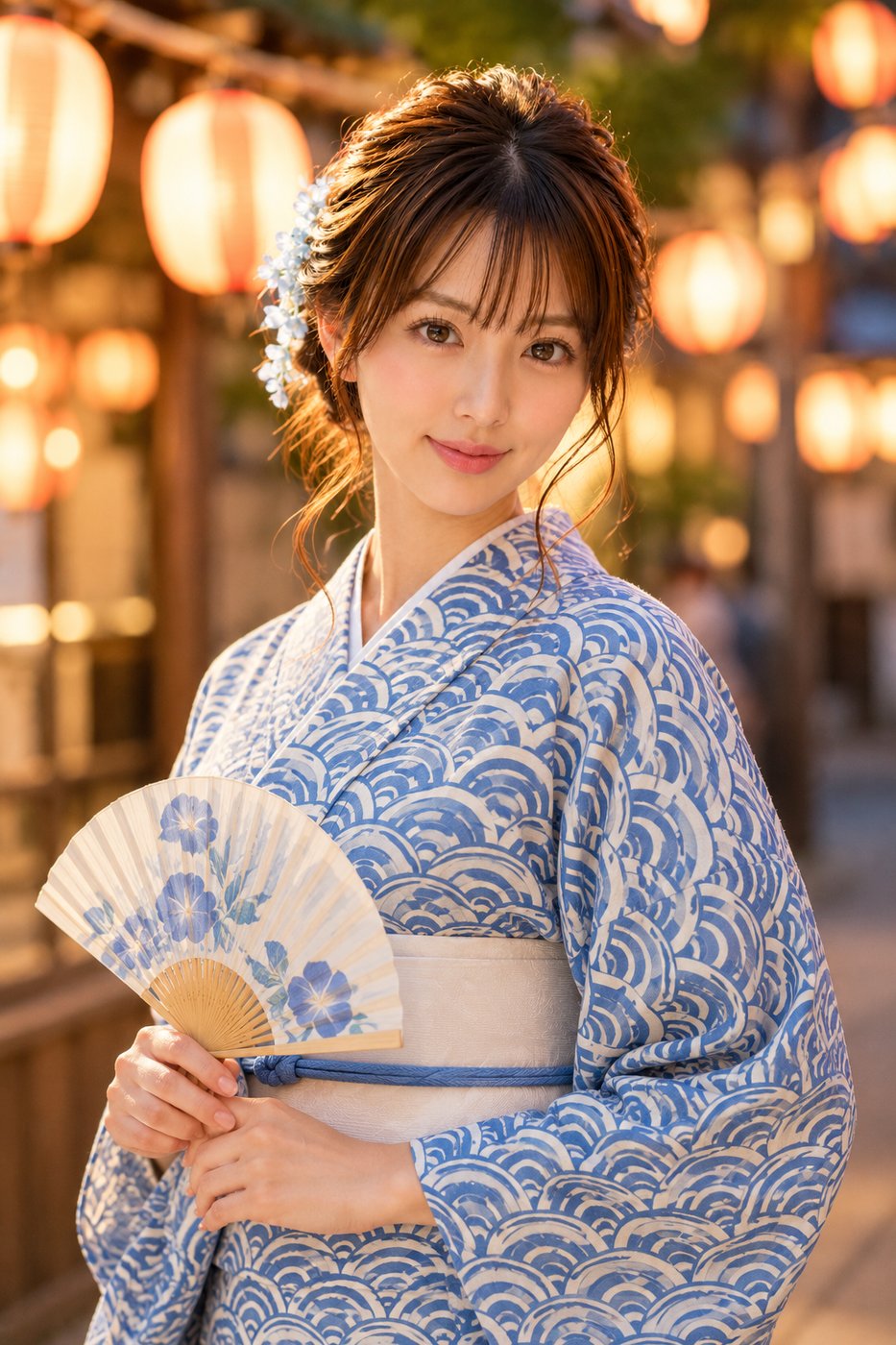
Seigaiha is also wonderfully versatile in terms of formality. As an abstract, geometric design it sits comfortably on a casual everyday komon kimono, yet a refined seigaiha motif can also appear on dressier pieces. If you are still sorting out how kimono and yukata differ in the first place, our guide to kimono vs yukata is a good place to start.
How to Style Seigaiha Today
You do not need a full kimono to enjoy this pattern. A seigaiha obi, a light summer yukata, a haori jacket, or even accessories like a fan or hair clip let you bring a little of that calm-sea energy into an outfit.
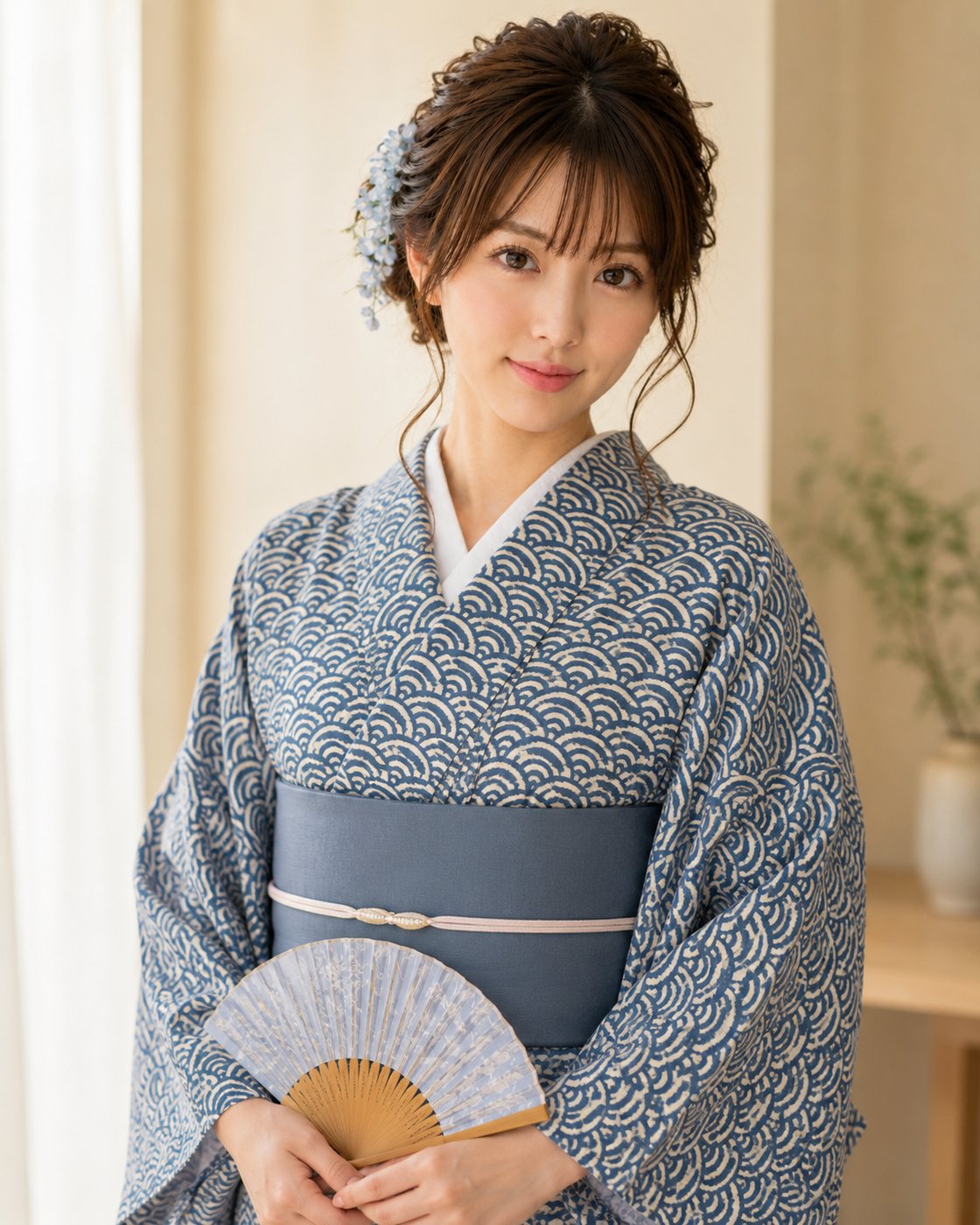
For pairing, the classic indigo-and-white version reads crisp, clean, and timeless — it flatters almost everything. Softer pastel or coral seigaiha feels modern and gentle, lovely for daytime and photos. And because the pattern itself is quiet and repetitive, it looks especially elegant next to a plain, solid-color piece such as an iromuji kimono, which lets the waves do the talking.
First-timer tip: If you are choosing a yukata for your first summer festival, a seigaiha design is one of the safest and most photogenic picks. It is unmistakably Japanese, endlessly flattering, and carries a beautiful meaning you can share when someone asks about it.
Seigaiha vs Other Traditional Patterns
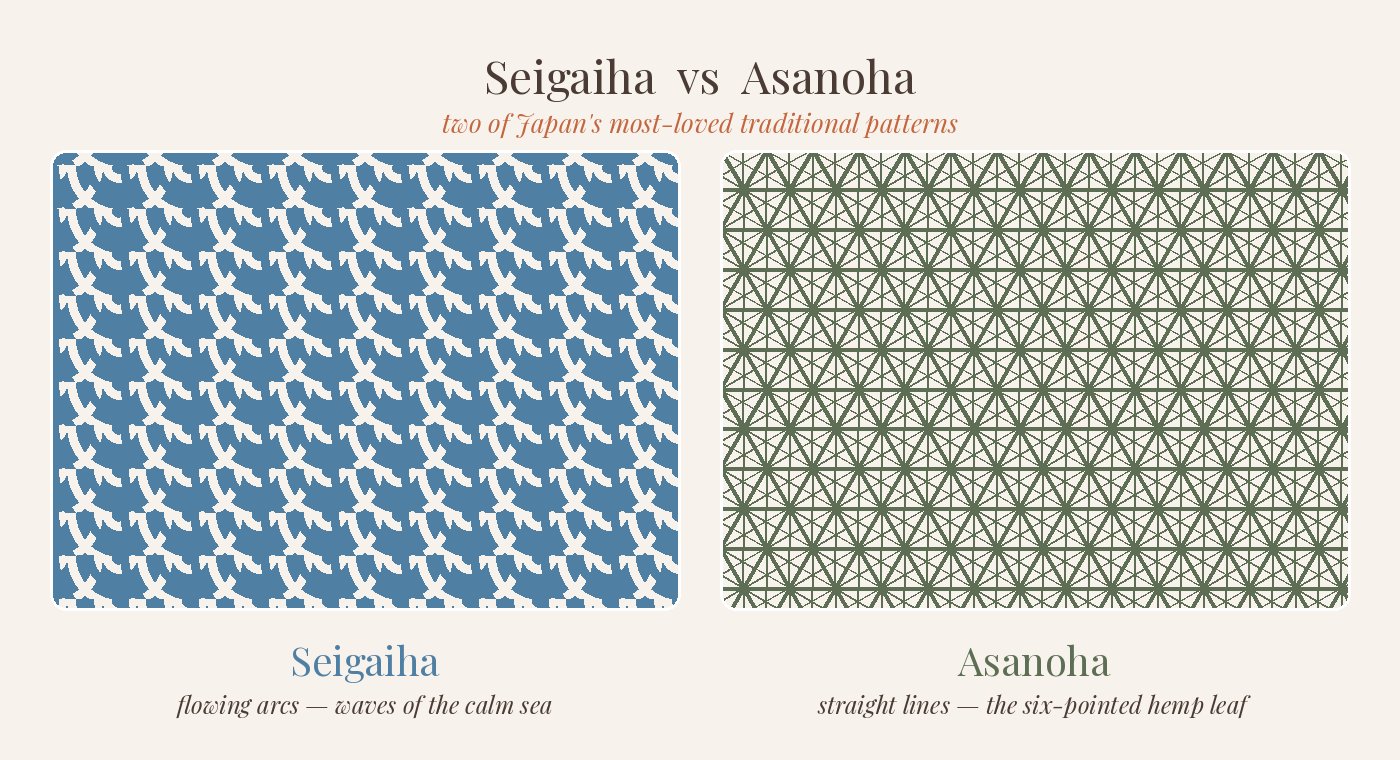
Japan has a whole language of traditional patterns, and it helps to be able to tell a few of them apart. Seigaiha is the one made of layered arcs, or waves. Compare it with asanoha, the six-pointed hemp-leaf design built from straight lines, which symbolizes healthy growth and protection. Where asanoha feels sharp and star-like, seigaiha feels rounded and flowing — two different moods drawn from the same love of nature. If you enjoy learning these, our guide to yukata patterns and their meanings explores several more.
Seigaiha: Frequently Asked Questions
How do you pronounce seigaiha?
It is pronounced roughly say-guy-ha, with three even beats. The word combines the characters for “blue,” “sea,” and “wave.”
What does the seigaiha pattern symbolize?
Calm, never-ending waves stand for peace, resilience, and good fortune that continues forever. It is considered an auspicious pattern and is a popular choice for celebrations and gifts.
Is seigaiha only worn in summer?
Not necessarily. Its water imagery feels especially cool and refreshing on summer yukata, but the motif itself is not limited to summer. In kimono, the sense of season also depends on the fabric, the garment, and the other patterns it is paired with.
What colors does seigaiha come in?
Traditionally deep indigo and white, echoing classic Japanese textiles. Today it appears in every shade, from soft pastels to coral, gold, and monochrome.
Why does seigaiha look familiar from anime and pop culture?
Traditional Japanese patterns are often woven into anime character designs, backgrounds, and merchandise, so many fans recognize seigaiha without knowing its name — then go looking for its meaning, just as you are now.