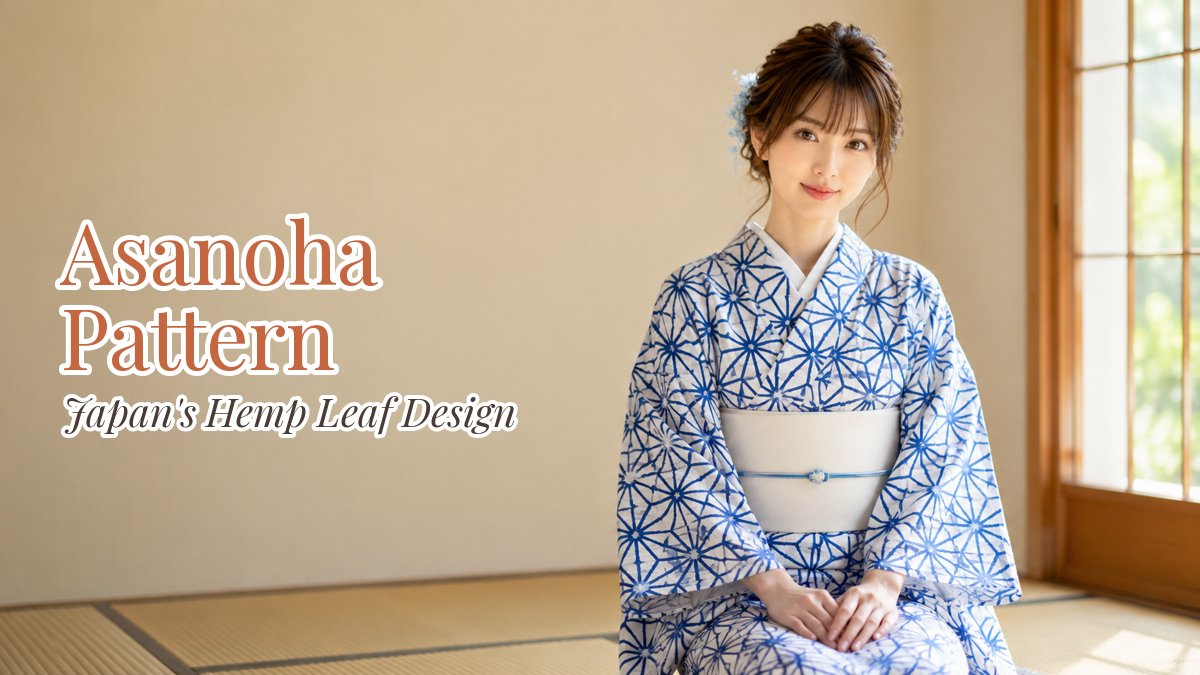
You may already know this pattern without knowing its name. A lattice of interlocking hexagons, each split into slender points like the leaves of a plant — this is the asanoha pattern, one of Japan’s most beloved traditional designs. Many people first meet it on Nezuko’s kimono in Demon Slayer, but the motif is far older than any anime. It appears in Buddhist temple art from the Heian period and has carried a quiet wish for centuries: that a child grow up strong, straight, and protected.
What Is the Asanoha Pattern?麻の葉 Asanoha
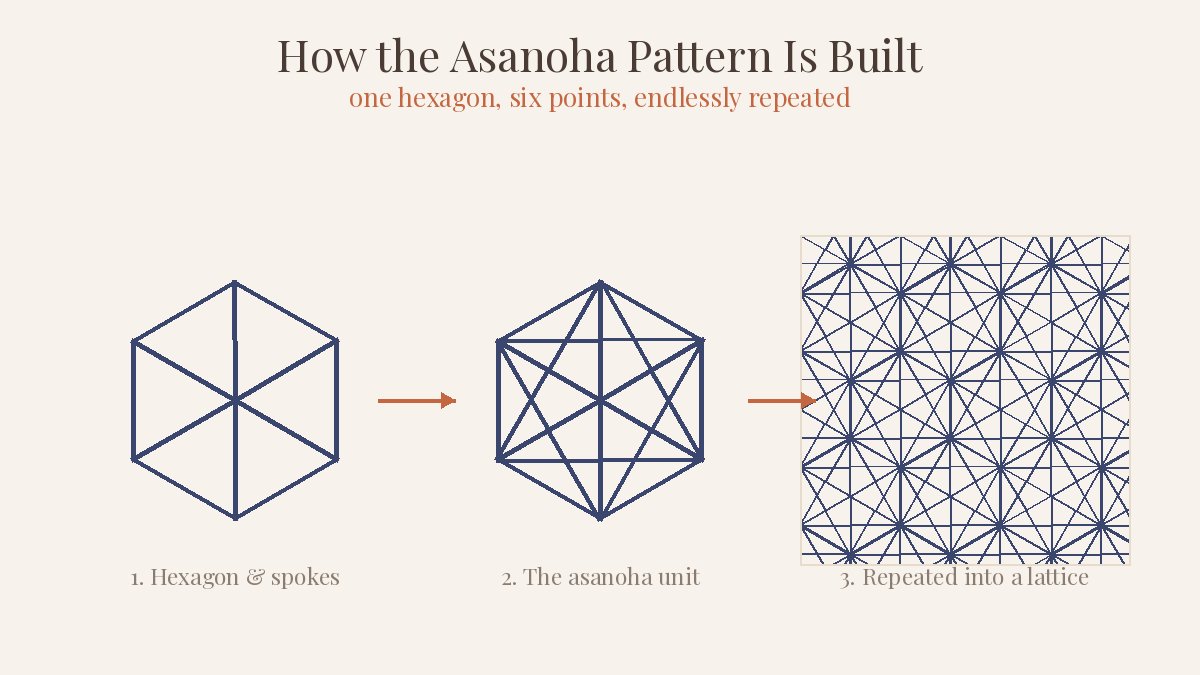
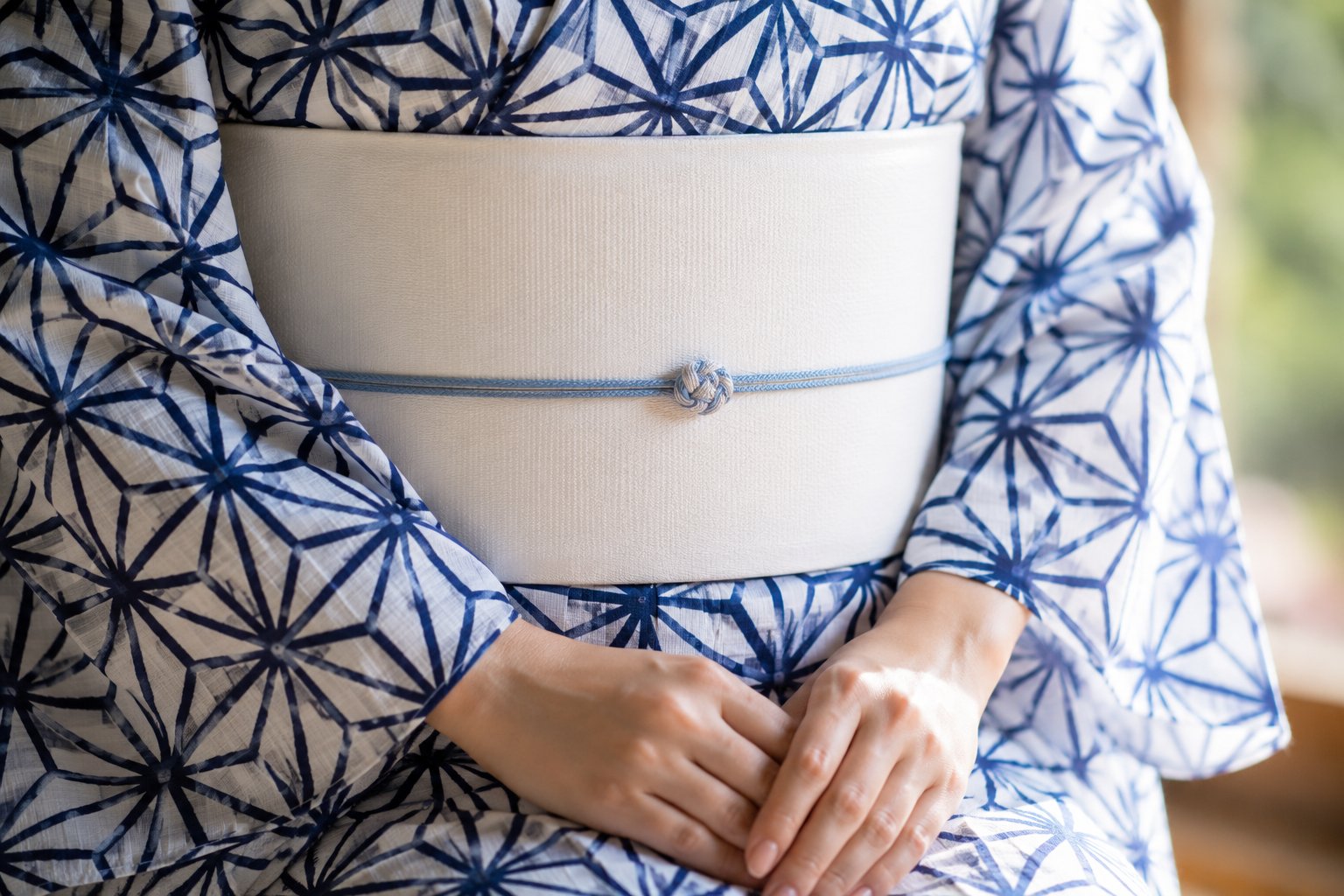
The asanoha pattern is a geometric design built from a single repeating unit: a regular hexagon, filled with lines that radiate outward into six slim points. Repeat that unit across a surface and the points connect into a continuous, star-like lattice. From a distance it reads as texture; up close, the geometry reveals itself.
One thing worth understanding right away is that asanoha is a pattern, not a picture. It does not depict a real plant leaf in any realistic way — it is an abstract, stylized shape said to resemble one. Because it is made entirely of straight lines, it translates beautifully across many crafts: dyeing, weaving, and especially embroidery. If you enjoy Japanese traditional kimono patterns, asanoha is one of the first names worth learning.
What “Asanoha” Means麻の葉 の意味
The name is refreshingly literal. Asa (麻) means “hemp,” and ha (葉) means “leaf” — so asanoha translates directly to “hemp leaf.” The design earned that name because its six-pointed shape resembles the leaf of the hemp plant. This is exactly why English speakers often call it the hemp leaf pattern.
Keep in mind that the name points to a shape, not a subject. Asanoha is a stylized geometric motif inspired by the look of the leaf — not a botanical drawing of the plant itself. That distinction is the whole character of the design: clean, orderly, and mathematical rather than pictorial.
The Meaning Behind Asanoha込められた願い
What makes asanoha more than a pretty geometry is the wish woven into it. Two meanings sit at its heart.
- Healthy growth. Hemp grows quickly and straight, shooting upward without much tending. That vigor made asanoha a symbol of strong, healthy growth — which is why it was long a favorite for babies’ first garments and undergarments, carrying the hope that a child would grow up straight and well.
- Protection from misfortune. The strict, repeating order of the geometry was believed to ward off evil. A pattern this regular, this unbroken, was thought to leave no gap for misfortune to slip through.
Together, these gave asanoha its enduring role as a pattern of blessing — a design you give to someone you want to see thrive.
A Long History麻の葉の歴史
Asanoha is a design with deep roots. It appears as a geometric motif in Buddhist temple art of the Heian period (794–1185), decorating the robes and settings of religious statuary — a sign of how far back its life in Japan reaches.
Its leap into everyday fashion came much later, in the late Edo period, and the stage helped carry it there. The kabuki actor Iwai Hanshiro V wore an asanoha kanoko (a tie-dyed asanoha) in a pale asagi blue for the play Yaoya Oshichi, and the look became so admired that the pattern picked up the nickname “Hanshiro kanoko.” Around the same period, the actor Arashi Rikan drew acclaim using asanoha in the role of Osome. Through celebrated performances like these, the pattern spread from the stage into the wardrobes of ordinary women. From there, asanoha settled in for good as a staple of kimono, yukata, and craftwork.
The Demon Slayer Connection鬼滅の刃 と麻の葉
For a global audience, one image did more than any history book to make asanoha famous: the pink-and-white asanoha on Nezuko’s kimono in Demon Slayer. Almost overnight, a centuries-old Japanese motif became instantly recognizable around the world.
Fans and commentators often connect the pattern’s traditional meanings — healthy growth and protection from evil — to Nezuko’s story, a character who keeps her humanity even after being turned into a demon. It is a lovely reading, though it is worth noting this is an interpretation offered by fans and media rather than an official, stated part of the series. If you came to kimono through anime, our guide to Demon Slayer kimono patterns looks at the other motifs and characters in the same way.
Where You’ll See Asanoha麻の葉が使われる場面
Once you know the shape, you start noticing it everywhere. Asanoha turns up across both traditional and modern Japanese life.
Kimono and yukata
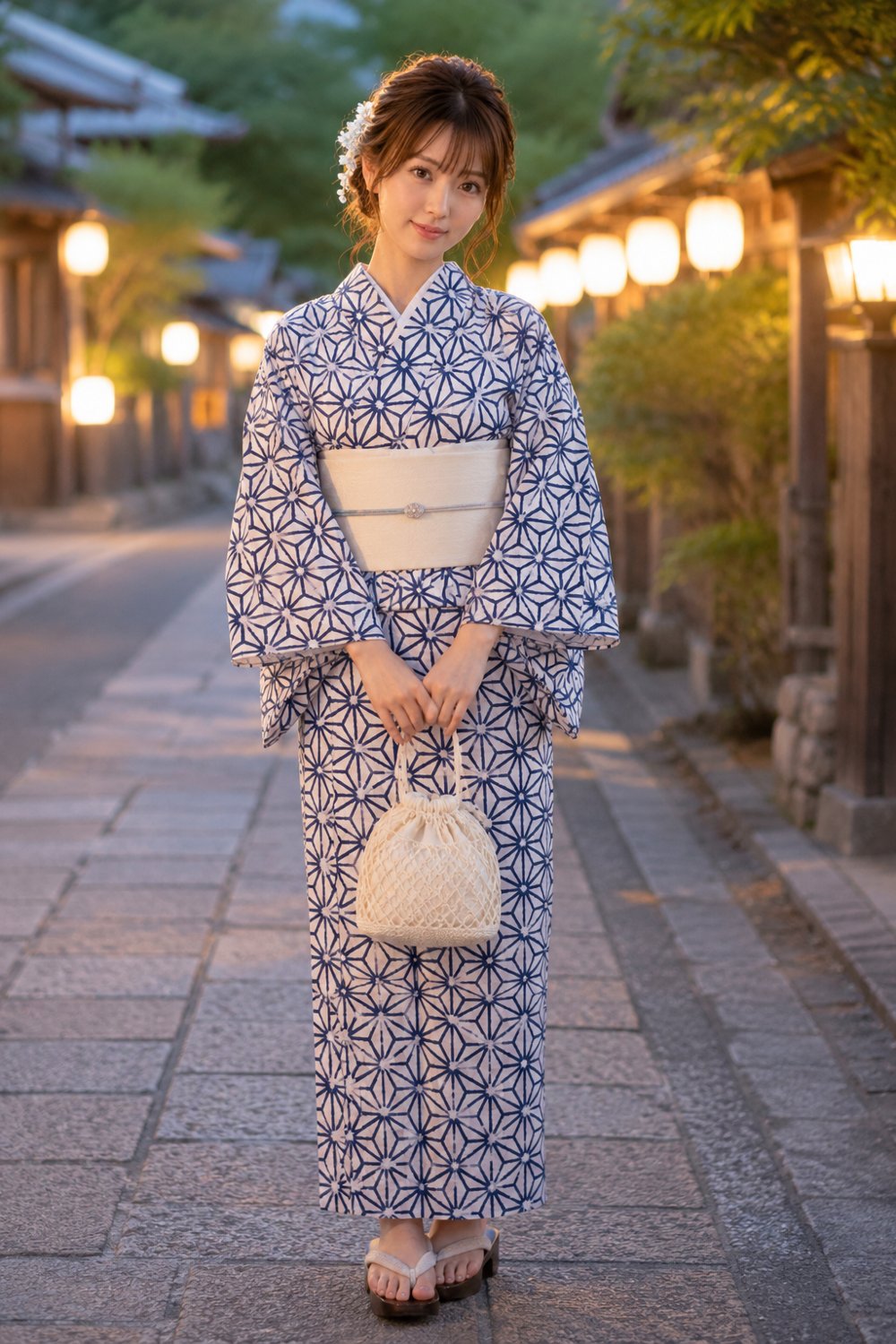
Asanoha is a well-loved choice for both kimono and summer yukata. Its crisp geometry feels cool and clean, which makes it especially popular on summer yukata — but it is not a summer-only pattern. As a timeless geometric design, it is worn comfortably all year round.
Sashiko embroidery
In the world of sashiko — Japan’s traditional running-stitch embroidery — asanoha is one of the signature patterns. Because the whole design is straight lines, it lends itself perfectly to needle and thread, and the hemp leaf pattern is a classic sashiko project for beginners and experts alike.
Crafts and modern design
Beyond cloth, asanoha appears in wooden kumiko latticework, ceramics, and traditional sweets. And it has aged remarkably well: today you will find it on stationery, homeware, interiors, and textiles, where its clean geometry fits right in with contemporary design.
Enjoying Asanoha Today現代での楽しみ方
If you would like to bring a little asanoha into your own wardrobe, it is one of the easiest patterns to start with. On a yukata, obi, or small accessory, it reads as elegantly Japanese without feeling costume-like.
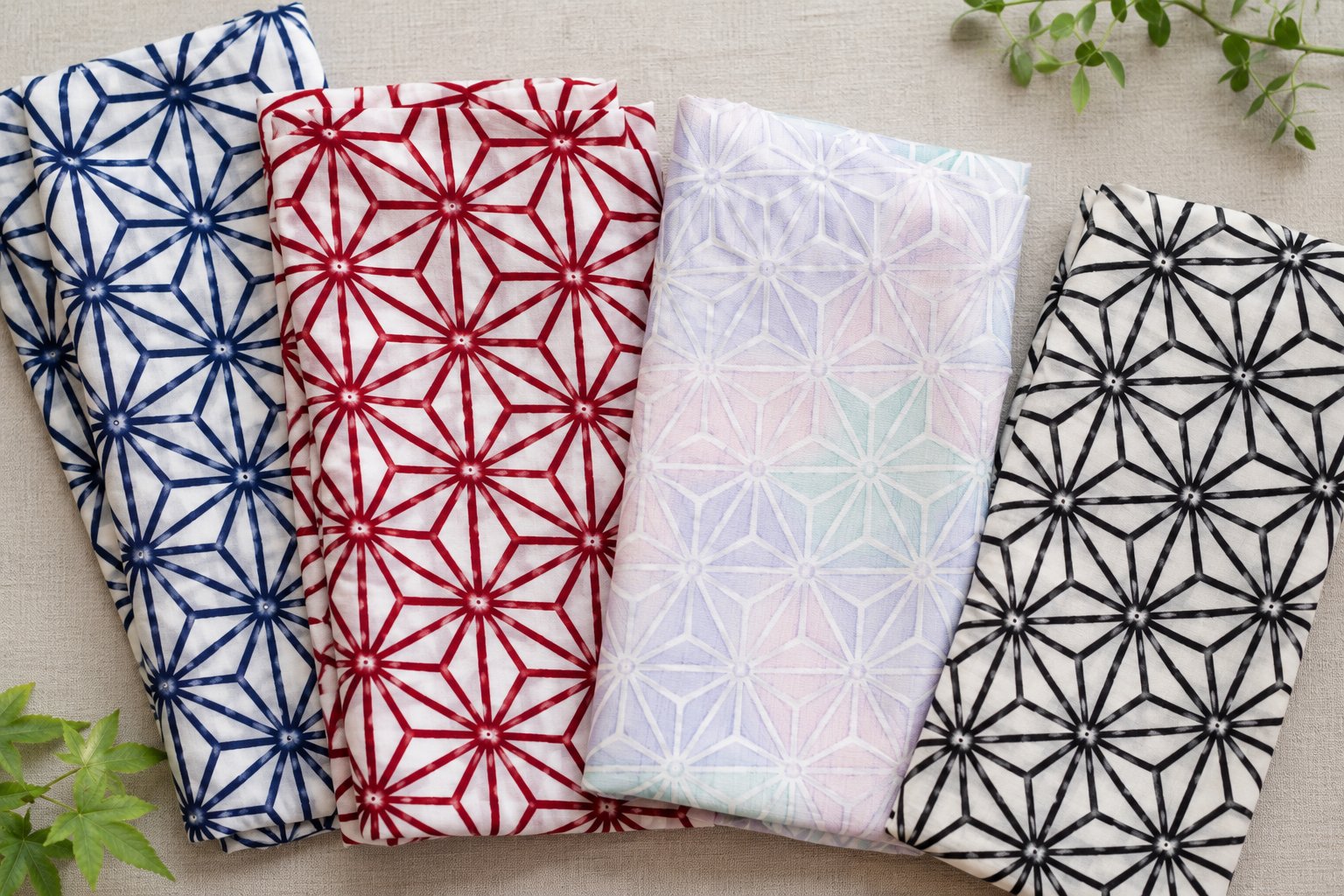
For a traditional feel, look for the classic color pairings — indigo, crimson, or white. For something more modern, asanoha also appears in soft pastels and clean monochrome, which suit contemporary rooms and outfits beautifully. Even a hand towel (tenugui) or a small pouch is a lovely, low-commitment way to enjoy the pattern.
Asanoha Pattern FAQよくある質問
What does the asanoha pattern mean?
It symbolizes healthy growth and protection from misfortune. Because hemp grows quickly and straight, the pattern became a wish for children to grow up strong and well, and its strict geometry was believed to ward off evil.
Is asanoha related to marijuana?
No. Asanoha is a stylized geometric pattern inspired by the shape of a hemp leaf, and culturally it carries meanings like growth and protection. It has been a cherished decorative motif in Japan for centuries, appearing on kimono, embroidery, and craftwork.
Why is asanoha in Demon Slayer?
It appears on Nezuko’s kimono. Its traditional meanings of growth and protection are often linked to her story, though that connection is a fan and media interpretation rather than an official one.
Is asanoha only for summer?
It is especially popular on summer yukata thanks to its cool, crisp look, but it is a year-round geometric pattern, not a seasonal one.
How is asanoha different from other geometric patterns?
Asanoha is built from six-pointed hexagons resembling a hemp leaf. It differs from seigaiha (overlapping wave arcs) and kikko (a plain hexagonal “tortoiseshell” grid), each of which carries its own shape and meaning.
Keep exploring Japanese patterns and style:
Traditional Kimono Patterns · Demon Slayer Kimono Patterns · Yukata vs Kimono · Komon: the everyday kimono
A simple repeat of six-pointed stars — and inside it, a wish that has been passed down for generations: grow straight, grow strong, stay safe. That is the quiet beauty of the asanoha pattern.