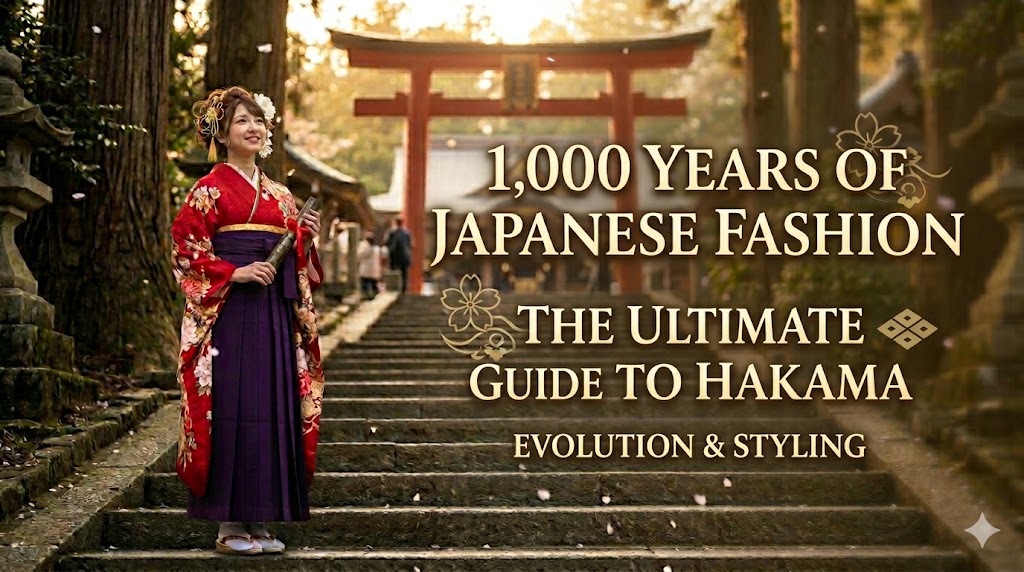
Maybe you spotted one in a martial arts film, in a Japanese graduation photo, or scrolling through a fashion feed — and wondered: what exactly is that? Trousers? A skirt? Something else entirely?
Here’s the short answer first, then everything else: a thousand years of history, every type, who wears them and when, how to put one on, and where to buy. Let’s dive in! 🎌
🏯 What Is a Hakama? A Simple Definition
A hakama (袴) is a traditional Japanese garment worn over the lower half of a kimono. It ties at the waist, falls to the ankles, and is deeply pleated. Some hakama are divided into two legs like wide trousers; others are undivided and flow like a long skirt. Both are hakama.
The key point, and the one most people miss: a hakama is never the whole outfit. It is an over-garment. Underneath there is always something else — a kimono for ceremonies and graduations, a keikogi for martial arts. If you want to see exactly how those two layers sit together, we walk through it in wearing a kimono with a hakama.
Along with the kimono and the yukata, the hakama is one of the cornerstones of traditional Japanese fashion. You’ll see it today on martial artists, Shinto priests, graduating students, and grooms at weddings — and increasingly on people who simply like the silhouette.
What Does the Word “Hakama” Mean?
The origin of the word itself isn’t fully settled, but the most widely cited explanation traces it to haku (穿く, “to put on” — the verb Japanese uses for anything you step into, like trousers or shoes) combined with mo (裳), an ancient skirt-like garment worn at the imperial court. Read that way, hakama means something close to “the mo you step into.”
A small note on English usage: hakama works as both singular and plural. One hakama, five hakama. You’ll occasionally see “hakamas,” but it isn’t standard.
There is a symbolic meaning too, and it’s one of the loveliest details in Japanese dress — each of the seven pleats stands for a virtue of the samurai code. We break that down further down the page.
Umanori vs Andon Hakama: Pants or Skirt? 🤔
This is the single most common question about hakama — and the answer is: both types exist.
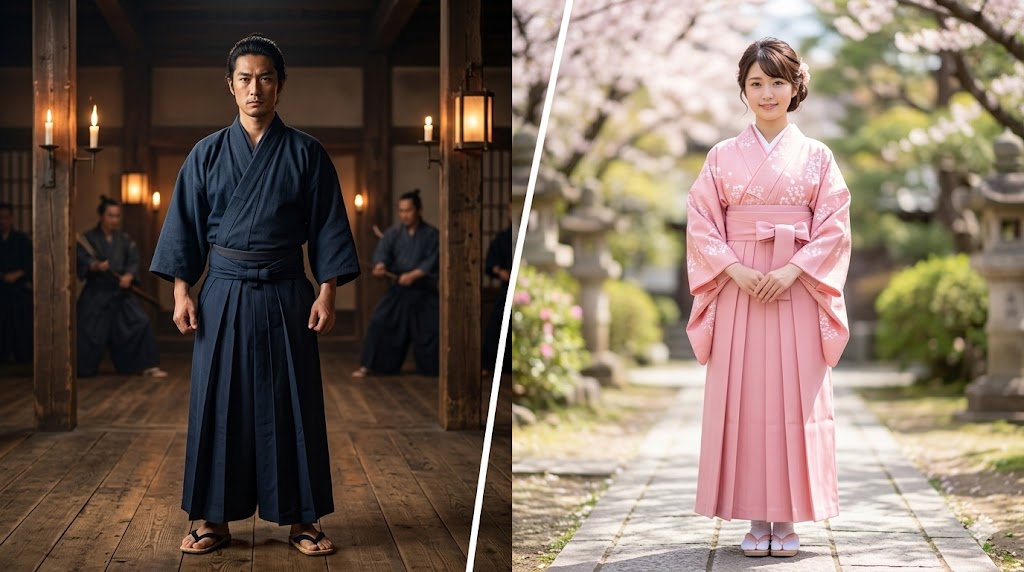
“Horse-riding hakama” — divided into two legs like trousers. Worn by samurai on horseback. The pants version.
“Lantern hakama” — undivided, flows freely like a skirt. Popularized by Meiji-era female students. The skirt version.
Umanori = Uma (horse) = legs apart = pants.
Andon = lantern shape = round & flowing = skirt. Easy! 😄
📜 The History of Hakama: 1,000 Years of Japanese Fashion
Hakama aren’t just clothing — they’re a living piece of Japanese history. Here’s how they evolved over a thousand years.
The earliest hakama were court attire — formal, elaborate, worn only by nobles and aristocrats. A symbol of status, not available to ordinary people.
Warriors adopted the umanori hakama for practicality on horseback. The iconic 7-pleat design became standard — each pleat representing a samurai virtue of Bushido.
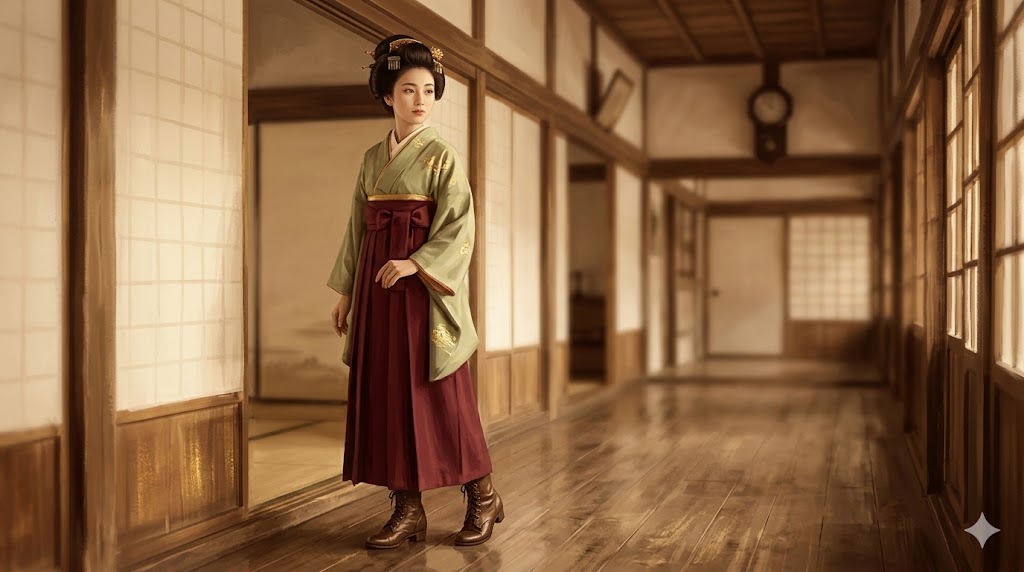
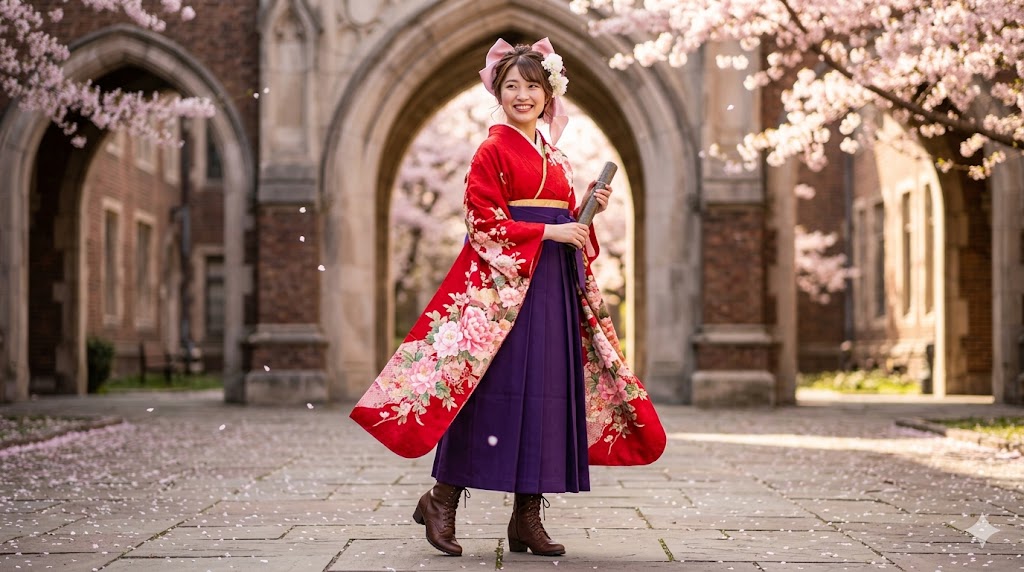
Female students at Western-style schools needed practical clothing. The andon hakama — worn with a kimono and leather boots — became the symbol of the modern Japanese woman. This haikara (ハイカラ) style is exactly what you see at graduation ceremonies today!
Today hakama appear in graduation ceremonies, martial arts dojos, Shinto shrines, and global fashion runways. Brands from MUJI to Yohji Yamamoto have embraced the silhouette worldwide.
🗾 Hakama in Japan Today: When & Where You’ll See Them
Hakama in Japan aren’t museum pieces — they’re a living part of the culture. If you visit Japan, here’s exactly when and where you’ll spot them in real life.
| Occasion | When | What You’ll See |
|---|---|---|
| Graduation Ceremonies | Late March | Thousands of female students in furisode + colorful hakama. The single biggest hakama event in Japan. |
| Shinto Shrines | Year-round | Miko in scarlet hakama and priests in formal hakama, especially busy at New Year’s hatsumode. |
| Martial Arts Dojos | Year-round | Kendo, aikido, kyudo practitioners in navy or black hakama. |
| Coming-of-Age Day | 2nd Monday of January | Young men in montsuki haori hakama celebrating turning 20. |
| Weddings | Year-round | Grooms in formal black montsuki haori hakama at Shinto ceremonies. |
| Tourist Rental Shops | Year-round | Kyoto and Asakusa shops offer hakama rental — yes, visitors can wear them too! |
Want to see hakama at their absolute best? Visit Japan in late March — graduation season. Train stations near universities become a parade of gorgeous furisode-and-hakama combinations. It’s one of my favorite sights of the year! 📸
🎋 The 7 Pleats of the Samurai — Hidden Meaning
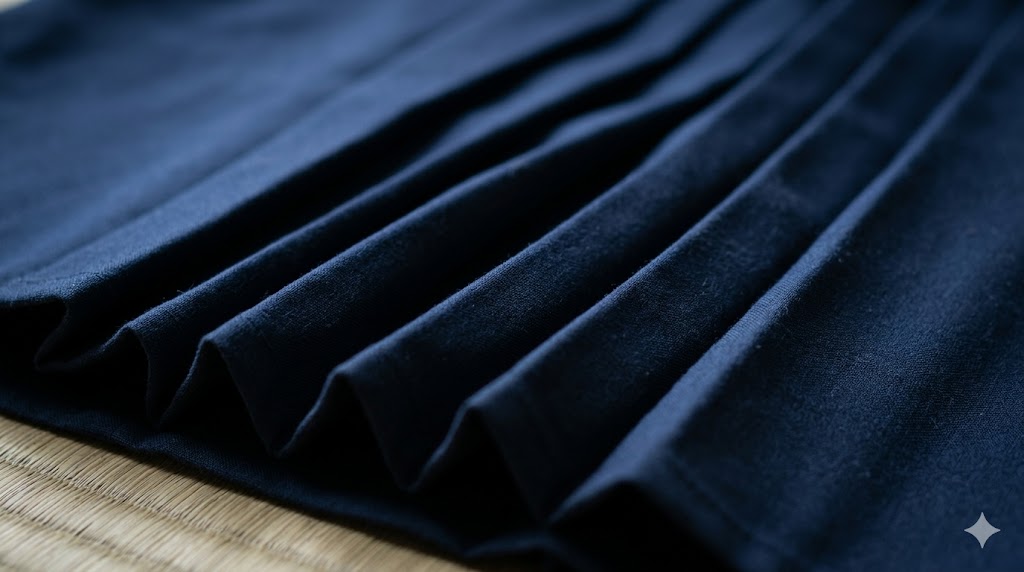
Every pleat in a traditional hakama carries meaning. The 7 pleats (5 front, 2 back) represent the seven virtues of Bushido — the samurai moral code.
When you put on hakama — even modern hakama pants — you’re wearing centuries of philosophy. Every pleat is a reminder of values that shaped an entire civilization. That’s why hakama feel different from ordinary clothing. 🙏
👘 Types of Hakama: A Complete Overview
By Occasion & Use
| Type | Who Wears It | Key Feature |
|---|---|---|
| Montsuki Haori Hakama | Men · Formal ceremonies | Crested kimono + haori jacket + hakama. Japan’s tuxedo equivalent. |
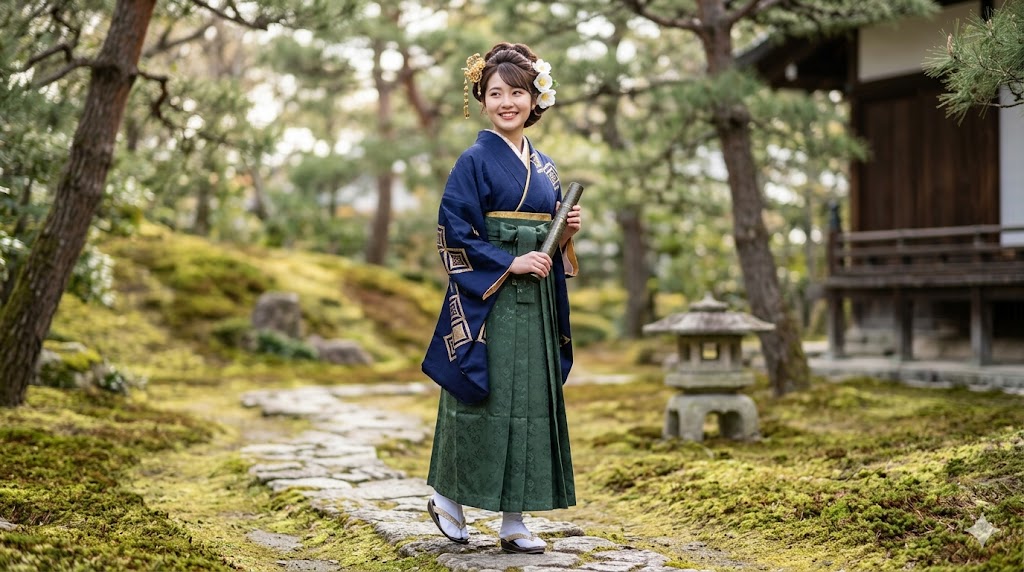
| Furisode + Hakama | Women · Graduation | Long-sleeved kimono + colorful hakama. The iconic graduation look. |
| Miko Hakama | Shrine maidens | Always red (scarlet) + white kimono. Sacred attire. |
| Martial Arts Hakama | Kendo, Aikido, Iaido… | Dark navy or black, sturdy tetron or cotton. |
| Modern Hakama Pants | Fashion lovers worldwide | MUJI, Yohji Yamamoto, streetwear versions. |
Which hakama you wear is only half the picture — the kimono underneath sets the formality of the whole outfit. Our guide to the main types of kimono ranks them from casual to ceremonial.
By Material
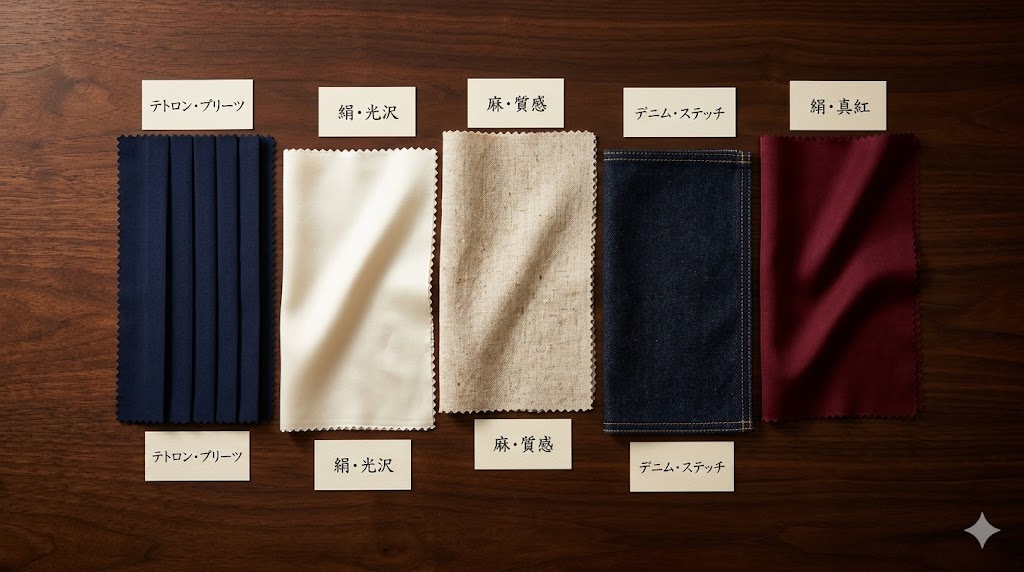
🎌 Hakama Colors & Their Cultural Meaning
| Color | Meaning / Use |
|---|---|
| 🔴 Red / Scarlet | Sacred & protective. Worn by miko (shrine maidens). Symbolizes vitality. |
| ⚪ White | Purity and spiritual elevation. High-ranking martial arts or Shinto ceremonies. |
| 🔵 Dark Navy | The martial arts standard. Dignified, practical, doesn’t show wear. |
| ⚫ Black | Most formal men’s attire. Kuromontsuki = Japan’s white-tie equivalent. |
| 💜 Purple | Nobility & elegance. Most popular for women’s graduation hakama. |
| 🟢 Forest Green | Natural, youthful. A growing graduation trend. |
| 🟡 Gold / Yellow | Festive and auspicious. Worn at special celebrations. |
Purple (murasaki) is the #1 most popular graduation choice — centuries of noble history behind it. But deep green is trending fast! Make sure your hakama color contrasts beautifully with your furisode kimono. 💕
👨 Hakama for Men: Traditional & Modern
Men’s Formal Hakama — Montsuki Haori Hakama (紋付羽織袴)
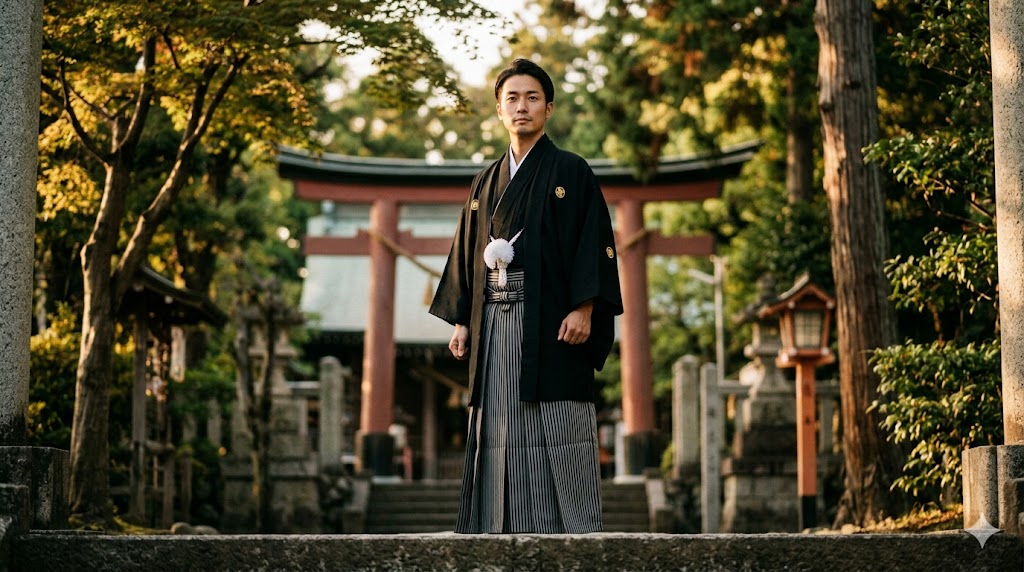
For formal occasions — weddings, funerals, Coming-of-Age Day, graduation — Japanese men wear the montsuki haori hakama. Think of it as Japan’s answer to the tuxedo.
This three-piece arrangement is the highest point of the kimono-and-hakama pairing. If you’re curious how the layering works in general, and how it shifts between formal and everyday, we cover it in wearing a kimono with a hakama.
Modern Men’s Hakama Fashion
The most searched hakama-inspired pants brand. Minimalist, affordable, in black/grey/navy.
Deconstructed hakama silhouettes as avant-garde fashion. Wide, asymmetric, architectural.
Indigo-dyed, folk-inspired hakama pants blending Japanese craft with street style.
Japanese craft + Americana. Hakama pants visvim are collector items.
👩 Hakama for Women: Graduation & Beyond
The Graduation Ceremony Look (卒業式袴)
Miko Hakama — Shrine Maiden Style (巫女袴)
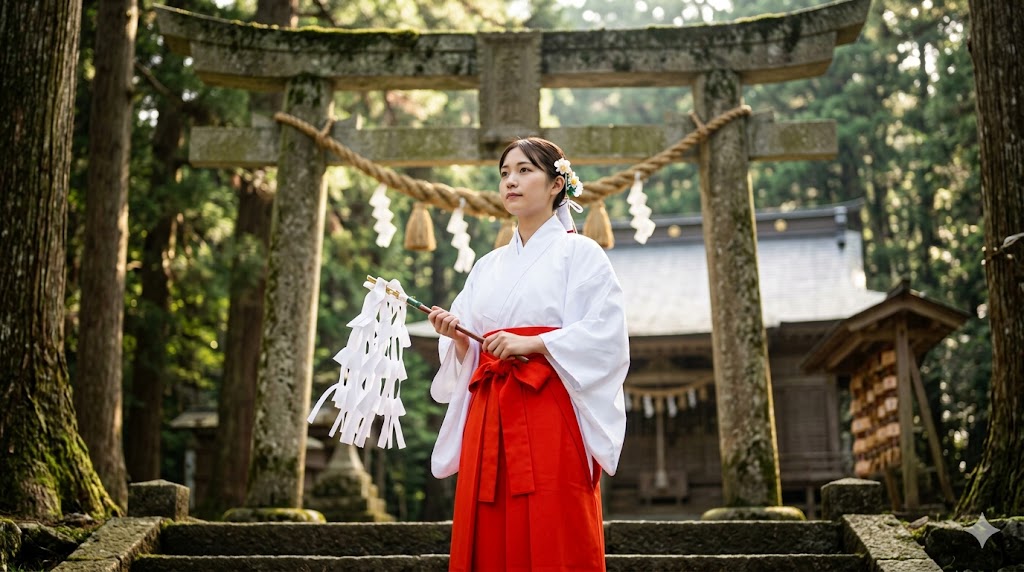
The most iconic female hakama image: scarlet red hakama worn by shrine maidens (miko). The white kosode + crimson hakama represents purity and divine protection — seen year-round at Shinto shrines, especially during New Year’s hatsumode.
⚔️ Hakama in Martial Arts: A Complete Guide
Nearly every traditional Japanese martial art uses the hakama, but the fabric, the weight, and the rank at which you earn the right to wear one all differ by discipline. Here’s the quick version — for sizing, materials, and care broken down art by art, see our dedicated guide to hakama for martial arts.
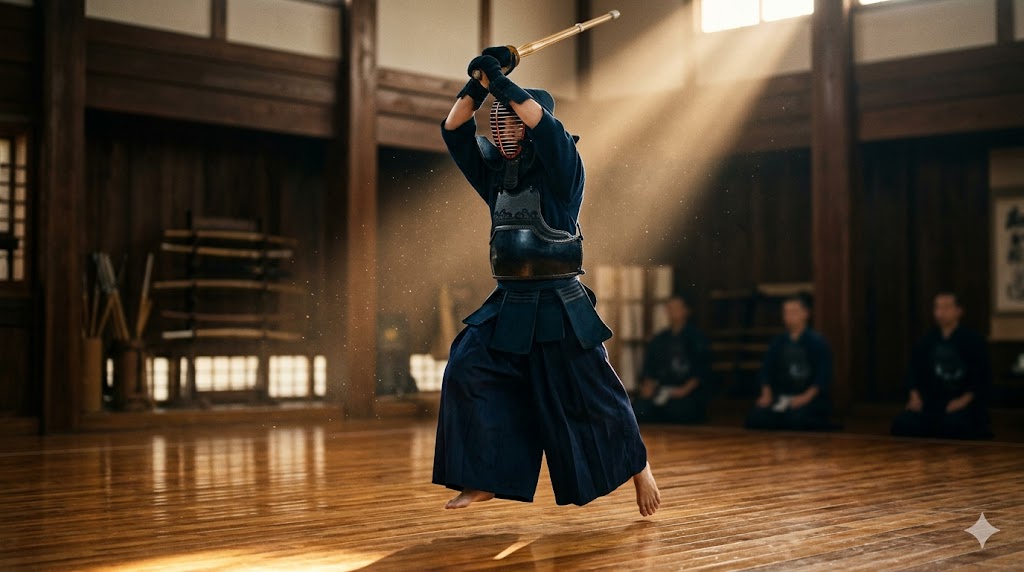
Worn from 1st kyu or shodan rank. Dark navy over the keikogi. Must be sturdy for intense practice. The flowing hakama creates visual drama with every cut.
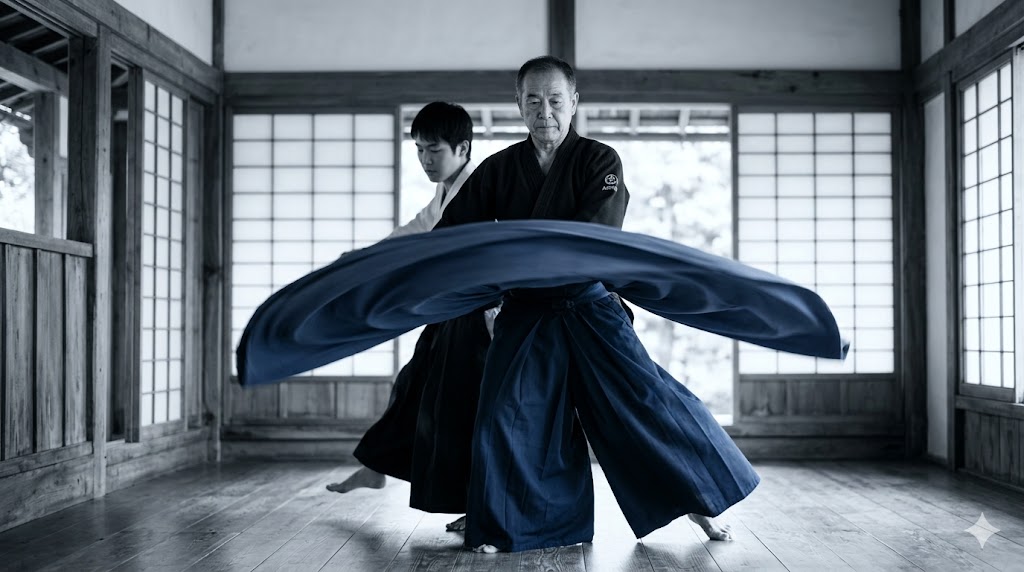
In many schools, worn from day one. Andon style for free circular movement. Said to obscure footwork — hiding the subtle positioning that makes techniques work.
Umanori style essential for precise footwork. Silk hakama preferred for demonstrations; tetron for daily practice.
Appearance is inseparable from technique. Senior practitioners wear formally decorated hakama, sometimes with elegant embroidery.
Naginata always uses hakama as standard uniform. Some karate and judo schools incorporate hakama at senior levels.
✨ Modern Hakama Fashion: Global Trends
The MUJI Hakama Pants Phenomenon
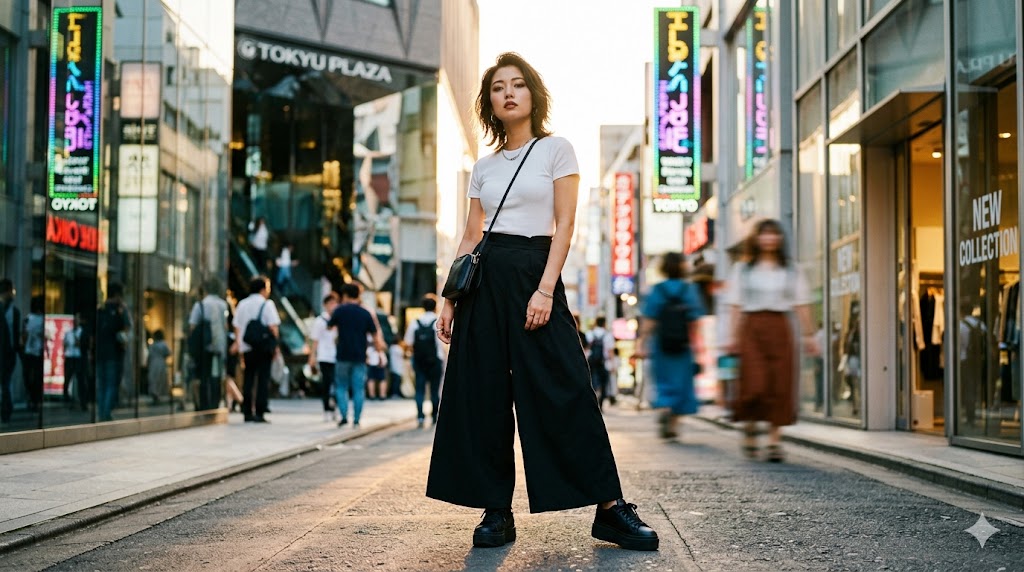
The most searched brand for hakama-inspired fashion globally is MUJI (無印良品). Their double-layered hakama pants have become a worldwide phenomenon — simple, minimalist, effortlessly stylish.
| MUJI Version | Key Features | Best For |
|---|---|---|
| Double-Layered | Two fabric layers, beautiful drape and body | Going out, semi-casual occasions |
| Cotton Single Layer | Lighter, breathable, relaxed feel | Everyday wear, warmer weather |
| Linen Version | Natural texture, airy aesthetic | Summer, casual outings |
The black double-layered version sells out fastest! Set a restock alert on muji.com/jp — international shipping available. 💙
Hakama Pants in Streetwear & Techwear
- Techwear hakama pants — Cyberpunk-inspired, utility pockets, technical fabrics
- Hakama pants streetwear — Relaxed wide-leg with modern proportions
- Denim hakama — Tradition meets Western fabric, surprisingly cool
- Yohji Yamamoto hakama pants — High-fashion deconstructed tailoring
- Sillage / Maharishi hakama pants — Cult-following niche brands
Modern hakama pants are a whole world of their own — from MUJI’s cult double-layered pants to techwear and denim takes. For sizing, styling, and where to buy each version, see our full guide to hakama pants for everyday wear.
👘 How to Wear Hakama — Step by Step
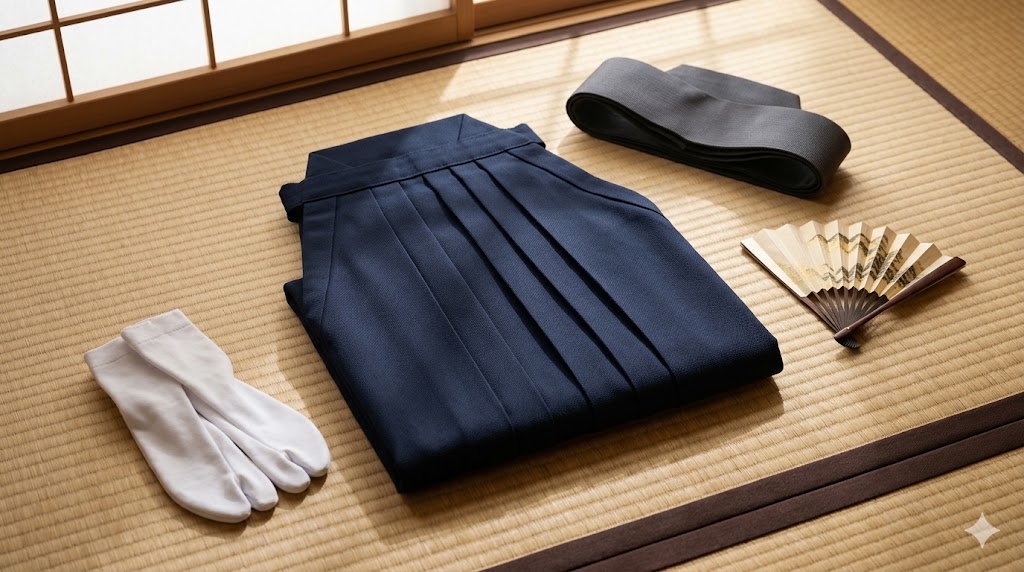
What You Need First
- The hakama itself
- A kimono or keikogi underneath, already worn and secured
- Obi (belt) already tied — hakama sit on top of it
- Tabi socks (for traditional style)
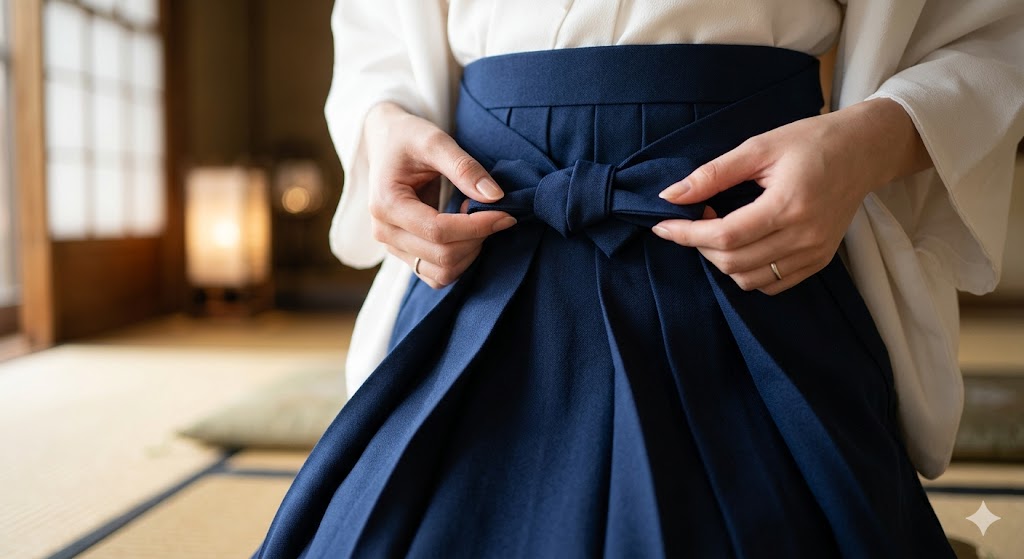
Hold the hakama in front of you. Place the front panel flat against your lower abdomen, just below your obi.
Take both front ties, wrap to your back, cross them, then bring back to your front.
Tie a flat bow at your front center. For formal occasions, use the jumonji (cross) tie.
Slip the rigid back panel into position over your lower back, tucking it under the front ties.
Bring back ties to your front, thread under the front knot, then tie firmly at the rear.
Hem should just clear the floor at the front. Check all pleats fall straight. The koshi-ita encourages perfect posture naturally.
Never stuff hakama into a bag — the pleats will lose their shape. Lay flat, re-fold each pleat carefully, then wrap the himo around the folded package. Or use a hakama hanger (袴ハンガー) that supports the waistband evenly.
How to Wash Hakama
| Material | Method | Key Tip |
|---|---|---|
| Tetron | Hand wash or gentle machine, cool water | Re-fold pleats while still damp |
| Cotton | Hand wash in cool water | Dry flat, re-press pleats with iron |
| Silk | Dry clean ONLY | Never wet — irreversible damage |
| Linen | Hand wash in cool water | Expect slight shrinkage — size up |
🛍️ Where to Buy Hakama
In Japan
Found in every major city. Full selection, expert staff who can fit and advise.
~¥15,000–30,000 including full dressing. Perfect for graduation — book months ahead!
Best area for kimono and hakama shopping. Multiple stores, competitive prices.
Isetan Shinjuku, Takashimaya — attentive service, higher-end formal selection.
Online (International)
Top martial arts hakama brand. Ships worldwide. Quality tetron and cotton.
Highly respected suppliers with good international sizing guides.
Fashion hakama pants, international shipping. Set restock alerts!
Amazon for budget martial arts; Etsy for custom, vintage, and handmade pieces.
Price Guide
❓ FAQ — Your Hakama Questions Answered
Mio’s Japan Style · kodomono-yume.com · Japanese culture & fashion for curious minds worldwide 🌍✨
Have questions? Leave a comment below! 💙