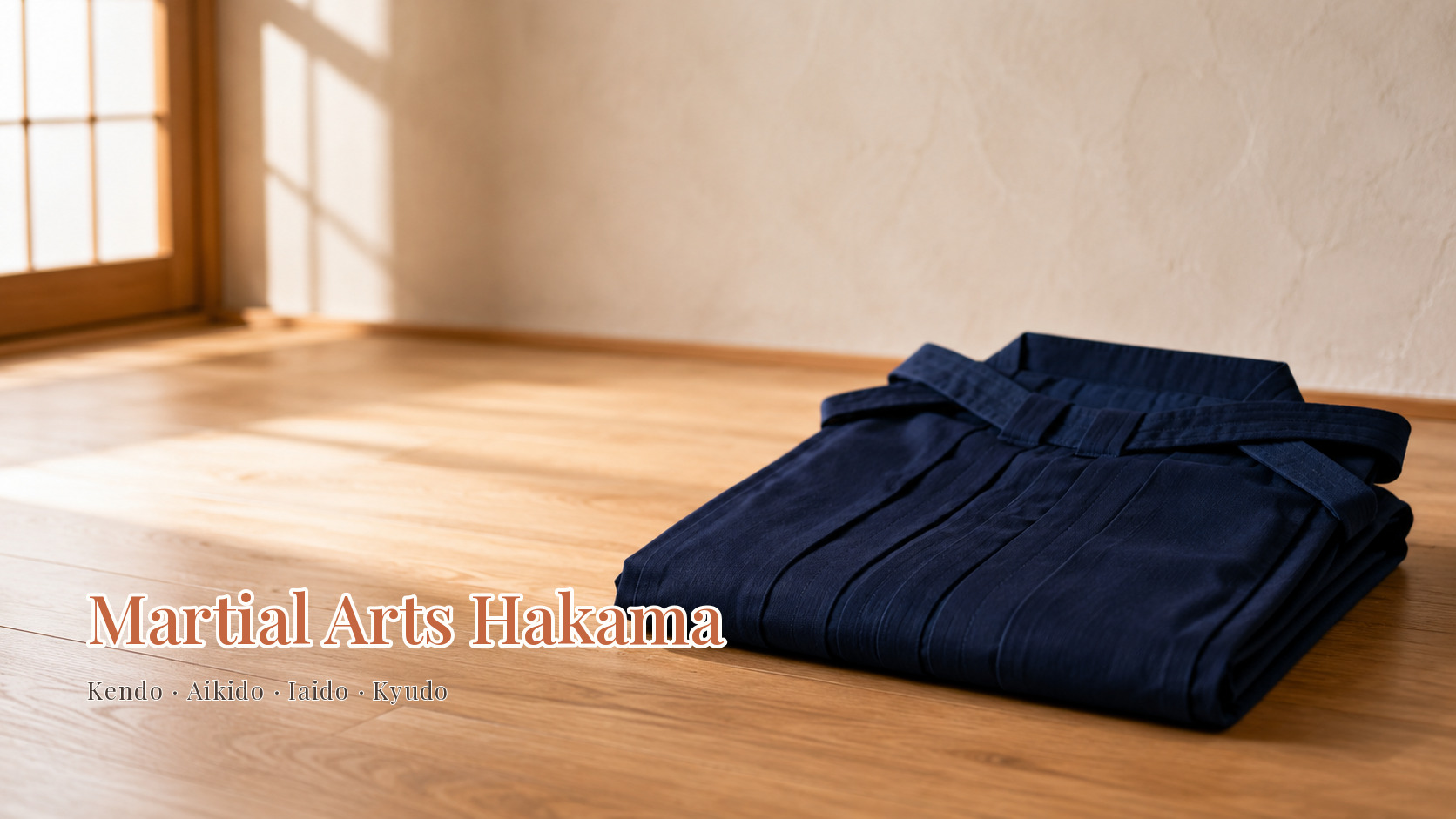
Say the word hakama and most people picture a graduation ceremony. Something formal. Something you wear once, photograph, and return to the rental shop.
In a dojo, a hakama is something else entirely. It is closer to equipment than to clothing. It gets sweated in, stepped on, washed, folded, and worn again next week.
And a kendo hakama is not the same garment as an aikido hakama. They can look nearly identical hanging on a rack, but they differ in weight, in fabric, and in how they move. That difference is not decorative. It comes from what each art asks the body to do.
This article is only about hakama for martial arts. How they differ between disciplines, how to choose your first one, how to size it, and how to care for it.
New to hakama in general? Start with our complete guide to hakama, which covers what they are, their history, and where they are worn outside the dojo.
Why Martial Artists Wear Hakama
Several explanations get passed down in dojos, and they are worth knowing even where they are hard to verify.
One is practical: the hakama hides your footwork. An opponent who cannot see your feet cannot read your next movement. It is a satisfying explanation, though some historians treat it as a later rationalization rather than the original reason.
One is about respect. A hakama is formal dress. Bringing one into a training hall marks that space as somewhere serious things happen.
And one is about the pleats. In kendo, students are often taught that the five front pleats represent the five virtues of Confucian thought, and the two back pleats stand for loyalty and filial piety.
It is worth being clear about what this is. It is a traditional interpretation passed down within Japanese dojos, not evidence of how the garment was originally designed. Different dojos explain it differently, and some do not teach it at all.
That said, the interpretation does real work. It turns getting dressed into a reminder of what you are actually training for. Whether or not a tailor centuries ago had virtue in mind, generations of students have.
How Hakama Differ by Martial Art
This is where the differences stop being abstract.
Kendo
The heaviest hakama you will encounter. Traditionally indigo-dyed cotton, thick enough that the pleats hold their shape on their own and the fabric makes an audible sound when you move.
Cotton kendo hakama are graded by weave density, marked with numbers like #6000, #8000, or #10000. Higher numbers mean heavier, denser, more expensive fabric. Beginners do not need the top grade.
The koshiita, the stiffened panel that sits at the small of your back, is firmest in kendo. It supports your posture.
Aikido
Lighter fabric is preferred here, and the reason is obvious once you have watched a class. Aikido involves falling, rolling, and sliding across the mat. Weight that feels dignified while standing still becomes a liability the moment you are on the ground. Tetron, a polyester blend, is a common choice.
When you start wearing a hakama in aikido, there is no universal rule. This is worth emphasizing.
Some dojos say black belt. Some say a specific kyu grade. Some have women wear hakama from the first class. Some make no distinction by gender at all. Two dojos in the same organization can differ.
Which means the answer you find online, including in this article, may not apply to you. The only reliable answer is your own instructor. Buying a hakama and then being told you are not ready for it is the outcome worth avoiding.
Iaido
Usually black or navy, and often tetron. Because iaido centers on drawing and sheathing a sword, the fabric must not catch or interfere with the blade’s path. Pleats that stay sharp matter more here than fabric that feels traditional.
Kyudo
Drawing a bow opens the upper body wide. A kyudo hakama needs to move with that without pulling or binding. Tetron is common for the same reasons as iaido.
Divided or Undivided?
Martial arts hakama are almost always umanori, the divided kind, with separate legs like wide trousers. Your legs move independently in every one of these arts, and an undivided hakama cannot accommodate that.
This is a real point of confusion, because the hakama seen at Japanese graduation ceremonies are frequently andon, the undivided kind that functions more like a long skirt. Same word, different garment, different purpose.
The full breakdown lives in our main guide: umanori vs andon hakama, explained.
Choosing Your Fabric
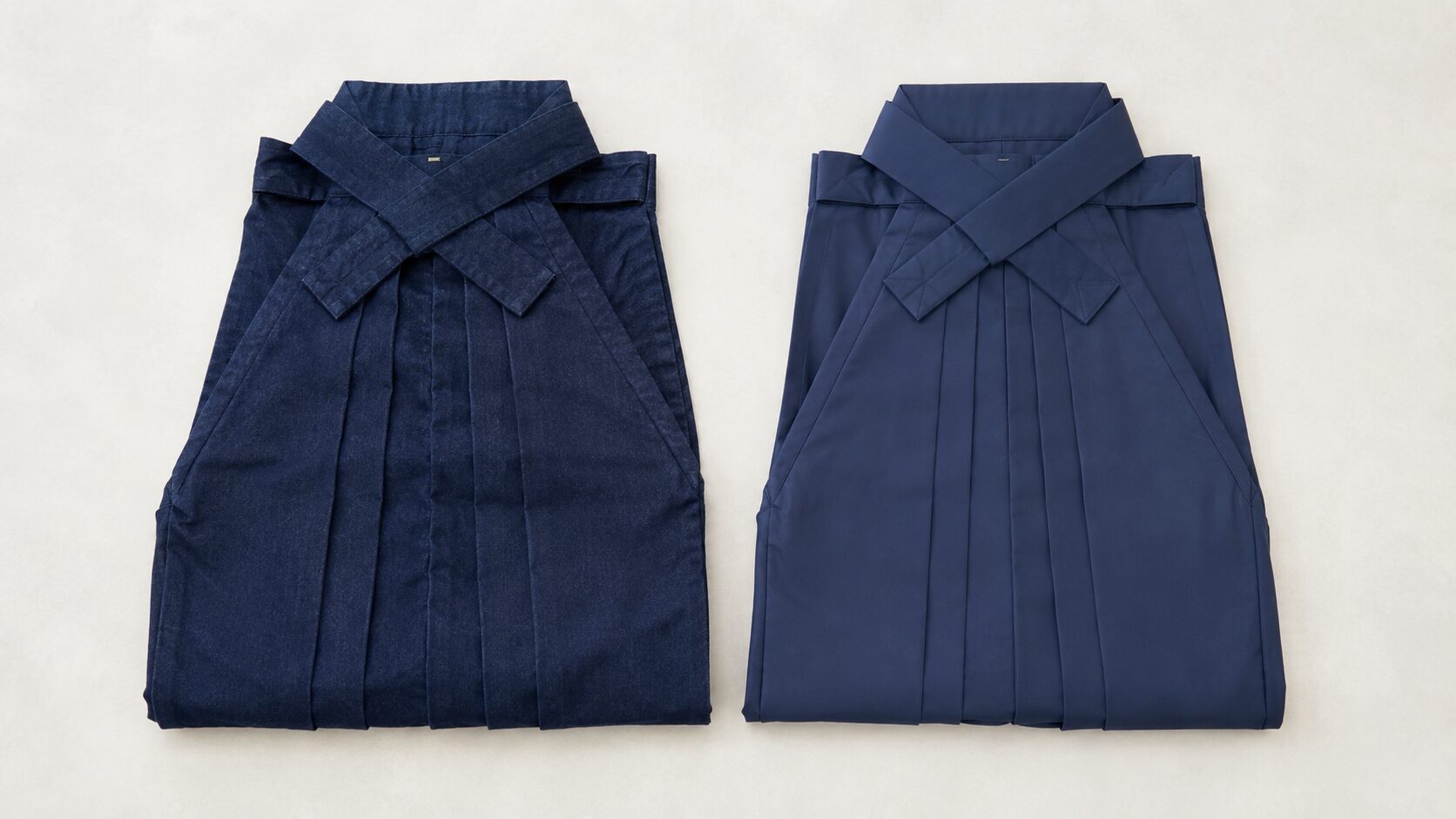
Cotton on the left, synthetic on the right. The difference shows in how the pleats hold.
Indigo-dyed cotton
Traditional. Heavy. It ages, and people who train in it tend to love it for exactly that. The trade-off is the indigo, which transfers onto your skin, your gi, and anything else it touches for the first stretch of its life. It also asks the most of you in care.
Tetron and other synthetics
Light. Machine washable. Pleats stay sharp with almost no effort. No bleeding, no fading, and considerably cheaper.
Natural indigo
Dyed with real indigo rather than synthetic dye. Expensive, and it deepens over years of training. This is a garment for someone who already knows they are staying.
For a first hakama, buy tetron. The reasoning is simple: at the point where you do not yet know whether you will still be training in a year, choosing the option with the highest maintenance burden is how a hakama becomes a chore. Indigo cotton is worth buying once you have decided you are committed. It will still be there.
Getting the Size Right
Do not guess your size from your height. Measure.
Hakama sizing is based on length, not height. Two people of identical height can need different sizes, because one carries that height in the torso and the other in the legs. Height-based charts get this wrong constantly.
How to measure
Measure from where the hakama sits on your body, around the hip bones and just below the navel, down to slightly above your ankle bone. That length is your size.
Japanese sizing typically uses sun, a traditional unit of roughly 3.03 cm. Measure in centimeters and divide by 3.03 to convert.
Measuring yourself accurately is genuinely difficult, so ask someone to help. Anyone at your dojo will do it, and most will be glad to.
About those height charts
They exist everywhere online. Treat them as a last resort rather than an answer, and check them against the specific brand you are buying, because the numbering is not standardized.
Too long and you will step on the hem. Too short and it looks wrong. Both interfere with training, and both are avoidable with five minutes and a tape measure.
Washing, Drying, and Folding
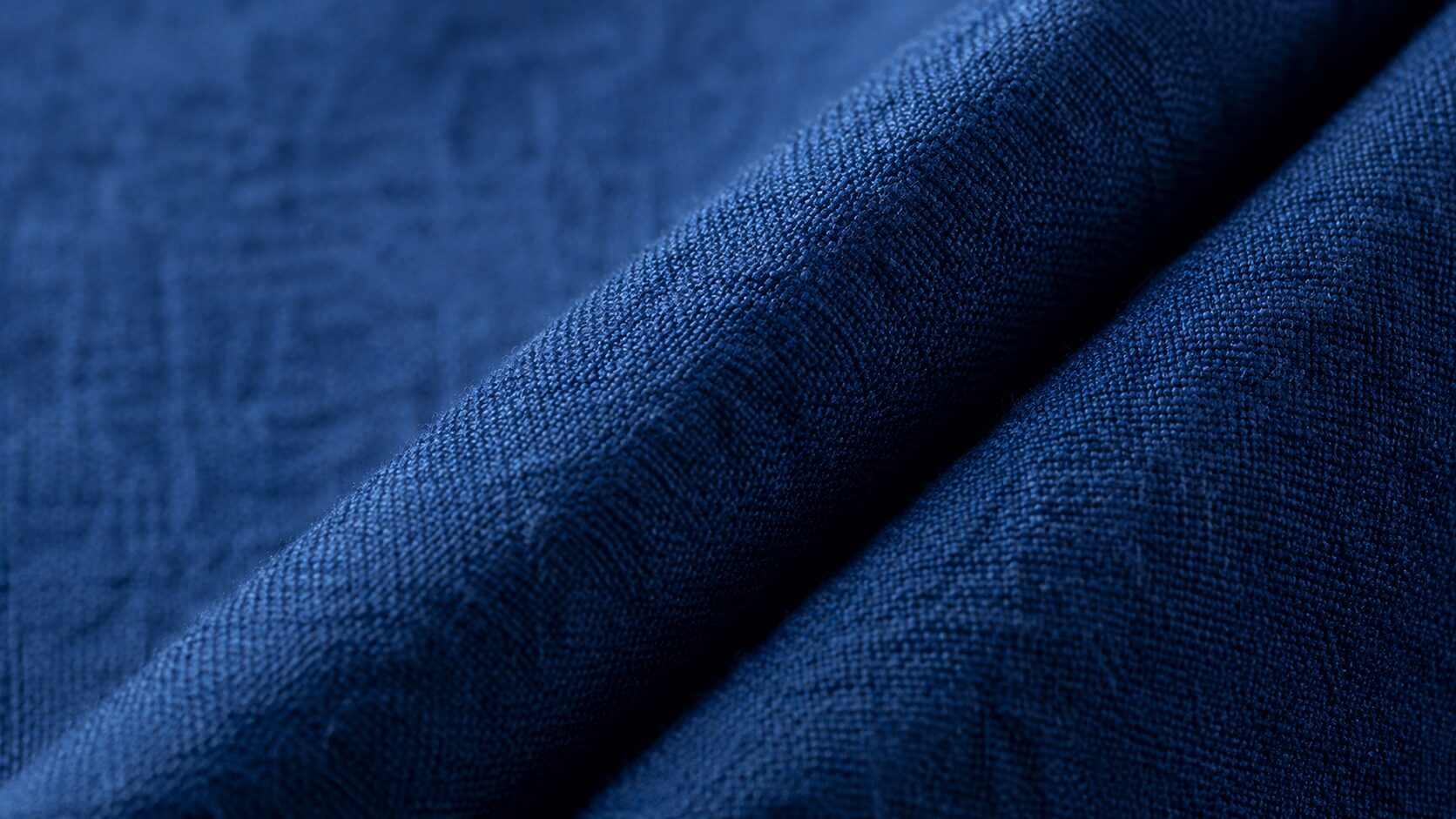
Indigo cotton up close. The colour sits on the surface of the fibre, which is why it moves.
If your hakama is indigo cotton
Wash it alone the first several times. Anything sharing that water will come out blue.
Use a small amount of a pH-neutral detergent. Alkaline detergents and anything containing bleach will damage the indigo. A gentle detergent made for delicates, Woolite for example, used at less than the recommended dose, is the right choice. Cold water only.
Dry in the shade. Direct sun will fade indigo quickly.
Keeping the pleats
Set the pleats by hand while the fabric is still damp, then hang it. Once it dries flat, they will not come back. Some people use a hakama press, a board that clamps the pleats while it dries.
Folding
Here is an honest answer: you will not learn to fold a hakama from a written description.
The broad shape of it is that you fold along the pleat lines and tie the himo in a cross. But inside that phrase are several steps that do not survive translation into text. It is the kind of skill that lives in the movement of someone’s hands.
So here is the right entry point instead: ask someone at your dojo to show you once. It takes about five minutes. Martial artists almost never refuse this request, and most are pleased to be asked.
Learning to fold your hakama is a small rite of passage in dojo life. It gets handed from person to person, and that is worth accepting on its own terms.
Where to Buy One
| Option | What to know |
|---|---|
| Through your dojo | Many instructors place group orders. Lowest risk of a sizing mistake, because someone experienced is checking. |
| Tozando | Kyoto-based, ships internationally, wide range across disciplines. |
| Seido | Built for martial artists outside Japan, with English support throughout. |
For a first purchase, going through your dojo is the safest route by a wide margin. Sizing, discipline-appropriate weight, and whether you should be buying one yet all get handled by someone who already knows the answers.
Common Questions
Can I wear a martial arts hakama if I do not train?
You can, but the weight and length are built for a dojo floor rather than a sidewalk. If the appeal is the look, hakama pants are designed for exactly that and are far easier to wear day to day.
What goes underneath?
Your gi, the training uniform. Nothing else is required beyond ordinary underwear.
How many pleats does a hakama have?
Five at the front and two at the back is the standard arrangement.
How long does indigo keep bleeding?
It slows considerably after the first several washes, but it never entirely stops. That is part of what indigo is.
Are men’s and women’s martial arts hakama different?
Not meaningfully. The garment is the same. The main difference is where it sits on the body.
Curious about hakama beyond the dojo, from graduation ceremonies to everyday styling? Our complete hakama guide covers the whole picture.