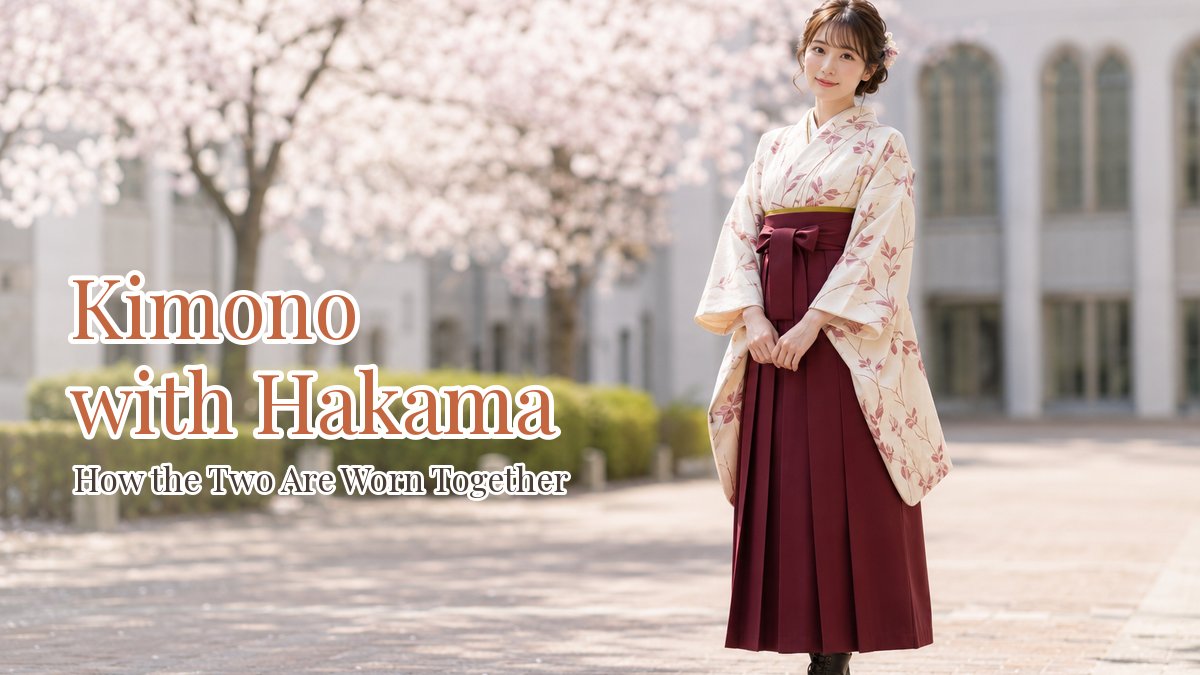
People often talk about a kimono and a hakama as if they were two competing choices, as though you pick one or the other. They are not alternatives. In the outfits where they appear together, one is worn on top of the other.
A hakama is not a standalone garment you put on over your underwear. It is the lower layer of a longer outfit, and underneath it there is almost always a kimono. Understanding that relationship, what sits on what, and why, is the thing that makes every graduation photo, shrine visit, and formal portrait suddenly make sense.
This article is about the combination itself. What it means to wear a kimono with a hakama, why people do it, who wears it and on what occasions, and how the pairing changes the formality of the whole look.
Want the full background on the garment itself first? Our complete guide to hakama covers what it is, its history, and the different types.
What “Kimono with Hakama” Actually Means
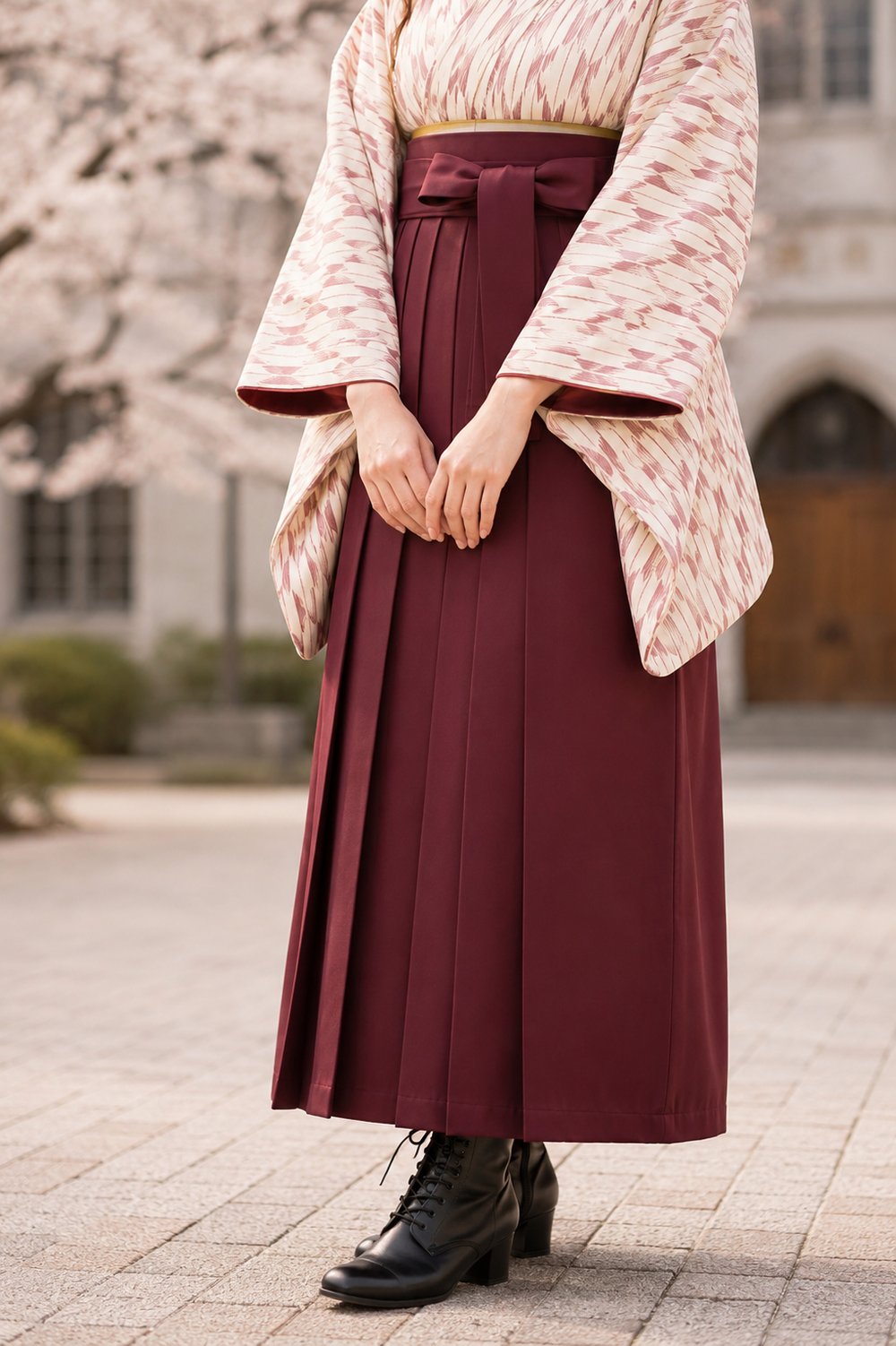
The kimono is the base; the hakama ties over its lower half.
Start with the layering, because it is the part that gets misunderstood most often.
The kimono is the base. It is a full-length robe, worn wrapped and tied, and on its own it is already a complete outfit. The hakama goes on over the lower half of that kimono. It ties at the waist and covers the kimono from roughly the waist down, either as wide divided trousers or as a long undivided skirt.
So when you see someone in a kimono with a hakama, you are looking at two layers. The kimono is doing the work of the top half, the collar, the sleeves, the chest. The hakama is shaping the bottom half. Remove the hakama and there is still a kimono underneath. Remove the kimono and the hakama has nothing to sit against.
The short version: the kimono is the foundation, and the hakama is worn over it. A hakama is never the whole outfit by itself.
Why Wear a Hakama Over a Kimono
If the kimono is already a complete outfit, why add the second layer at all? Three reasons, and most occasions involve more than one of them.
It raises the formality
The hakama began as formal dress. Adding one to a kimono lifts the whole outfit into more ceremonial territory, which is why it shows up at graduations, weddings, and official rites rather than at casual gatherings.
It makes movement easier
A kimono alone wraps the legs closely. The hakama gathers and structures the lower half, which is part of why the garment is standard in martial arts and in any setting that asks the body to move with purpose.
It signals the occasion
A hakama marks a setting as serious. On a Shinto priest, a martial artist, or a graduate, it communicates the role and the moment at a glance. The outfit is doing part of the talking.
Historically the hakama was central to men’s formal dress, and over time it spread into other settings, including women’s education and ceremonies, which is where much of today’s graduation imagery comes from.
Who Wears It, and When
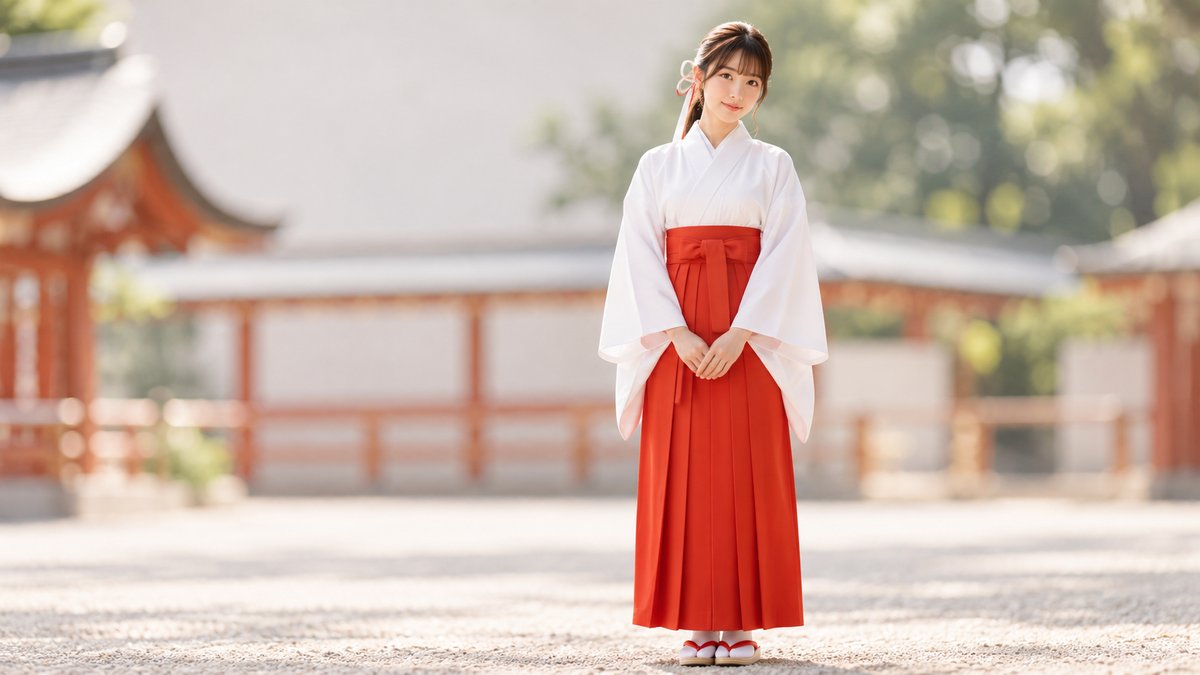
Shrine maidens wear a bright red hakama over a white kimono.
This is what most people are actually picturing when they search for a kimono with a hakama. The pairing turns up in a handful of specific settings.
- Women at graduation ceremonies. A shorter kimono worn with a hakama, often finished with boots or zori. This is the single most recognizable version of the look, especially in spring.
- Shinto priests and shrine maidens. The bright red hakama worn by shrine maidens over a white kimono is one of the most familiar images in Japanese religious dress.
- Coming-of-age and formal ceremonies. The combination appears at various rites where a step up in formality is called for.
- Traditional arts and archery. Disciplines like kyudo pair a kimono-style top with a hakama for both tradition and freedom of movement.
- Men’s formal dress. The most formal men’s version layers a kimono, a hakama, and a haori jacket together, covered in the next section.
The martial arts version is its own world, with different fabrics and weights for each discipline. We break it down in hakama for martial arts.
Kimono, Hakama, and Haori: the Three-Piece Look
There is a third layer that turns up in the most formal versions of the outfit: the haori.
A haori is a jacket worn open over the kimono. Adding one to a kimono-and-hakama outfit raises the formality another step. In men’s dress this three-piece arrangement has a name and a very specific role.
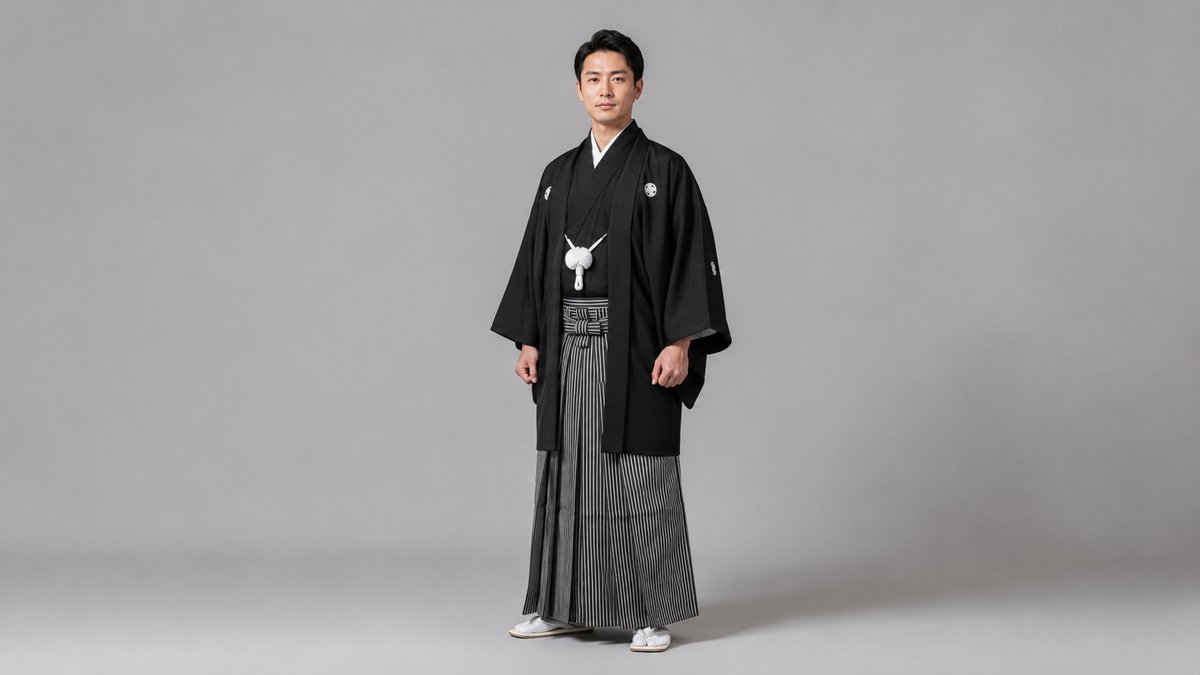
Montsuki haori hakama, the most formal traditional dress for men.
Montsuki haori hakama is the most formal traditional outfit for men: a black kimono marked with family crests, a hakama, and a matching haori worn together. It is what a groom or a formal guest wears at a wedding or a major ceremony.
Women wear haori too, though the crested black three-piece set is most strongly associated with men’s formal dress. For most of the occasions in this article, the haori is the optional top layer that appears when the formality needs to go as high as it can.
How the Combination Changes Formality
The pairing is not a single fixed level of dress. How formal it reads depends on what kimono sits underneath.
A plain or crested kimono under the hakama pushes the outfit toward the formal end. A more casual patterned kimono, such as a komon, keeps things lighter. The hakama itself always nudges the look toward “this is an occasion,” but the base layer sets the ceiling.
So the way to think about it is in two decisions: first the kimono, which sets the underlying level of formality, then the hakama and any haori, which build on top of it. If you know how kimono types are ranked, you can read almost any kimono-and-hakama outfit correctly.
New to how kimono are ranked by formality? Our guide to the main types of kimono walks through them from casual to ceremonial.
Yukata, Kimono, and Hakama: How They Relate
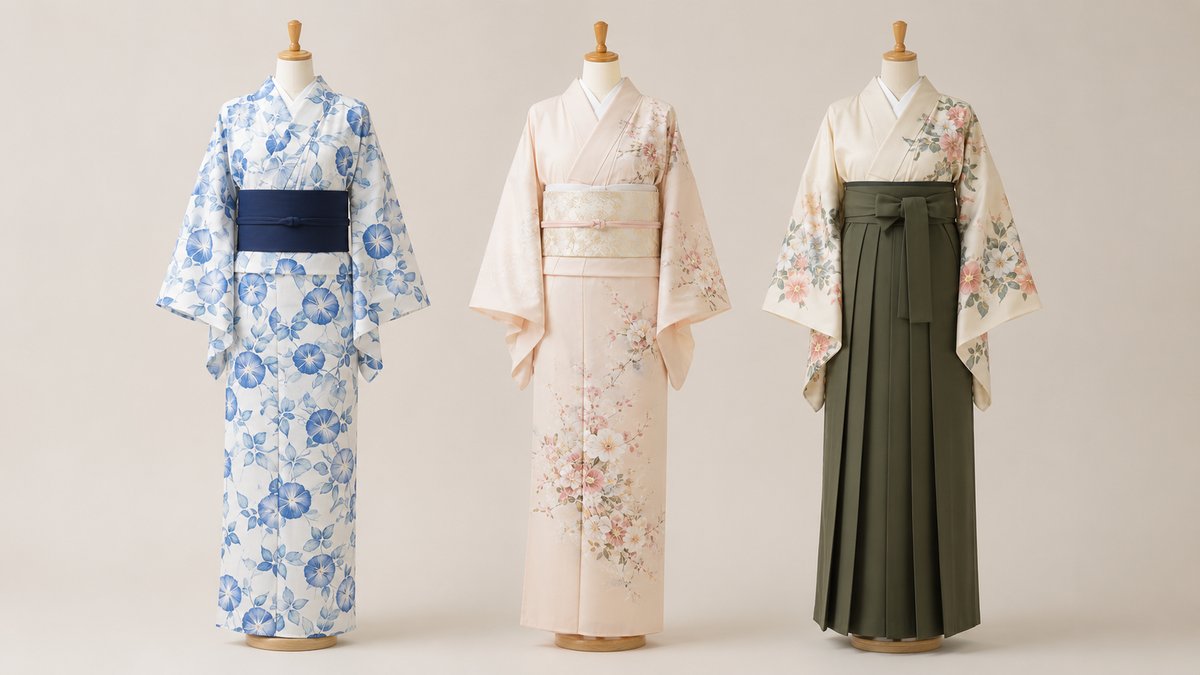
Left to right: a yukata, a kimono, and a kimono worn with a hakama.
These three words get grouped together constantly, which makes it look as though they are three versions of the same choice. They are not, and the difference is worth getting straight.
A kimono is the basic form of traditional Japanese dress, and depending on the type it can be anything from casual to highly formal. A yukata is a light cotton kimono worn in summer, casual by nature, the kind of thing you see at fireworks and festivals. A hakama is not a type of robe at all. It is the layer worn over the lower half of a kimono.
So kimono and yukata sit on the same axis, what kind of robe you are wearing, while the hakama sits on a different one, what you layer on top. Asking “kimono or yukata” is a question about the robe. Asking “with or without a hakama” is a question about the layer over it. That is why you can have a kimono with a hakama, but a yukata is worn on its own as summer wear rather than as the base for this formal pairing.
Still sorting out the first part of that? We compare the two robes in detail in yukata vs kimono.
Common Questions
Can you wear a hakama with a yukata?
The hakama pairing is built around the kimono, and it belongs to formal and ceremonial settings. A yukata is casual summer wear worn on its own, so it is not the base you would reach for when the point of adding a hakama is to dress up.
Is a kimono with a hakama different for men and women?
The basic idea is the same layering, but the occasions and the way it sits on the body differ. Women’s versions are most visible at graduations, while the crested three-piece set is the classic men’s formal look.
Where can you wear a kimono with a hakama?
Graduations, weddings and formal ceremonies, shrine and religious settings, and traditional arts. It reads as formal, so it suits occasions rather than everyday outings.
Do you need a haori as well?
No. The haori is the extra top layer for when the formality needs to be as high as possible. A kimono with a hakama is already a complete formal outfit without it.
Curious about the garment on its own? Our hakama guide covers what a hakama actually is, where it came from, and the different types you will come across.