If you’ve started looking into kimono, you’ve probably hit this wall almost immediately: furisode? houmongi? komon? There are so many names, and it’s hard to tell what actually makes them different.
Don’t worry — you’re not the only one who finds it confusing. And once you know one simple trick, the different types of kimono suddenly fall into place. That trick? Kimono are organized by formality. Just like Western wear runs from ballgowns to evening dresses to sundresses, kimono range from “very formal occasion” all the way down to “perfect for a relaxed afternoon.”
In this guide, we’ll line up the most common types of kimono from most formal to most casual, so you can see at a glance who wears each one — and when. Truthfully, there are dozens of traditional kimono varieties, but most people only ever need to know the seven main types worn today. These robes are one of the most iconic corners of traditional Japanese fashion, so getting to know them is the perfect place to begin.
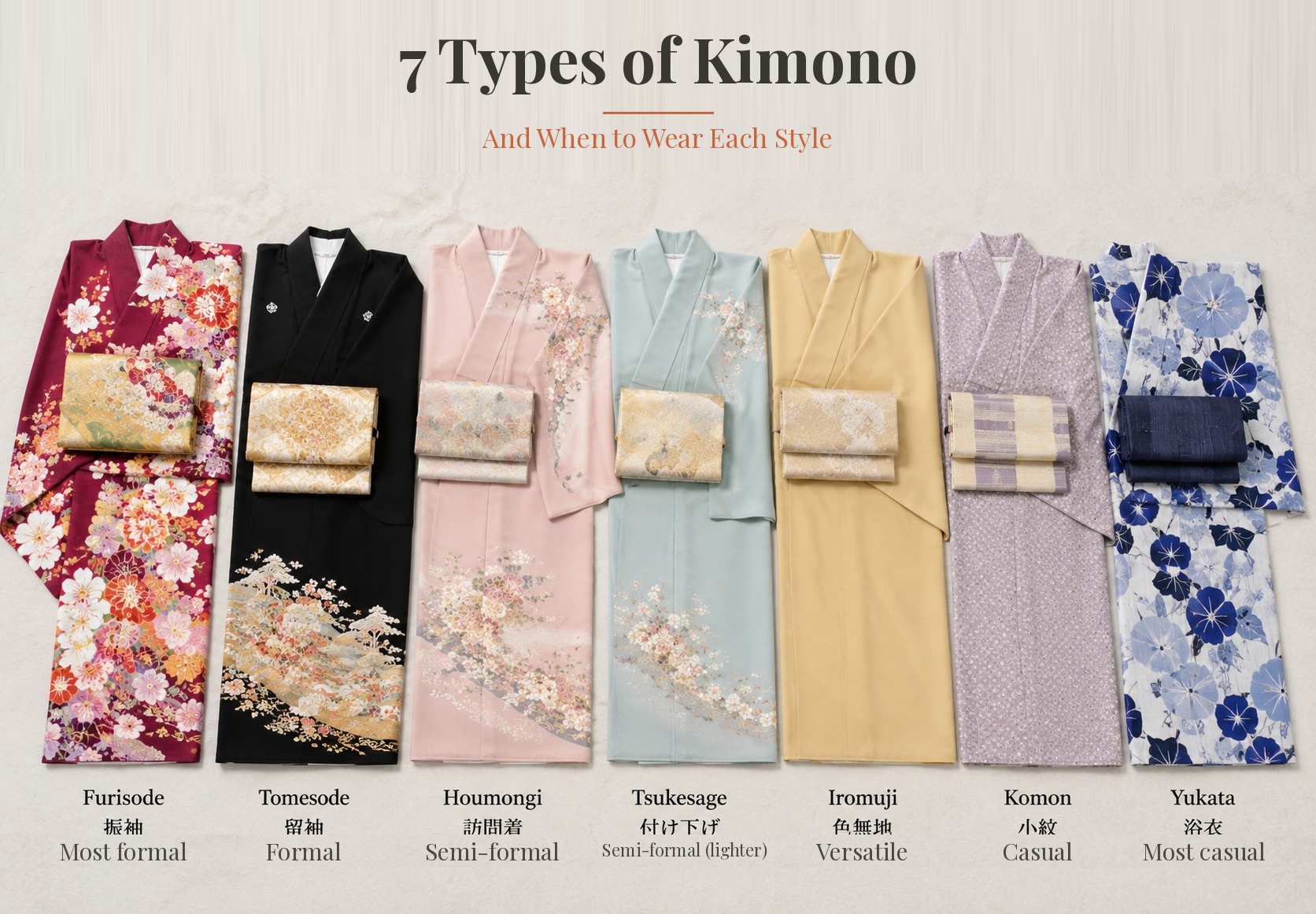
There are many kimono types, but most can be understood by their level of formality. The seven main types you’ll encounter are furisode, tomesode, houmongi, tsukesage, iromuji, komon, and yukata.
Wondering how a yukata fits into all this? It helps to read our kimono vs yukata guide first — it’ll make everything below click into place.
The Key Is Formality
Before we dive into the types, there’s just one rule worth remembering: a kimono’s identity is defined by its formality.
Even though they’re all “kimono,” the one you’d wear to a wedding and the one you’d wear to your neighborhood café are completely different things. Three factors mainly decide that level of formality:
- How the pattern is placed — all-over and showy, or restrained
- The color and fabric
- Whether the wearer is married or unmarried — this especially affects sleeve length
Every type below sits somewhere on this formality scale. You don’t need to memorize the names — just get a feel for “this one’s for formal occasions, this one’s everyday,” and you’re all set.
Kimono Types at a Glance
Before the detailed walk-through, let’s take in the whole picture at once.
| Type | Formality | Sleeve | Best for |
|---|---|---|---|
| Furisode | Highest (unmarried) | Long, swinging | Coming-of-age, weddings (guest), graduations |
| Tomesode | Formal | Short | Family weddings, formal ceremonies |
| Houmongi | Semi-formal | Short | Wedding guest, tea ceremony, parties |
| Tsukesage | Semi-formal (lighter) | Short | Parties, celebratory events |
| Iromuji | Varies | Short | Tea ceremony, formal events (versatile) |
| Komon | Casual | Short | Outings, strolls, everyday wear |
| Yukata | Most casual | Short | Summer festivals, fireworks, summer evenings |
Now let’s look at each one, from most formal to most casual.
Furisode: The Showstopper for Young Women振袖 Furisode
Let’s start with the one you probably picture when you think “kimono” — the gorgeous, eye-catching furisode.
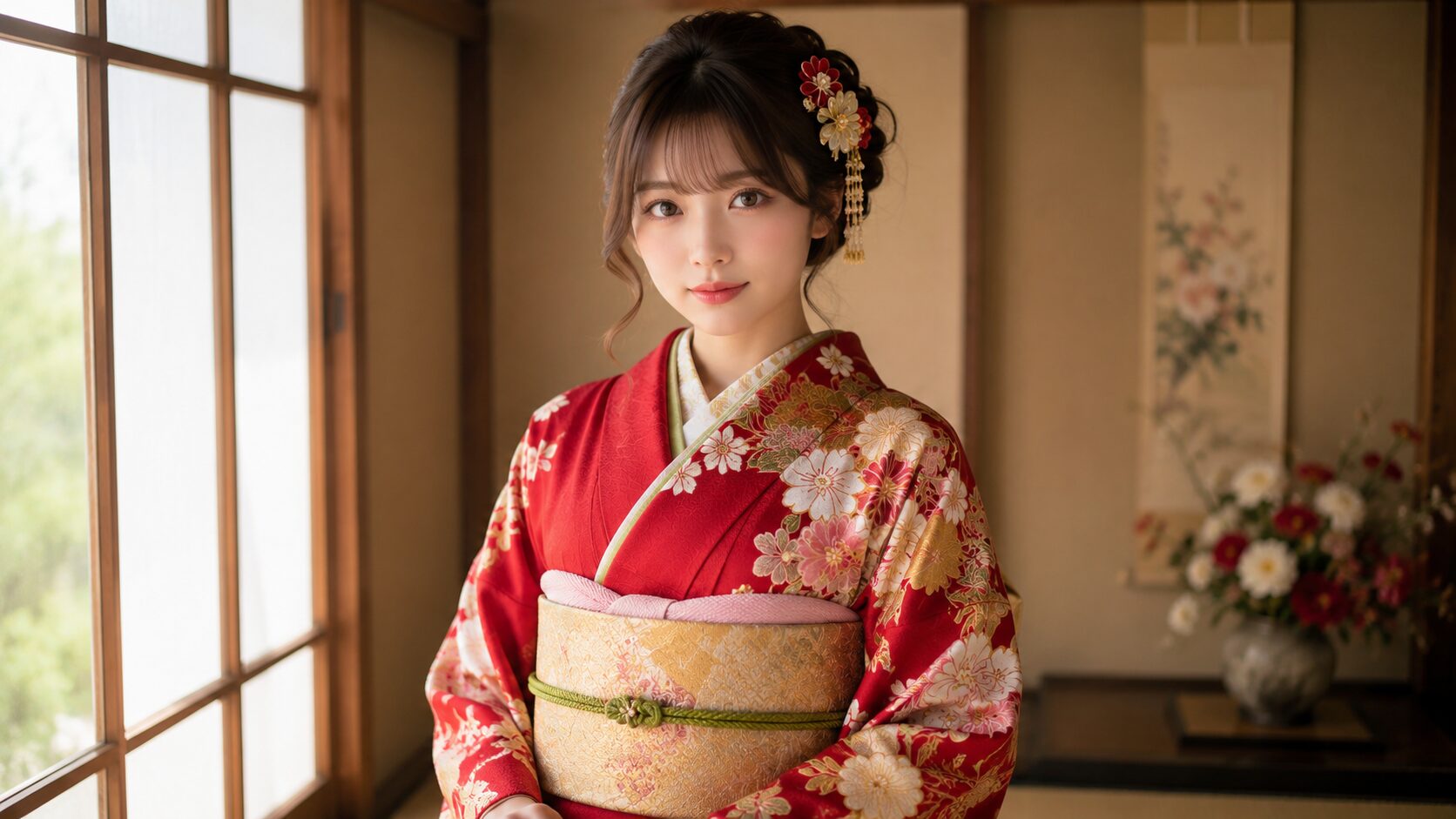
Its defining feature is those long, sweeping sleeves that hang almost to the floor — a symbol of youth and celebration. The furisode is the highest-ranking formal kimono for unmarried women, and it takes center stage at coming-of-age ceremonies, as a guest at weddings, and at graduations — where it’s traditionally paired with hakama in Japan.
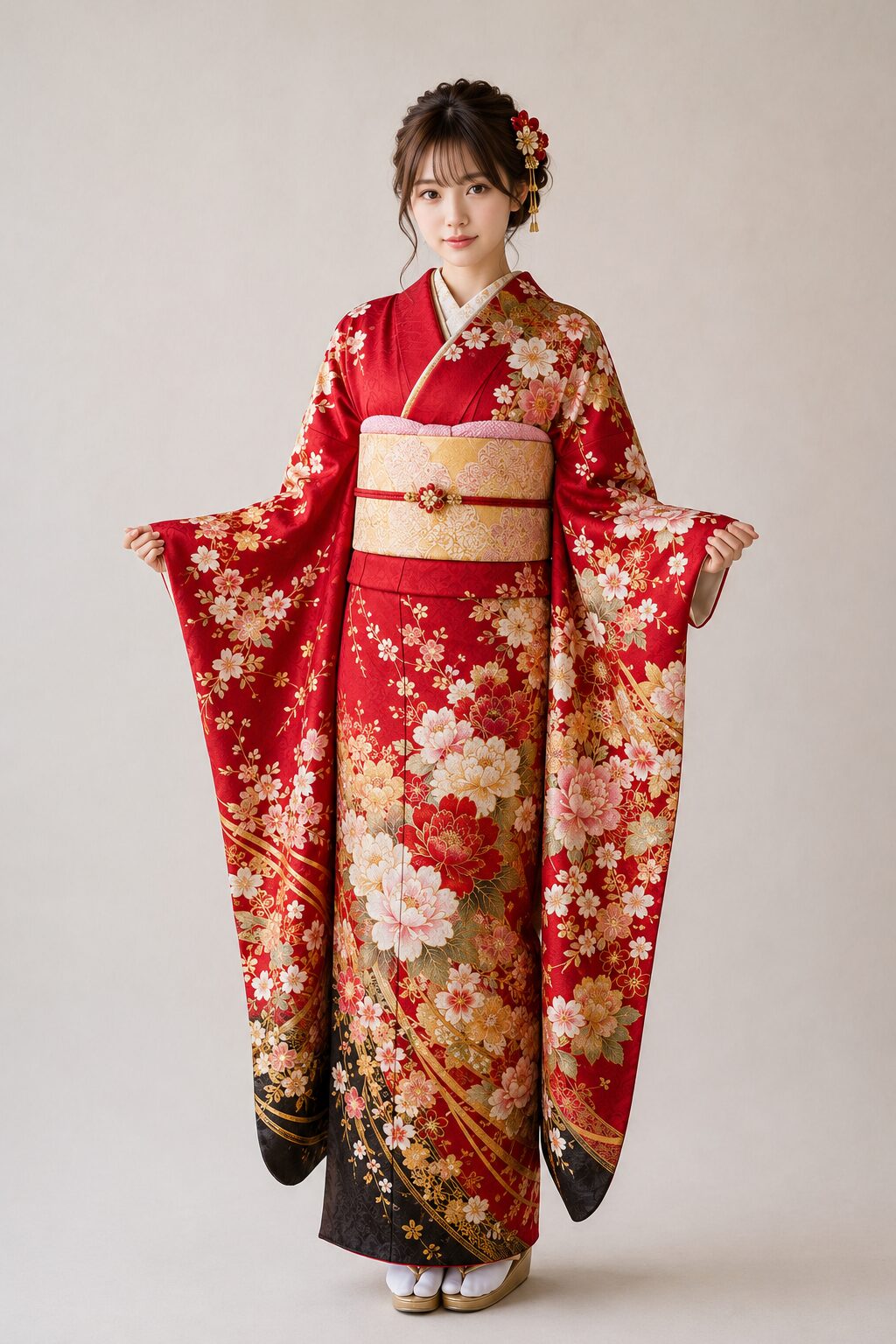
It’s the most formal kimono for unmarried women — not the single most formal kimono overall. Other formal garments, like the black tomesode or the bridal uchikake, sit in their own categories.
Still fuzzy on how a furisode differs from a regular kimono? Our furisode vs kimono guide explains exactly what sets it apart — sleeve length, occasions, and who wears one.
Tomesode: The Most Formal Kimono for Married Women留袖 Tomesode
If the furisode is the formal kimono for unmarried women, the tomesode is its married-women counterpart.
The sleeves are much shorter than a furisode’s, and the pattern sits tastefully along the hem only. The most formal version is the black-ground kurotomesode, worn by the mothers and close relatives of the bride and groom at weddings — essentially the highest formal dress. There’s also the irotomesode, made in colors other than black.
Traditionally worn by married women, though these days a younger unmarried woman may sometimes wear an irotomesode — so “married women only” is a little outdated.
Curious how the black kurotomesode and the colored irotomesode differ — and who wears each? Our complete tomesode guide breaks it all down.
Houmongi: The Versatile Semi-Formal Favorite訪問着 Houmongi
Not too formal, not too casual — that sweet spot is exactly why the houmongi is such a favorite.
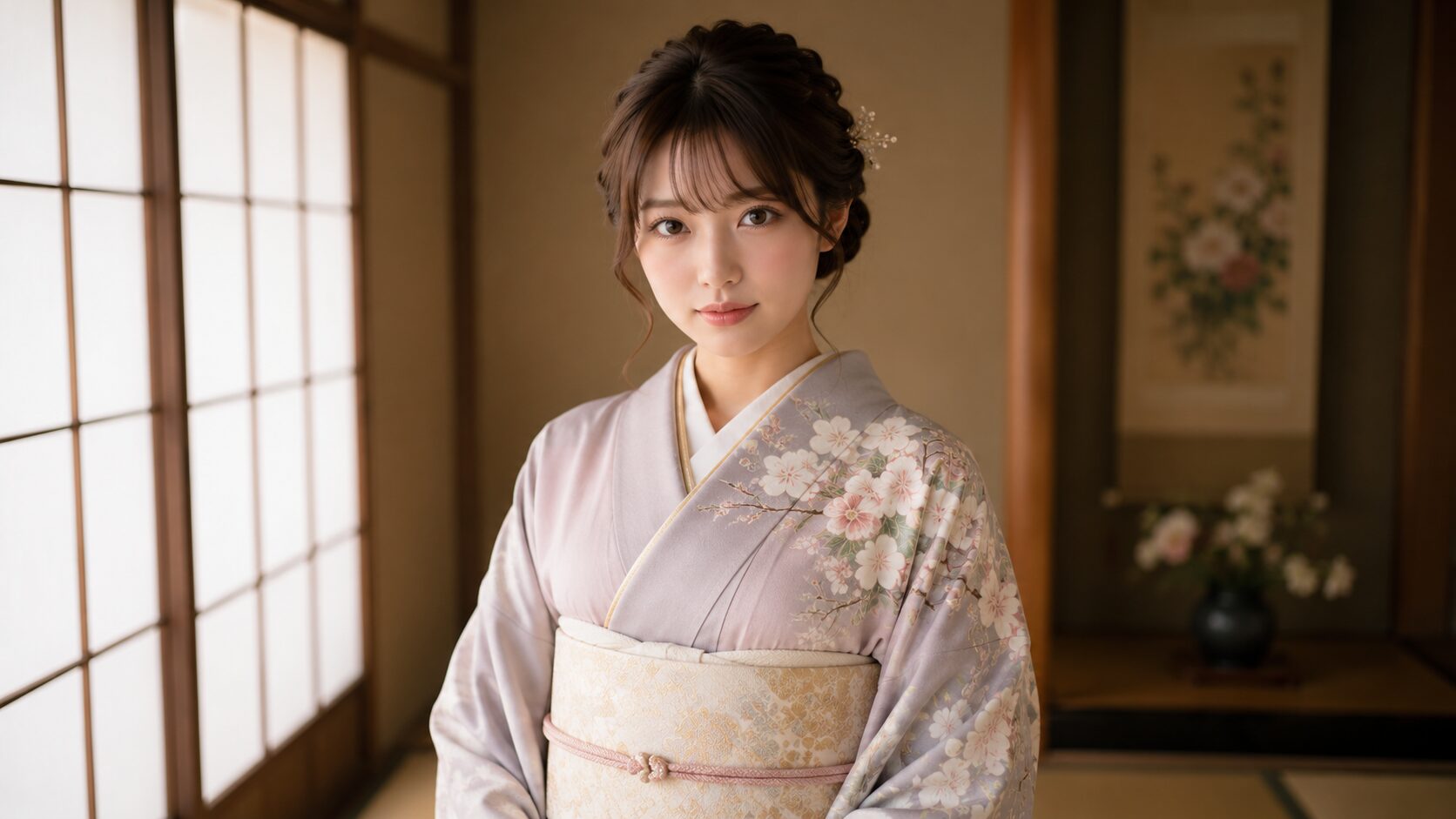
Its signature is the eba pattern, which flows continuously from the shoulder down across the hem, giving it a beautifully coordinated look. It can be worn by married and unmarried women alike, making it wonderfully versatile for wedding guests, tea ceremonies, and parties. It’s often named as the one kimono worth owning.
If a versatile, wear-it-almost-anywhere kimono sounds like your style, our houmongi guide walks through its patterns, occasions, and how to wear one.
Tsukesage: A Lighter Take on the Houmongi付け下げ Tsukesage
Very similar to the houmongi — and the type beginners most often mix up — is the tsukesage.
The quickest way to tell them apart is how the pattern connects. On a houmongi, the design flows across the seams; on a tsukesage, the patterns are more restrained and placed to point “upward” toward the shoulders and hem. That makes it a touch less formal than a houmongi, and a popular, easygoing semi-formal choice.
Because the two are so close, the practical difference is often about how much attention you want the kimono to draw. A tsukesage reads a little quieter, which is exactly why many people find it easier to wear.
Iromuji: The All-Rounder With No Pattern色無地 Iromuji
Here’s proof that a kimono doesn’t need a pattern to be formal — the iromuji.
True to its name, it’s a single-color kimono (any color but black) with no pattern. It looks plain, but it’s actually one of the smartest pieces you can own. Its formality depends mainly on the family crest (mon), but also on the obi and accessories you pair with it — so it can dress up for a tea ceremony or dress down for a casual outing. A true all-rounder that plays many roles.
Curious how a single plain color can shift from tea-ceremony formal to easygoing casual? Our complete iromuji guide explains how the crest and obi set its formality.
Komon: The Everyday Kimono小紋 Komon
Now we move firmly into casual territory, with the everyday favorite: the komon.
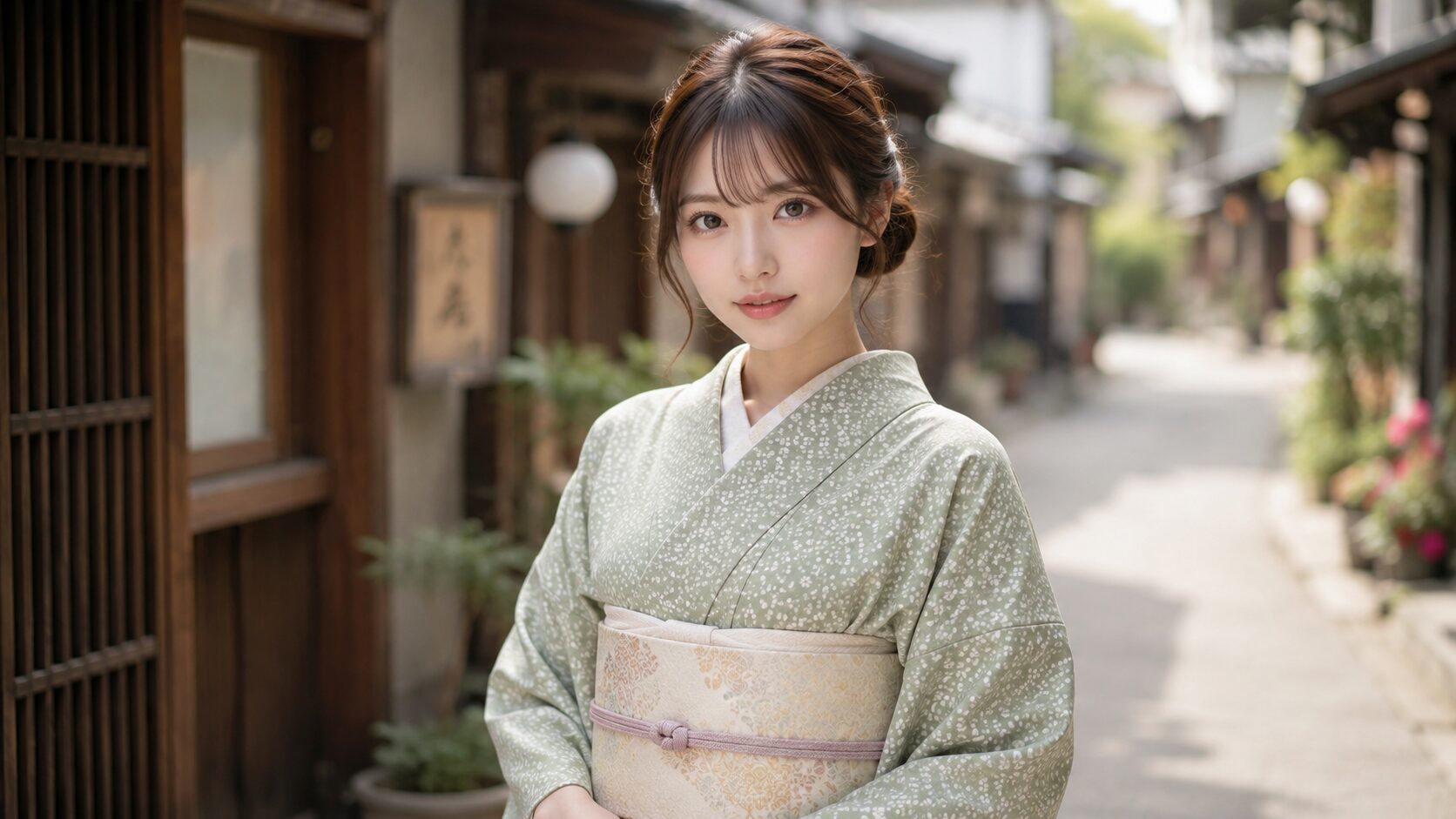
It’s defined by a small pattern repeated all over the fabric, and most komon are casual, everyday kimono — perfect for shopping, a stroll, a café, or lunch with friends. (A few, like the refined Edo komon, become semi-formal when a crest is added, but as a rule, think “casual.”) It’s also a lovely first kimono. Fun fact: the one in our How to Wear a Kimono tutorial is a komon, too — so it’s a great place to learn the basics.
Want to get to know this everyday favorite a little better? Our full komon guide covers its patterns, when to wear it, and how to style one.
Yukata: The Casual Cousin of the Kimono浴衣 Yukata
Finally, the most casual member of the family: the summer yukata.
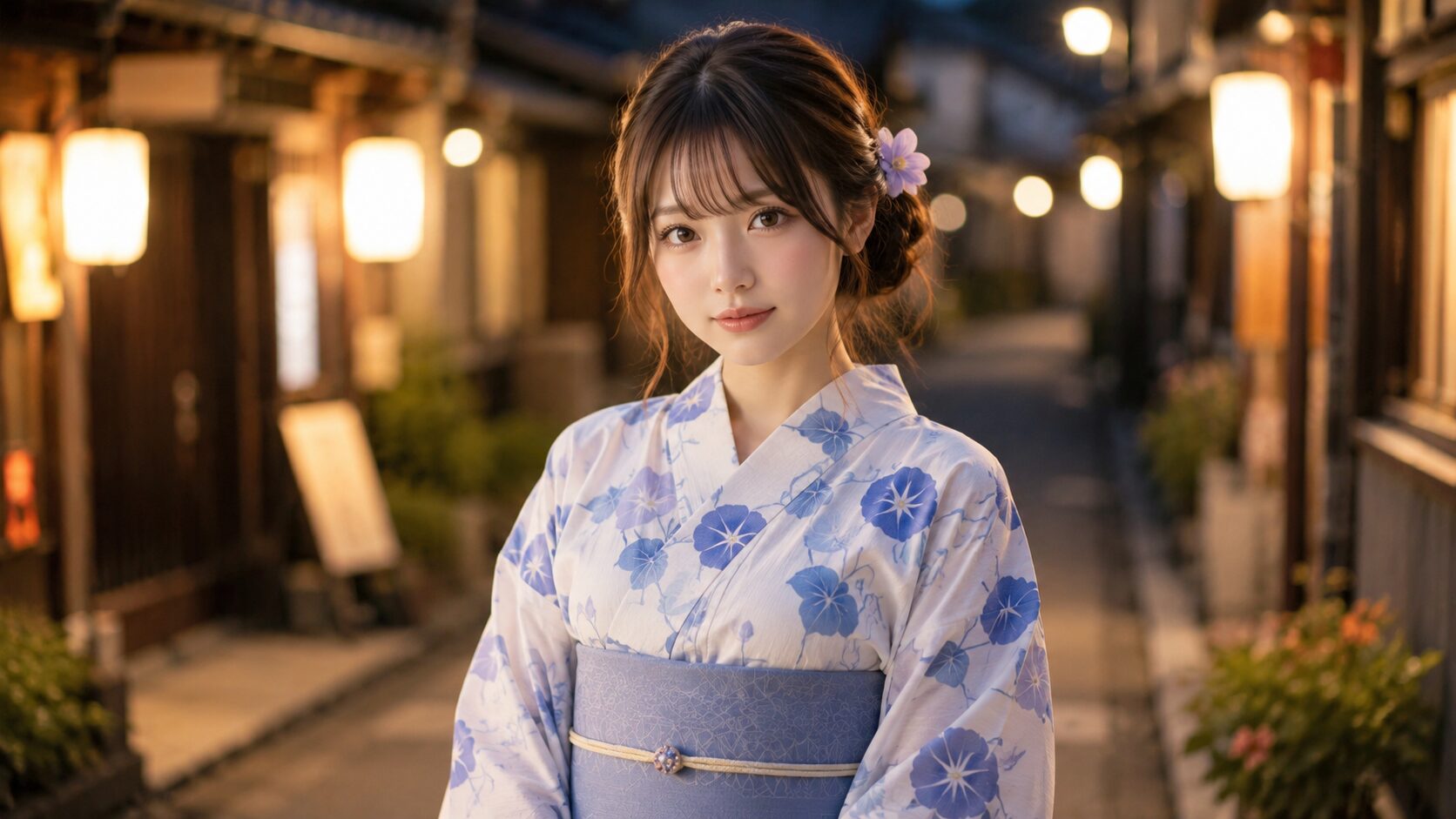
Worn against the skin without a full under-robe, it’s essentially summer loungewear in kimono form. Made of cool cotton, it’s a must for summer festivals and fireworks displays.
One quick note: in English, the yukata is generally considered the most casual type of kimono — though in Japan it’s often treated as a separate category of traditional wear. Both ways of seeing it are valid.
Even the name tells a story. The word yukata traces back to a robe worn after bathing — not to summer festivals at all. Our guide to what “yukata” really means unpacks where the word came from and how it became the icon of Japanese summer.
A Quick Note on Special-Occasion Kimono
Those are the seven types you’ll meet day to day — but a few others are reserved for special occasions. There’s the mofuku, the all-black mourning kimono; the uchikake, the lavish embroidered overcoat a bride wears at weddings; and the shiromuku, the pure-white bridal ensemble. You’ll almost never choose these yourself, but knowing they exist rounds out the picture nicely.
Which Kimono Is Right for You?
Now that you know the types — “so, what should I actually wear?” Here’s a quick by-occasion guide:
- Trying on a kimono while visiting Japan → an easy komon, or a yukata in summer. A rental is all you need.
- Invited to a wedding as a guest → the houmongi is the classic choice; if you’re unmarried and want something more festive, a furisode works too.
- A tea ceremony or quiet formal event → an iromuji or houmongi.
- A close family wedding, as the mother of the bride or groom → the black kurotomesode, the highest formal dress for married women.
- A summer festival or fireworks → a yukata, no question.
If you’re visiting Japan, kimono rental shops will usually recommend the right style for the occasion — so you don’t have to memorize everything before you go. See our Kyoto Kimono Rental Guide.
Once you’ve got the formality scale in mind, you’ll always be able to pick a “can’t-go-wrong” option for any occasion.
Frequently Asked Questions
How many types of kimono are there?
Dozens exist historically, but seven cover almost everything worn today: furisode, tomesode, houmongi, tsukesage, iromuji, komon, and yukata. They run from most formal to most casual, and that scale is the only thing you really need to hold onto.
Can foreigners wear kimono?
Absolutely. Kimono can be enjoyed by anyone, regardless of nationality. What matters is simply choosing a style that suits the occasion and wearing it respectfully.
What’s the difference between a kimono and a yukata?
A yukata is the most casual, summer-only type of traditional wear — worn against the skin, with no under-robe. We break it all down in Yukata vs Kimono.
What does the word “yukata” actually mean?
It comes from yukatabira, a light robe once worn around the bath — long before it became festival wear. See The Meaning of Yukata for the full story.
Which kimono should a beginner start with?
Hands down, the komon. It’s the easiest to wear and the simplest to put on. Start with the basics in How to Wear a Kimono.
Do I have to memorize all the types?
Not at all. Once you understand the “most formal to most casual” scale and the seven main types, you’re set — just choose to match the occasion.
Can I rent a kimono?
Yes. Rentals are especially popular with travelers — see our Kyoto Kimono Rental Guide.