You may already know this pattern without knowing its name. Those green-and-black squares on Tanjiro’s haori in Demon Slayer — that is the ichimatsu pattern, a simple checkerboard of alternating squares. Most people meet it through anime, but this design is far older than any series. In Japan it has been loved since ancient times under the older name ishidatami, the “stone pavement” pattern — and because its squares continue on and on without a break, it later came to be linked with wishes for prosperity and things that last.
What Is the Ichimatsu Pattern?
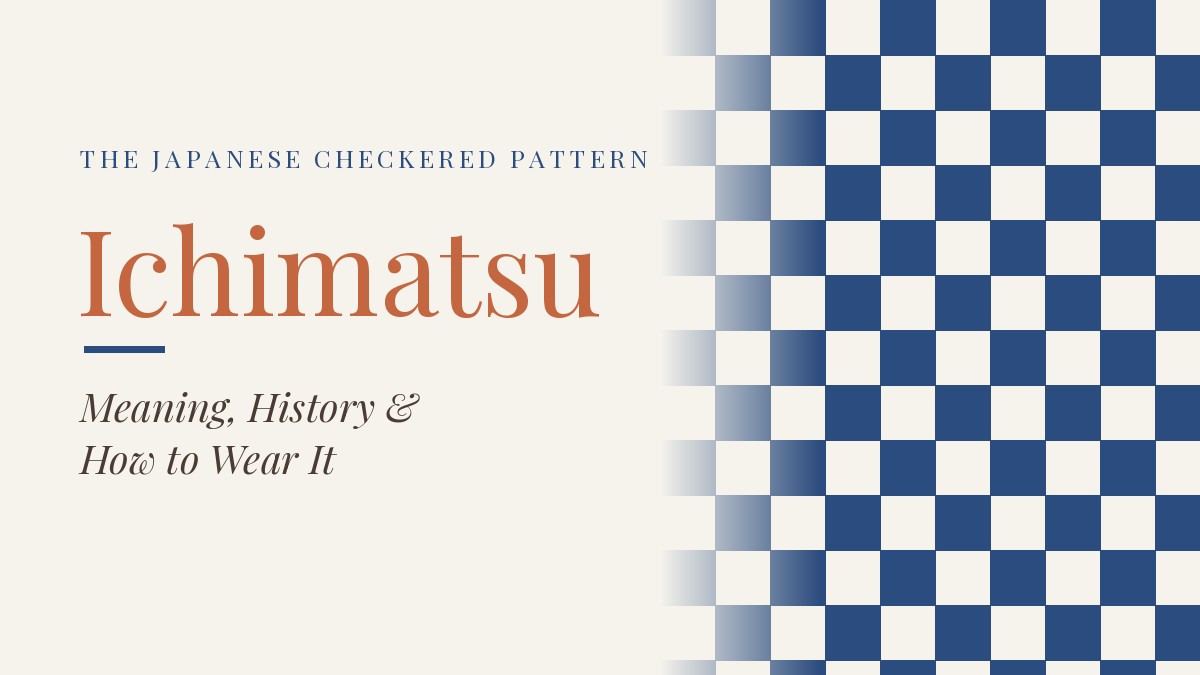
The ichimatsu pattern is a geometric design of two-colored squares (or rectangles) laid out in an alternating grid. If you picture a checkerboard, a chessboard, or a Japanese go board, you already have the shape in mind — in English it is simply called a checkerboard pattern.
The important thing to understand is that ichimatsu is a pattern, not a picture. Where the hemp-leaf asanoha is a star-like shape and the seigaiha wave is all flowing curves, ichimatsu is built from straight lines and squares. All three are geometric, yet each has its own character — star, wave, and grid.
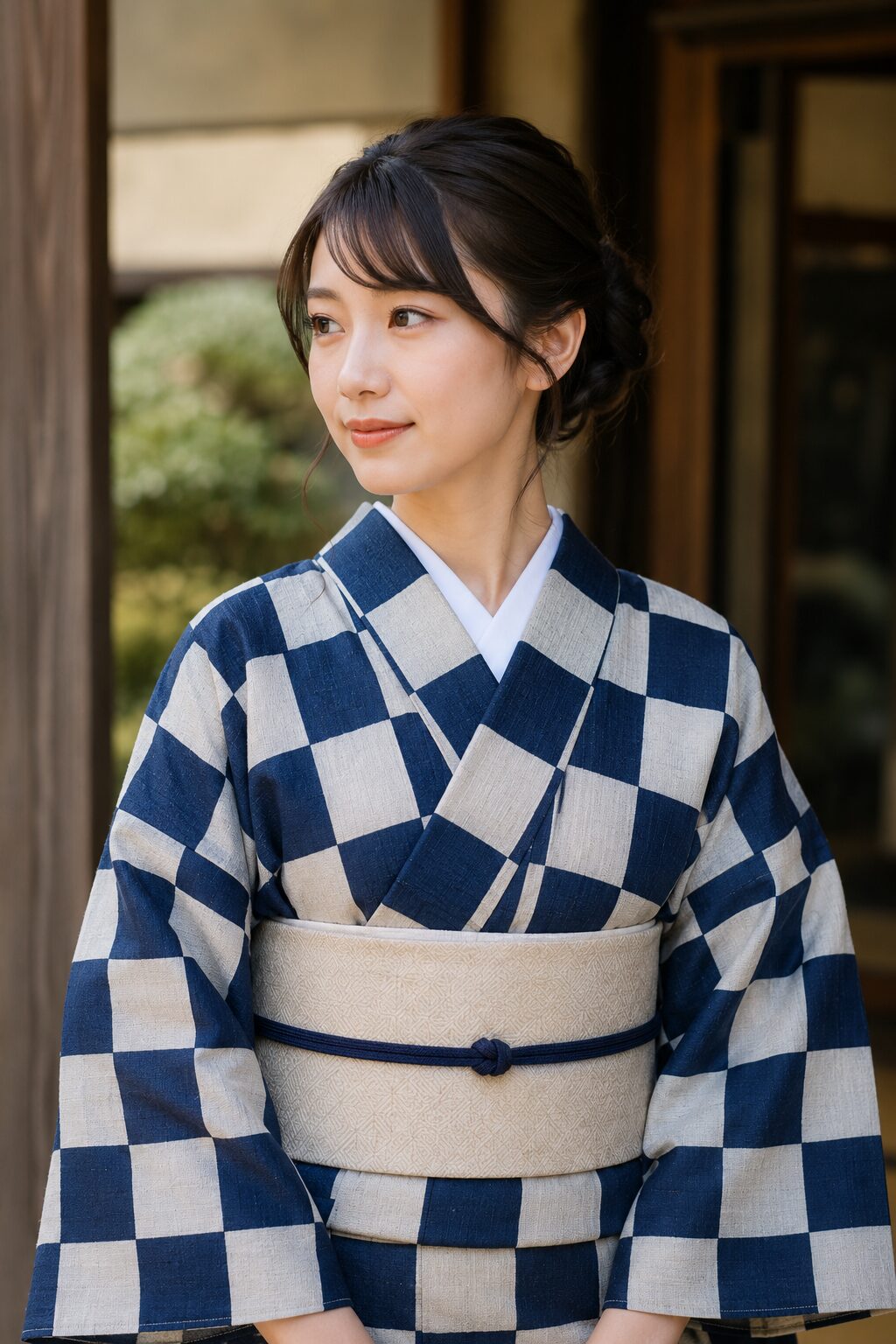
Traditionally it appears in two-color pairings such as indigo and white or crimson and white, but the choice of colors changes the mood completely.
What “Ichimatsu” Means
Here is something surprising: this pattern was not always called ichimatsu. Because it looks like paving stones laid side by side, it was long known as ishidatami-mon, the “stone pavement” pattern. In its finer form it was even called arare (“hail”) in the Heian period, used as a refined motif on the robes and furnishings of the court.
The checkerboard shape itself is genuinely ancient in Japan. Similar stone-pavement and lattice designs appear on the clothing of haniwa clay figures from the Kofun period, and in the textiles preserved at temples and imperial repositories such as Hōryū-ji and the Shōsō-in. In other words, the design existed long ago; only its name kept changing over the centuries.
The name “ichimatsu” spread in the Edo period. It is said to come from the kabuki actor Sanogawa Ichimatsu (1722–1762), who wore this stone-pavement design in his stage costume and made it so fashionable that the women of the day rushed to put it on their own kimono — after which it became known as the “ichimatsu pattern.”
A popular account says the actor wore the design as checkered hakama trousers in a 1741 play. The specific details are often repeated but not firmly documented in early sources, so they are best treated as a well-loved tradition. What most sources agree on is simpler: it was Sanogawa Ichimatsu who gave this old pattern its new name.
The Meaning Behind Ichimatsu
Part of the charm of ichimatsu lies in the meaning that grew out of its shape. Because the squares continue up, down, left, and right without ever breaking, the pattern came to be associated with good fortune.
More specifically, it has been linked with prosperity, with growth and expansion, with a family line continuing unbroken, and with things that carry on for a long time. These meanings were read into the never-ending grid rather than fixed from the start — but they are why ichimatsu has long been treasured as an auspicious, celebratory design.
The Demon Slayer Connection
For audiences around the world, one haori did more than any history book to make ichimatsu famous: the green-and-black checkered jacket worn by Tanjiro Kamado in Demon Slayer. Thanks to the series, a great many people now know that this square-grid design is a traditional Japanese pattern with a name and a history.
Many fans connect the pattern’s sense of “continuing without breaking” to Tanjiro’s story — a boy who keeps caring for his family and refuses to give up. It is worth noting that this is a reading offered by fans and media, not an official, stated part of the series. If you came to kimono through anime, our guide to Demon Slayer kimono patterns looks at the other characters and motifs in the same way.
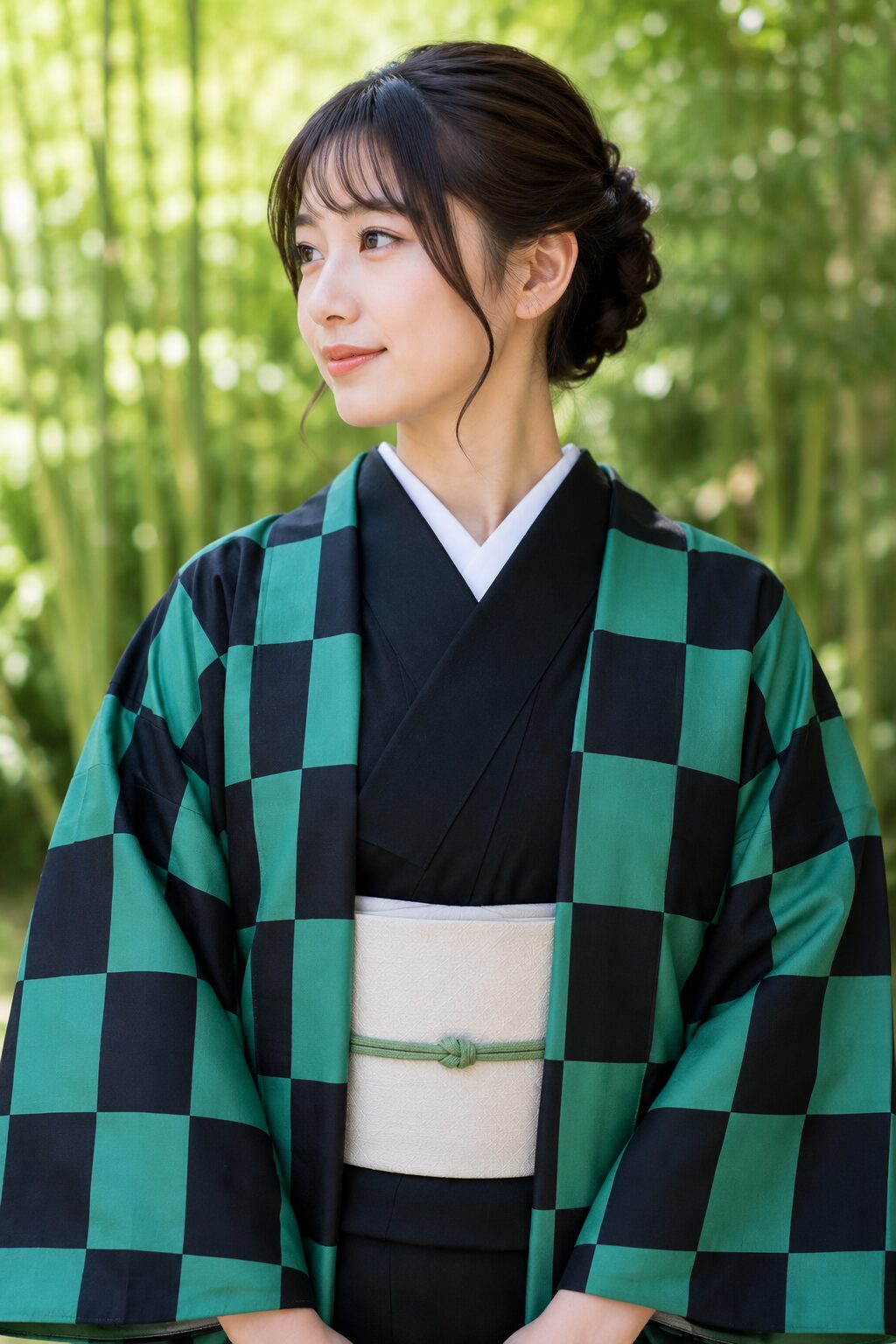
I want to be honest about why I love this pattern so much — and the answer is Tanjiro. So many characters are strong, but his strength is a kind I find rare. He carries real fear and real pain, and stays gentle and calm through all of it, and never stops moving forward. The ichimatsu pattern continues without breaking, one square and then another, quietly. To me it looks exactly like that: a heart that keeps walking on, one step and then another, even while holding onto fear — steady and unyielding.
This is only my own feeling, of course, not something the series states outright. But it is why this simple checkered pattern has stayed with me so deeply.
Ichimatsu Beyond Anime
Once you know ichimatsu, you start noticing it well beyond the screen.
One famous example is the official emblem of the Tokyo 2020 Olympic and Paralympic Games. Named the “Harmonized Chequered Emblem” and designed by Asao Tokolo, it is based on the ichimatsu pattern that took hold in the Edo period, rendered in traditional Japanese indigo. Built from three different rectangular shapes, it represents different countries, cultures, and ways of thinking, carrying the message of “unity in diversity.”
Thanks to its simple, powerful geometry, ichimatsu also sits comfortably in modern design. You will find it on textiles, small crafts, architecture, and product design — and used boldly in traditional settings too, like the famous checkerboard garden of paving stones and moss at Kyōto’s Tōfuku-ji temple.
Ichimatsu in Kimono and Yukata
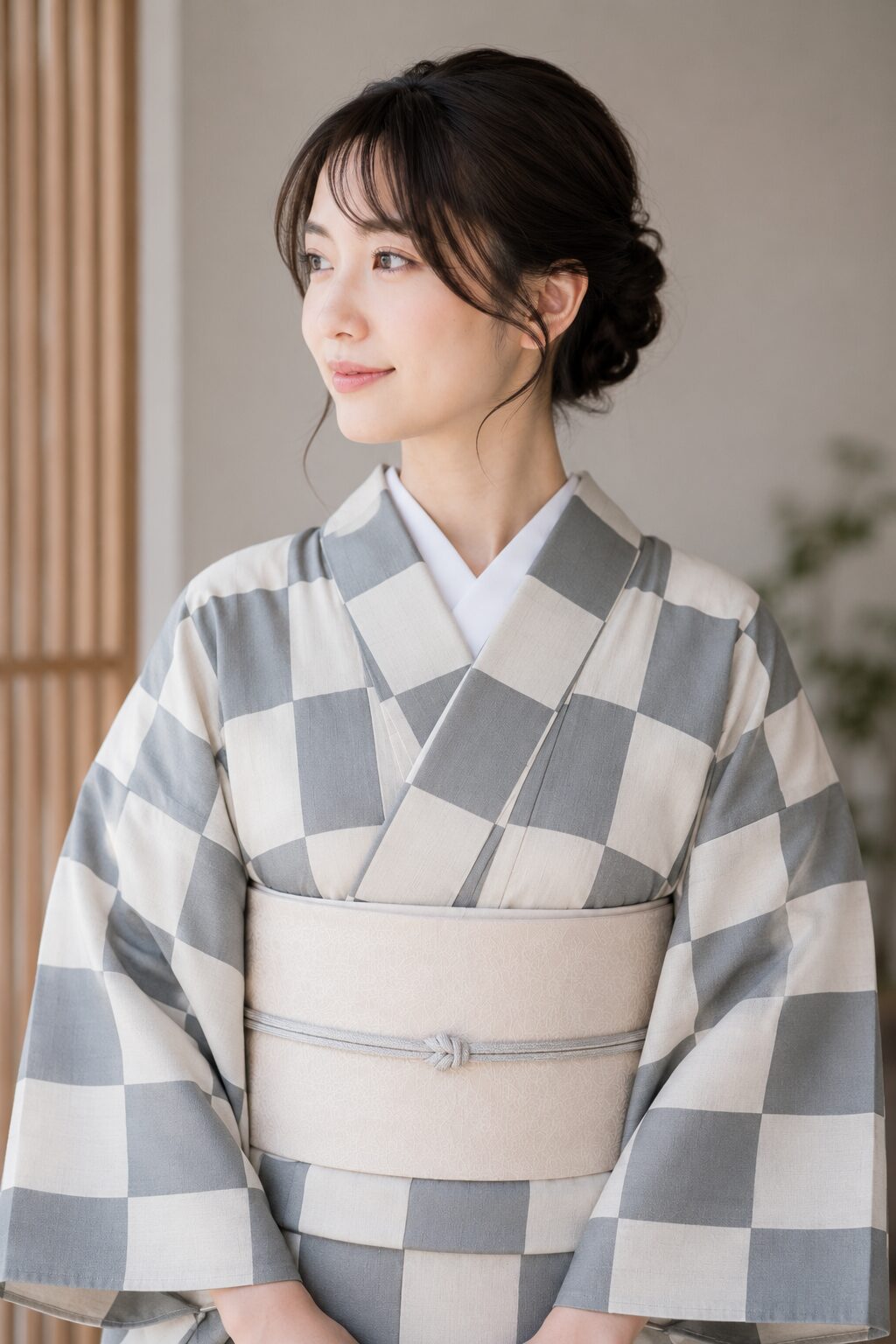
As a kimono and yukata motif, ichimatsu is wonderfully easy to wear. Being an abstract geometric design, it can look either bold and traditional or clean and modern.
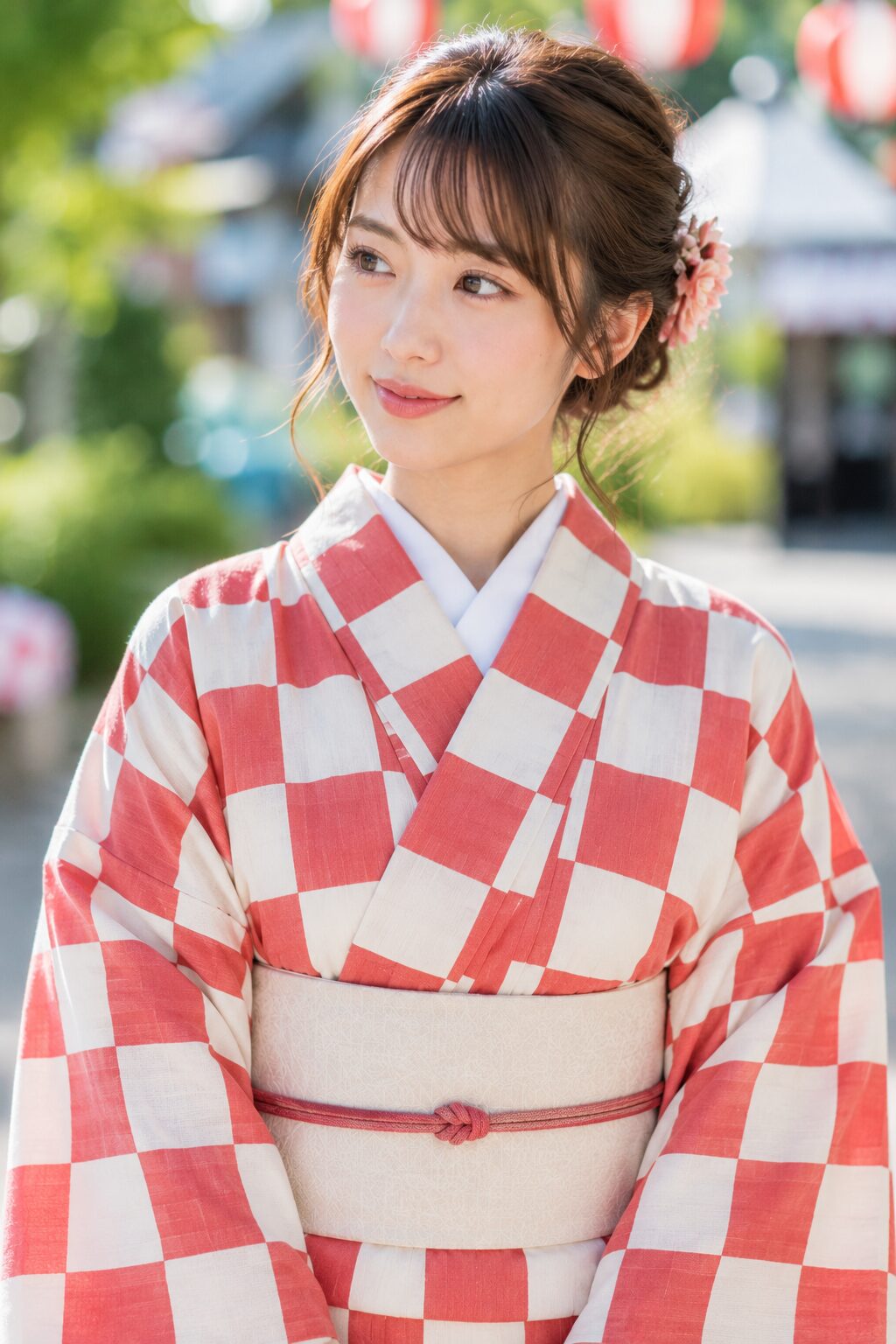
Color does most of the work. The classic indigo-and-white or crimson-and-white pairings look crisp, clean, and unmistakably Japanese. In monochrome or soft pastels, the very same grid feels contemporary and light, right at home in a modern wardrobe. Ichimatsu also settles easily onto an everyday komon kimono.
Ichimatsu vs Other Traditional Patterns
Japan has a whole language of traditional patterns, and being able to tell a few of them apart makes looking at kimono and Japanese design far more fun. Ichimatsu is the one built from a grid of squares. Set it beside asanoha, the star-like hemp leaf born from a hexagon, and seigaiha, the layered arcs that suggest rolling waves, and the differences leap out. Asanoha is sharp and star-like, seigaiha is round and flowing, and ichimatsu is straight and orderly — three different moods from the same love of geometry. If you enjoy learning these, our guide to yukata patterns and their meanings explores several more.
Ichimatsu Pattern: Frequently Asked Questions
What does the ichimatsu pattern mean?
Because its squares continue without ever breaking, the pattern has been linked with prosperity, growth, a family line continuing on, and things that last a long time. Rather than one fixed ancient meaning, these are associations read into the never-ending grid, which is why it is loved as an auspicious design.
Why does Tanjiro wear the ichimatsu pattern in Demon Slayer?
The hero, Tanjiro Kamado, wears a green-and-black ichimatsu haori. Many people connect the pattern’s “unbroken continuity” to his devotion to his family, but this is a fan and media interpretation rather than an official part of the series.
Is ichimatsu connected to the Tokyo Olympics logo?
Yes. The official Tokyo 2020 emblem, the “Harmonized Chequered Emblem,” is based on the ichimatsu pattern that took hold in the Edo period, rendered in indigo to express the idea of “unity in diversity.”
How is it different from asanoha and seigaiha?
Ichimatsu is a grid of squares, asanoha is a six-pointed star built from hexagons, and seigaiha is a set of overlapping wave arcs. Each has its own shape and its own set of associated meanings.
Why is it called “ichimatsu”?
It was originally called ishidatami (“stone pavement”). It is said to have taken the name “ichimatsu” after the Edo-period kabuki actor Sanogawa Ichimatsu, who wore the design in his stage costume and made it hugely popular.
One square, and then another, continuing on without a break. To me, that endless grid speaks of a wish for things that last — and of a heart that quietly keeps moving forward. That is why the ichimatsu pattern stays close to mine.