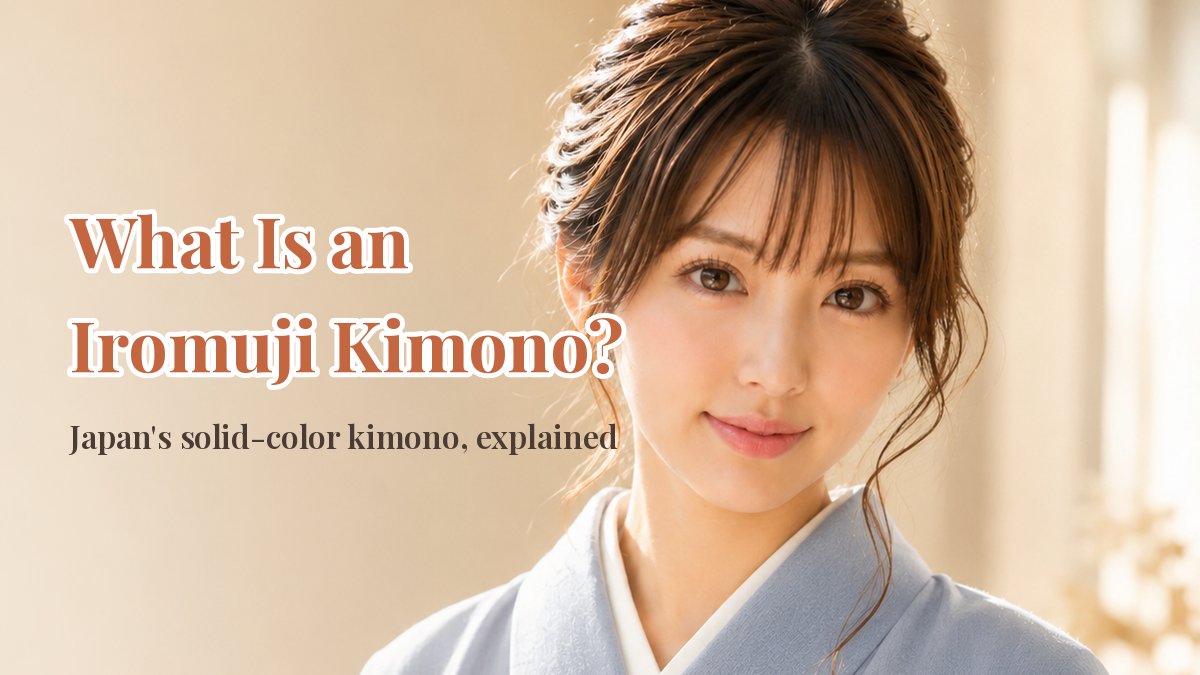
Most people expect a kimono to be covered in flowers, cranes, or waves. The iromuji is the quiet exception — a kimono dyed in a single solid color with no design at all. Yet this plainest of kimono is secretly one of the most useful garments in a Japanese wardrobe. It is the kimono worn to tea ceremonies, to a child’s graduation, to a friend’s celebration, and — in the right color — even to a funeral. One garment, many faces.
What Is an Iromuji Kimono?
An iromuji is a kimono dyed in one solid color, other than black, with no dyed patterns and no embroidery. That single rule — one color, no picture — is the whole definition.
The only decoration an iromuji is allowed is a texture woven into the cloth itself, called a jimon. Fabrics like rinzu (a soft, satin-like silk) carry subtle woven motifs — flowing water, clouds, chrysanthemums — that catch the light without ever becoming a visible “pattern.” From across a room the kimono reads as pure color; up close, it shimmers. That restraint is exactly the point.
What the Word “Iromuji” Means
The name explains itself. Iro (色) means “color,” and muji (無地) means “no pattern” or “plain.” Put together, iromuji literally means “colored, but plain” — a solid-color cloth with nothing printed on it.
It is a helpful name to remember, because it also tells you what an iromuji is not. A kimono with scattered little motifs is a komon. A kimono with flowing painted scenery is a houmongi. Strip all of that away and leave only the color, and you have an iromuji.
Where Iromuji Fits: Komon, Iromuji, Tsukesage & Houmongi
Japanese kimono follow an unspoken formality scale, a lot like the difference between jeans, a day dress, and a gown. Here is where the iromuji sits among the everyday and semi-formal types.
| Type | Design | Formality | Typically worn for |
|---|---|---|---|
| Komon | Small repeating patterns all over | Casual | Shopping, outings, relaxed days |
| Iromuji | Solid color, no pattern | Casual to formal (crest decides) | Tea ceremony, ceremonies, celebrations |
| Tsukesage | Modest placed motifs | Semi-formal | Parties, receptions, dining |
| Houmongi | Flowing motifs across the seams | Semi-formal to formal | Weddings (as a guest), formal parties |
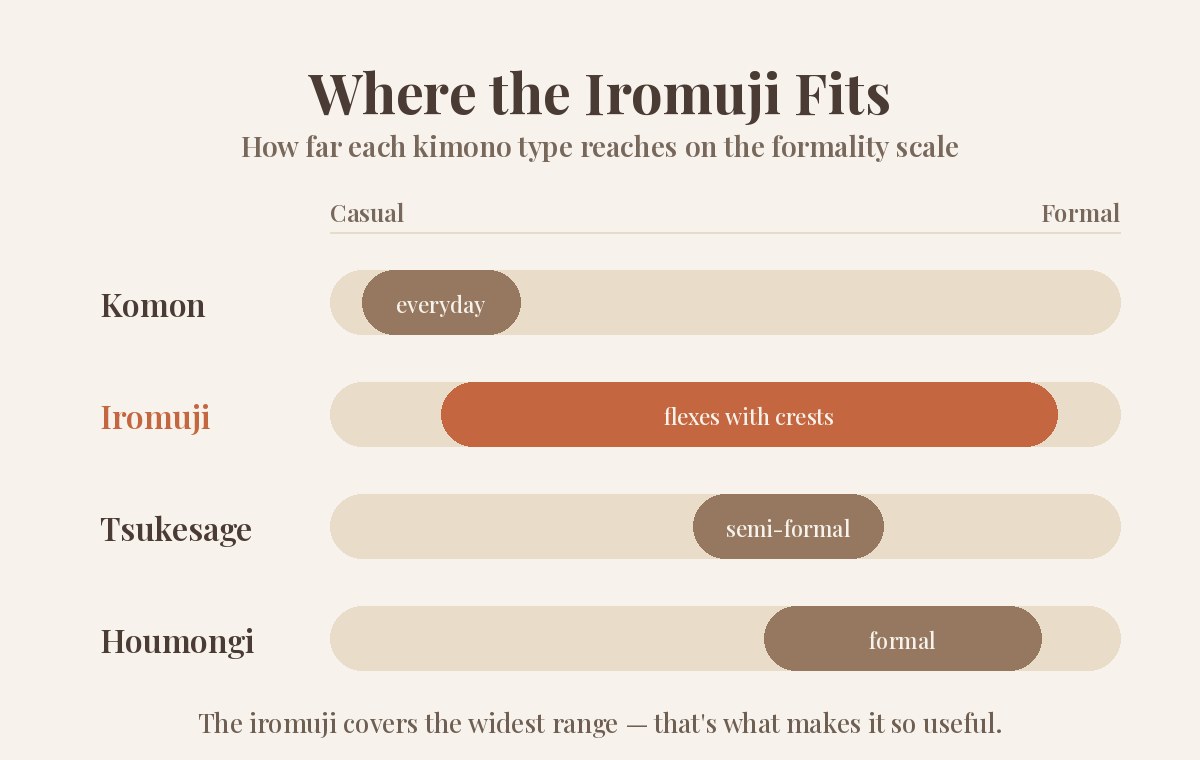
What makes the iromuji unusual is that it does not have one fixed rank. A komon is always casual; a houmongi is always dressy. An iromuji can be either — and the deciding factor is something you might not even notice at first glance: its family crests.
Explore the other kimono types:
Komon: the everyday kimono · Houmongi: the visiting-wear kimono · Tomesode: the most formal kimono · Tsukesage (coming soon)
How Family Crests (Kamon) Set the Formality
A kamon (家紋) is a family crest — a small, stylized emblem passed down through generations, much like a European coat of arms. When crests are dyed onto a kimono in white circles (on the back, sleeves, and chest), the garment becomes a montsuki, and the number of crests raises its formality step by step.
The iromuji is the least formal kimono that is allowed to carry crests at all — which is exactly what gives it such a wide range:
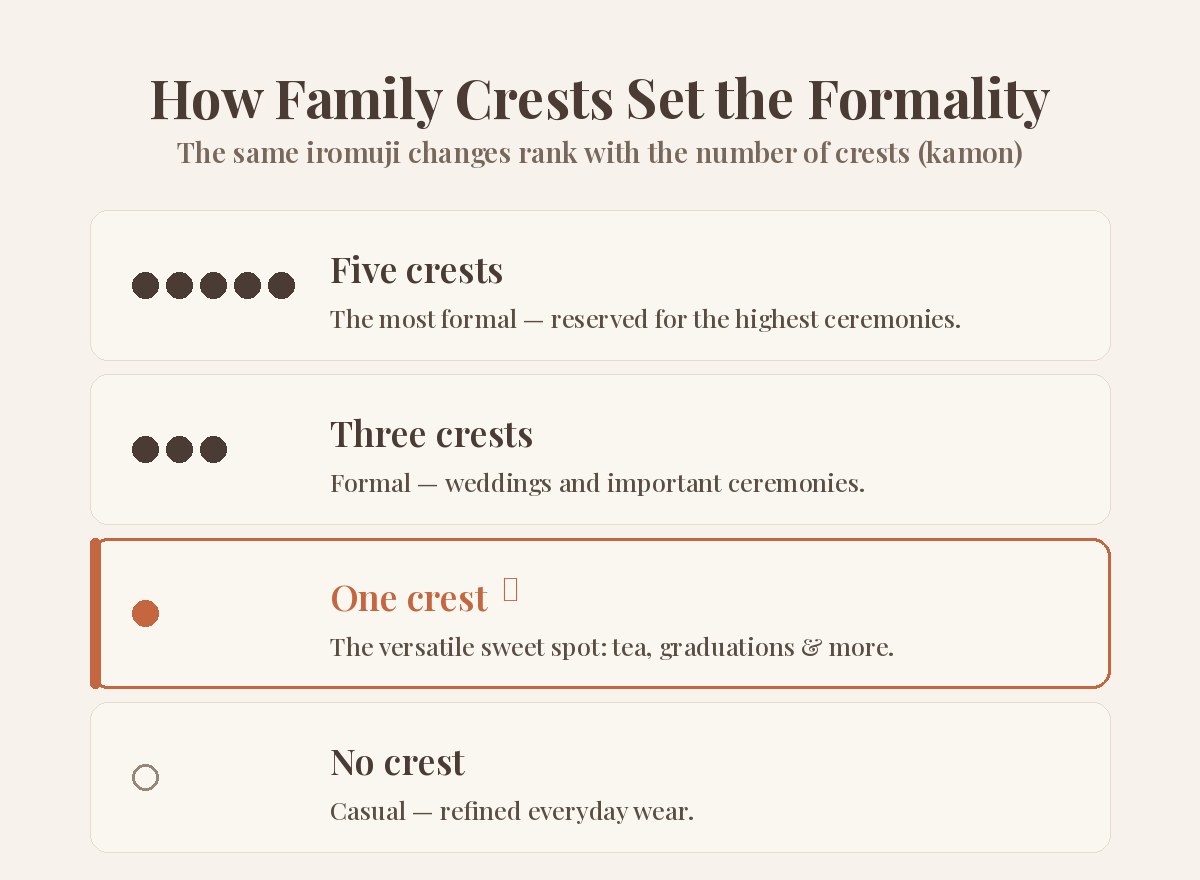
- Five crests (itsutsu-mon)The most formal. Reserved for the highest ceremonial occasions.
- Three crests (mitsu-mon)Formal. Suitable for weddings and important ceremonies.
- One crest (hitotsu-mon)The versatile sweet spot. Dressy enough for tea ceremonies and graduations, yet not so formal that it feels out of place at a relaxed gathering. This is the crest most people choose.
- No crest (mumon)Casual. Worn as elegant everyday wear or for a dinner out.
Beginner tip: If you only ever own one iromuji, choose a single-crest version. It covers the widest range of occasions with a simple change of obi.
The Tea Ceremony Kimono
Ask anyone in Japan which kimono belongs at a tea ceremony (chado), and the answer is almost always the iromuji. There is a deep reason for that.
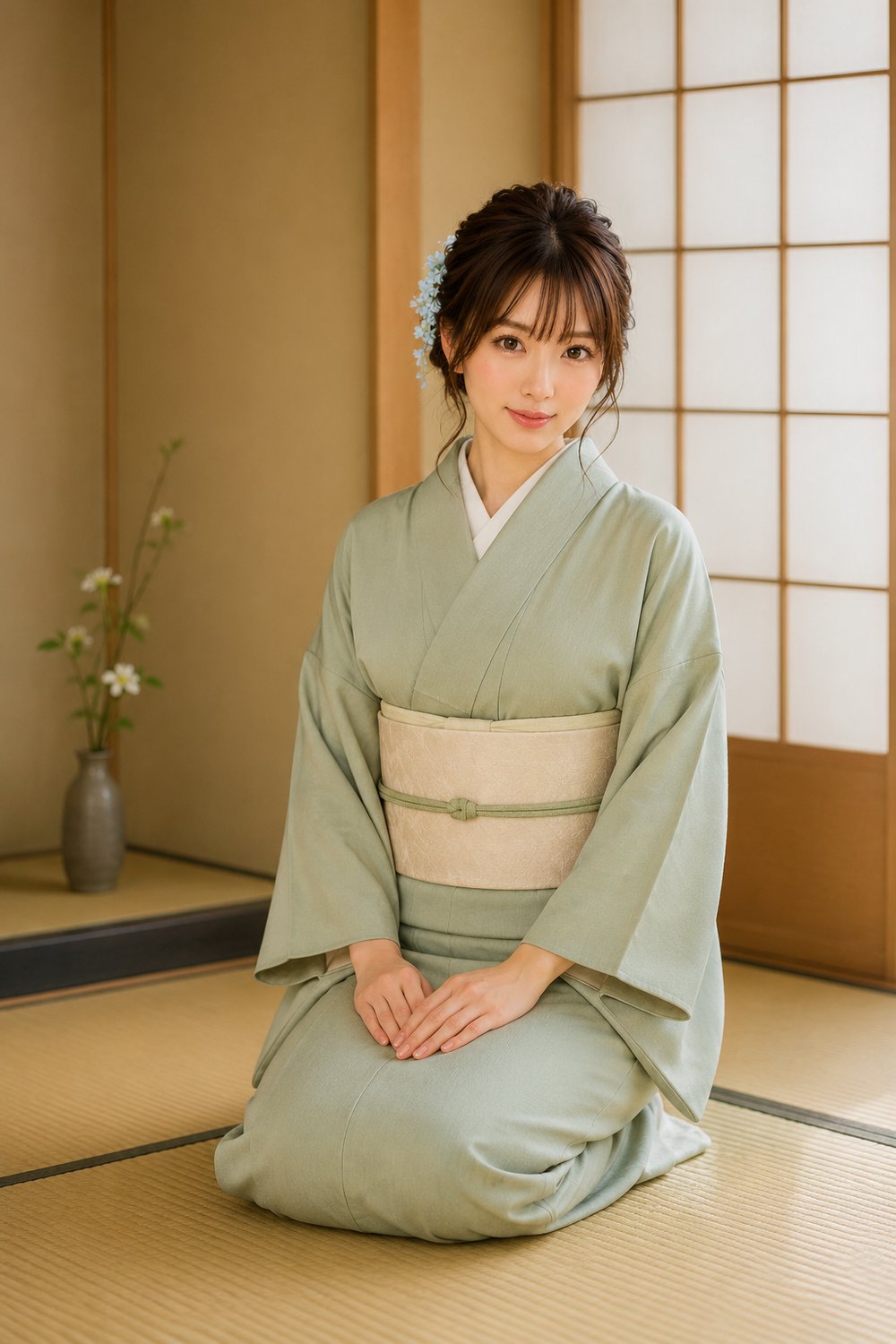
In the world of tea, the host, the guests, the utensils, and the season are meant to be in quiet harmony. Nothing should pull focus from the bowl of tea itself. A boldly patterned kimono would compete with that stillness — so the plain, calm surface of an iromuji is considered the ideal. Its beauty is the beauty of restraint, and it lets the moment speak. A single-crest iromuji in a soft, seasonal color is the standard choice for students and guests alike.
When Else to Wear an Iromuji
Because its formality flexes with its crests and obi, the iromuji shows up at more moments in Japanese life than almost any other kimono.
Graduations and school ceremonies
A single-crest iromuji is a classic choice for mothers attending a child’s entrance ceremony or graduation. It looks composed and respectful without overshadowing the students of the day.
Celebrations and parties
Paired with a festive gold-or-silver fukuro obi, a crested iromuji becomes suitable for weddings (as a guest), receptions, and formal parties. The same kimono with a more relaxed obi dresses right back down again.
Condolences and funerals
Here the color does the work. A crested iromuji in a subdued shade — muted purple, deep indigo, or gray — is appropriate for memorial visits and less formal mourning occasions.
Important distinction: A muted iromuji is not the same as full mourning dress. The formal black mourning kimono is a separate garment called mofuku, dyed solid black with five crests and worn only by close family at funerals. An everyday iromuji should never be black.
Choosing Your First Iromuji
If you are buying an iromuji for the first time, three simple choices will carry you a long way.
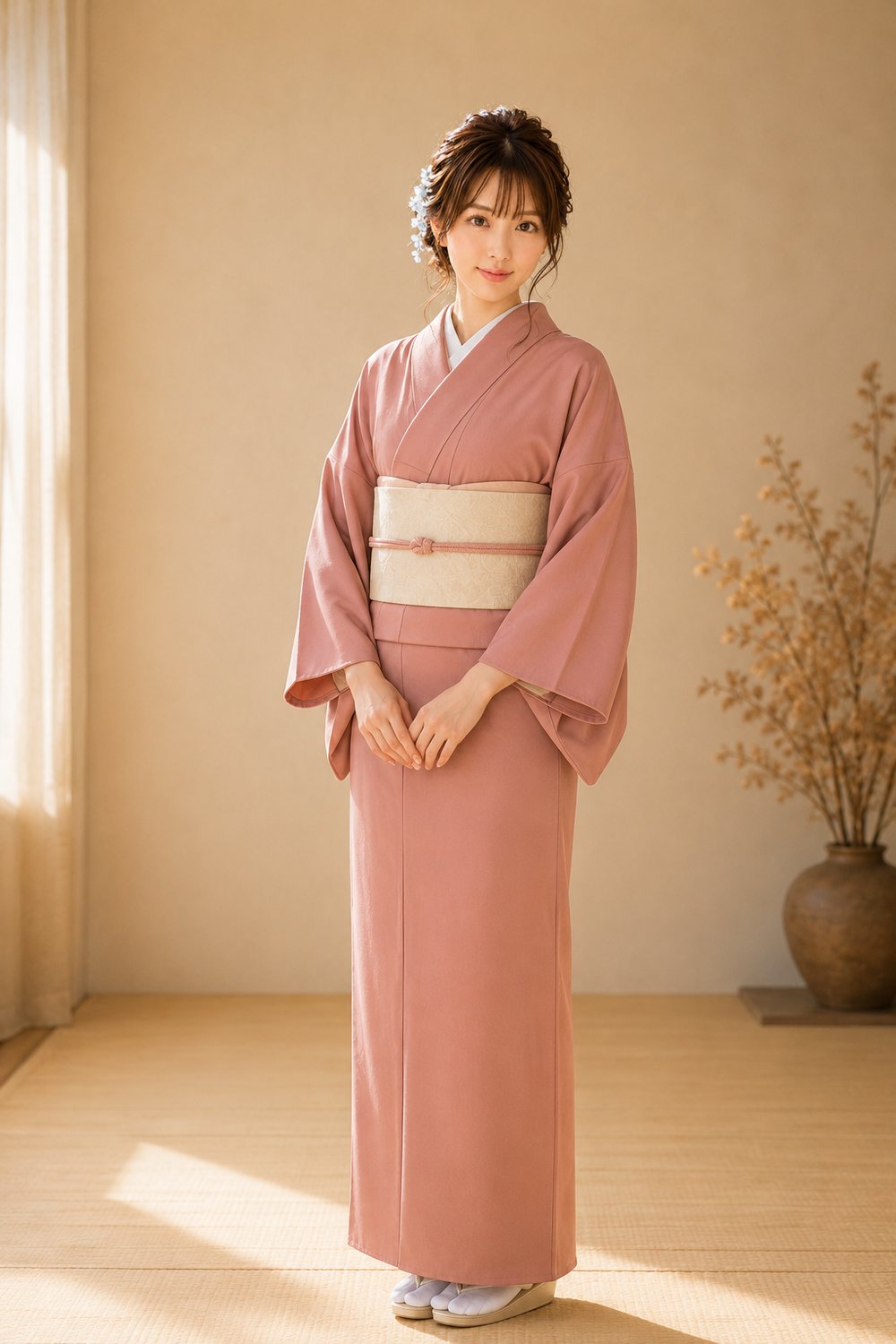
Color: Reach for a versatile mid-tone — soft rose, sage, dove gray, or a gentle blue. These read as elegant across seasons and suit almost any occasion. Very pale or very vivid colors are lovely but narrow your options.
Crest: As above, a single crest gives you the most flexibility for the least commitment.
Obi: This is the secret to the iromuji’s “many faces.” Swap in a formal fukuro obi to dress it up for a ceremony, or a lighter nagoya obi to relax it for a casual outing. One kimono, one crest, two obi — and you are ready for nearly anything.
Iromuji Kimono FAQ
Can you wear an iromuji to a wedding?
Yes, as a guest. A one- or three-crest iromuji paired with a formal fukuro obi is perfectly appropriate. Save five-crest formality for the closest family roles, where a tomesode is more usual.
Is iromuji formal or casual?
Both — that is its whole charm. The number of crests and the obi you pair it with decide where it lands, from everyday wear to genuinely formal.
What is the difference between iromuji and houmongi?
A houmongi has flowing painted motifs that connect across the seams; an iromuji has no pattern at all. The houmongi is decorative, the iromuji is defined by its calm, solid color.
Can you wear an iromuji without a crest?
Absolutely. A crestless (mumon) iromuji is treated as refined everyday wear and is a lovely, low-pressure way to enjoy kimono.
What color should a beginner choose?
A versatile mid-tone such as rose, sage, gray, or soft blue. It flatters across seasons and keeps the most occasions open to you.
Keep exploring the world of kimono:
Plain on the surface, endlessly adaptable underneath — the iromuji proves that in kimono, sometimes the quietest choice is the smartest one.