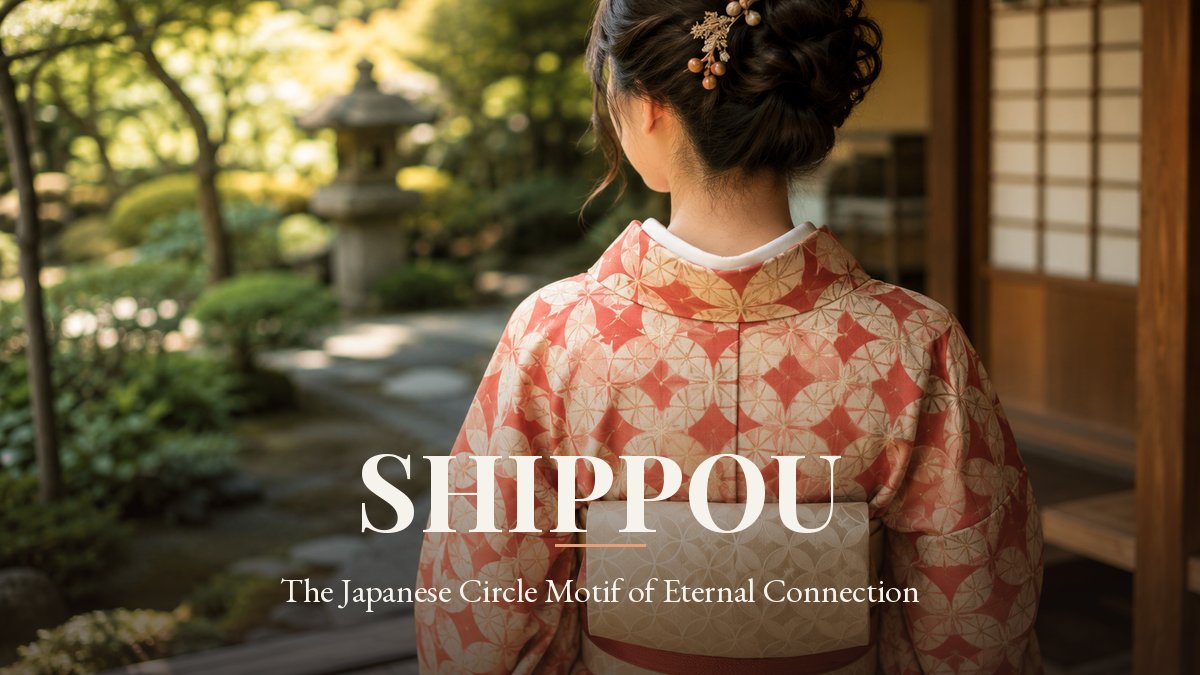
Among Japan’s traditional patterns, few carry as quietly powerful a message as shippou (七宝), also known as shippou tsunagi. At first glance, it’s a simple geometric design: identical circles overlapping by a quarter of their diameter, repeated endlessly in a grid. But look closer, and shippou tells a story about connection — one that has made it a beloved motif on kimono, obi, and traditional crafts for generations.
A Pattern with Deep Roots
Shippou is a pattern that has been used in Japan since ancient times. In earlier periods, it was also known as wachigai (輪違い), meaning “crossed circles” or “interlocking rings” — a name that describes exactly what the eye sees: circles crossing and overlapping in an unbroken chain.
Where Does the Name “Shippou” Come From?
The origin of the name shippou is debated, and a few different explanations exist.
One theory holds that because the circles extend outward in every direction, the pattern was first called shihou (四方), meaning “four directions” or “on all sides.” Over time, this term is said to have shifted into shippou.
Another theory connects the name to the Buddhist concept of the Seven Treasures — a set of precious materials described in Buddhist sutras as adorning the Pure Land. The exact list of these treasures varies depending on the sutra, but they generally represent rare and precious materials such as gold, silver, and gemstones. Under this theory, the endlessly connected circles came to be associated with abundance and preciousness, linking the pattern’s name to these treasured materials.
Rather than a single confirmed origin, shippou’s name likely carries echoes of both ideas — a pattern that spreads in every direction, named after things of great value.
The Design: Circles That Become Something More
The beauty of shippou lies in its simplicity. Each circle overlaps its neighbors by exactly one quarter, repeating in every direction to form a continuous lattice. Where the circles intersect, new shapes seem to emerge — flower-like petals and elegant geometric forms appearing in the negative space between the rings.
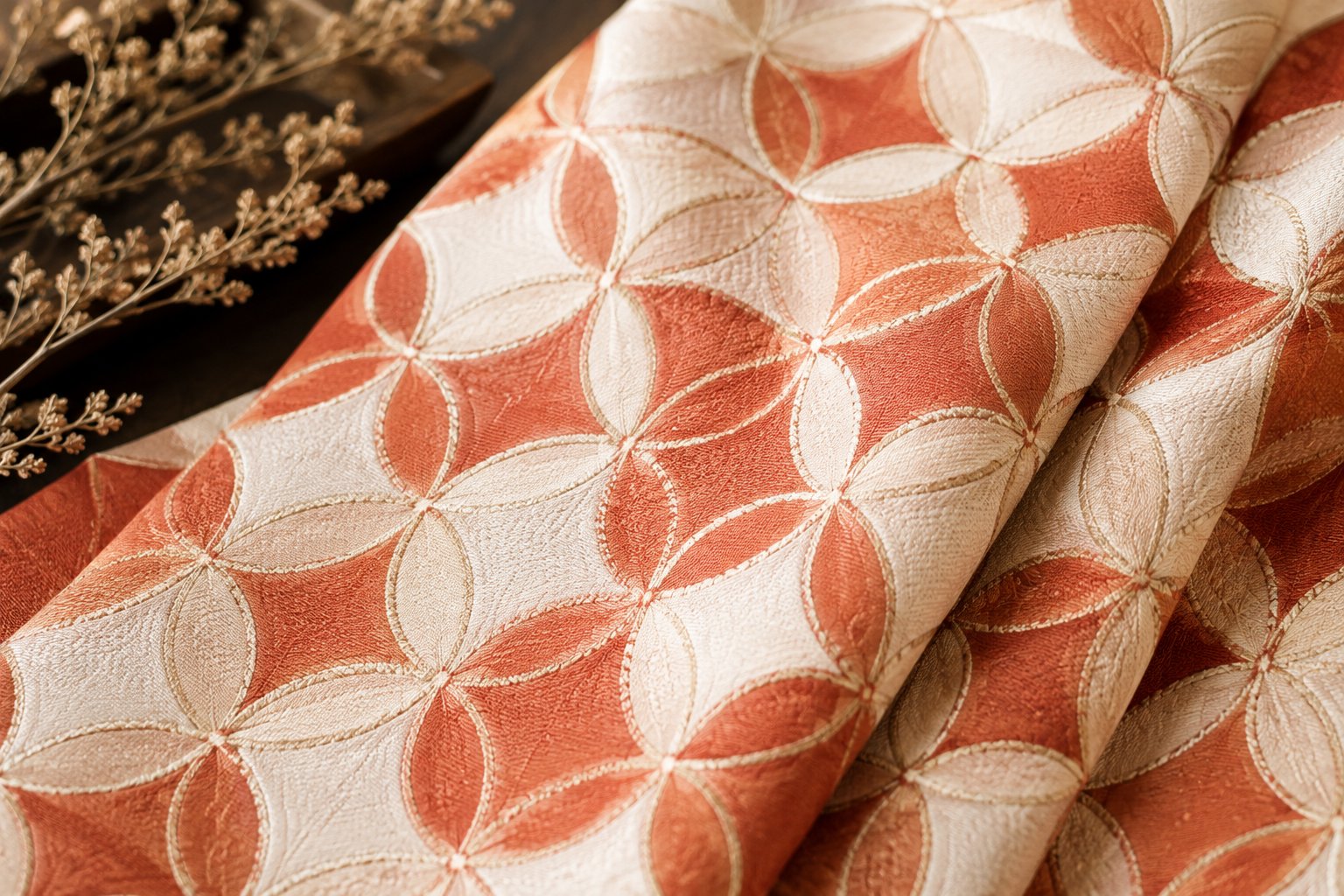
The overlapping circles of shippou create flower-like shapes in the spaces between them.
It’s this optical layering — circles giving rise to shapes beyond themselves — that has made shippou a favorite not only in textiles but in raden (mother-of-pearl inlay), lacquerware, and other traditional crafts.
What Shippou Symbolizes
Because the circles in shippou never break — each one flows seamlessly into the next — the pattern has long been read as a symbol of:
- Harmony and completeness (enman, 円満)
- Bonds between people — interlocking circles as a visual metaphor for relationships that remain unbroken
- Prosperity and abundance
- The continuation of family and descendants
For American readers, the easiest way to think about it: shippou visualizes unbroken connections. Just as the circles link endlessly without a single gap, the pattern has come to represent relationships and good fortune that carry on without interruption — lasting relationships, made visible in cloth.
Shippou in Kimono, Obi, and Celebration
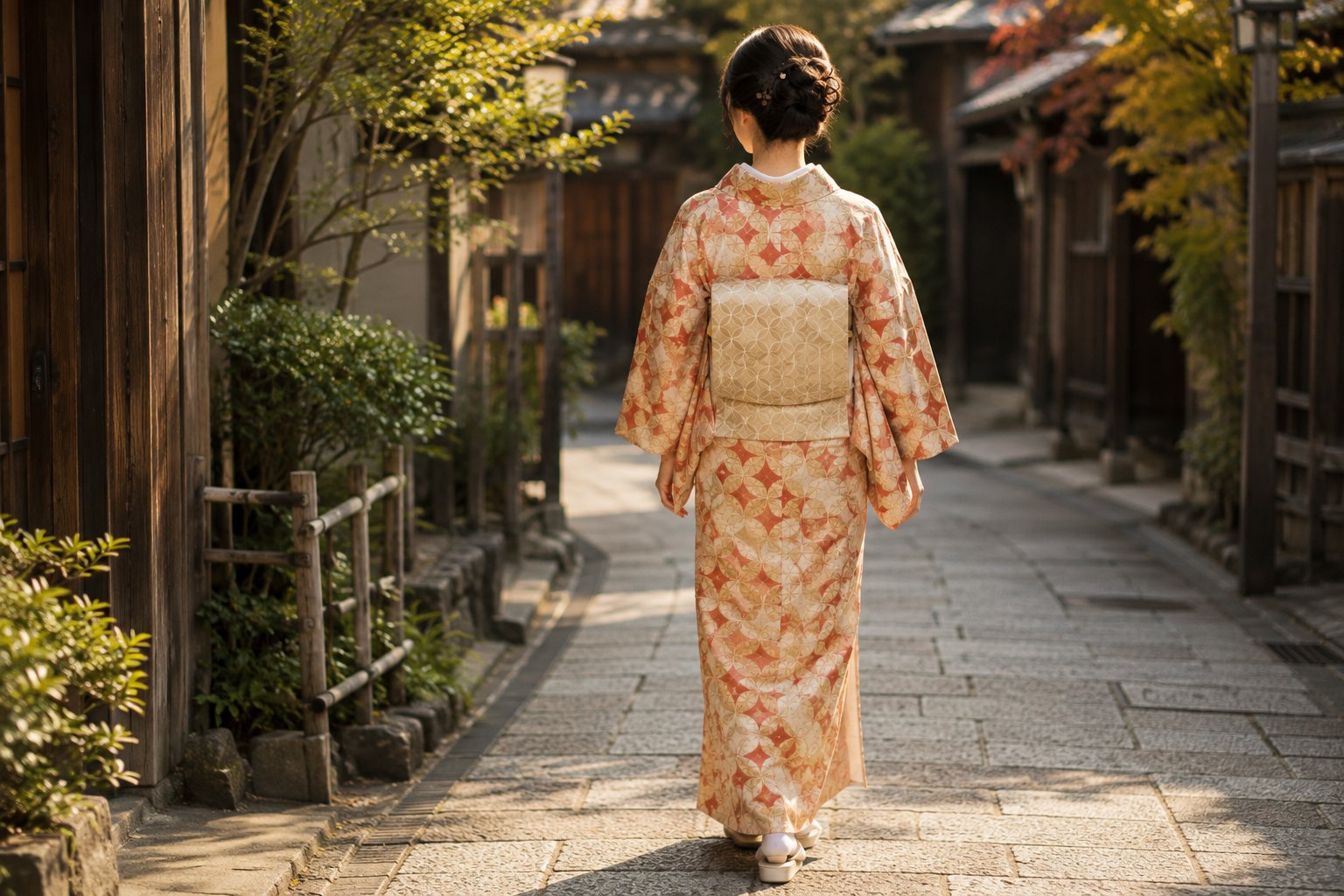
Shippou is often chosen for formal kimono and obi worn on celebratory occasions.
Thanks to this symbolism, shippou has long been treasured as an auspicious (kissho) pattern — one considered fitting for celebratory occasions. It appears frequently on formal kimono and obi, as well as on small accessories, precisely because its meaning of harmony, connection, and prosperity resonates with the spirit of celebration.
Beyond textiles, shippou-based motifs have also found their way into lacquerware, ceramics, and mother-of-pearl inlay work, a testament to how versatile — and how beloved — this pattern has been across Japanese craftsmanship.
Variations on the Pattern
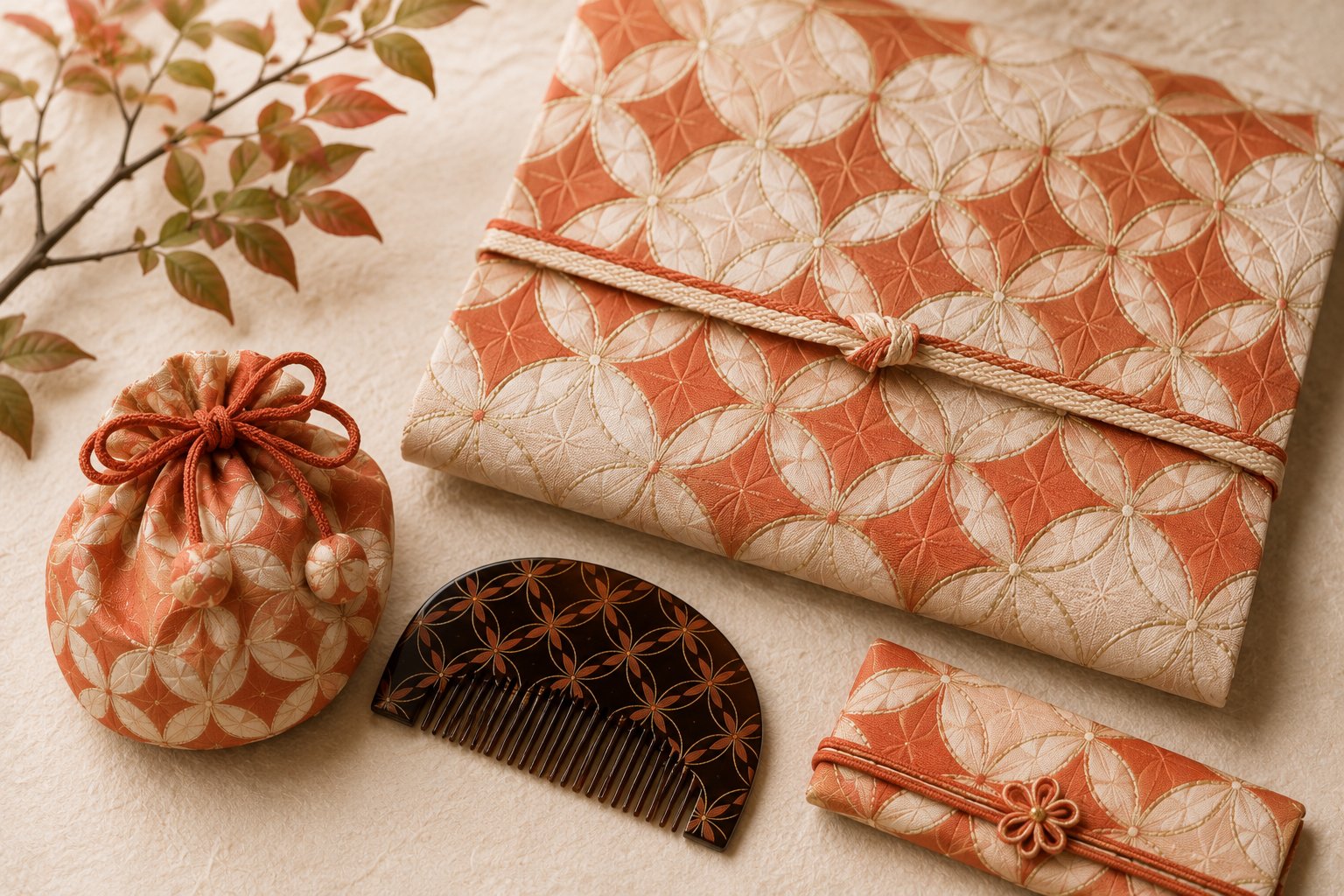
Shippou-inspired motifs appear on traditional accessories, from drawstring pouches to lacquered combs.
Shippou has inspired several variations over the centuries. One popular example is hana shippou (花七宝), where a small flower motif is placed at the center of each overlapping circle, adding extra visual richness to the repeating lattice.
The wachigai/shippou motif has also made its way into Japanese family crests (kamon), where a single unit of the pattern — sometimes three or four linked circles — is used on its own as a heraldic symbol, independent of the continuous textile pattern.
Closing Thoughts
What makes shippou special isn’t just its clean, geometric beauty — it’s the story hidden inside that geometry. A pattern of circles, endlessly overlapping, becomes a quiet expression of something deeply human: the wish that the connections we value — with family, friends, and loved ones — continue without end.
The next time you spot this lattice of interlocking circles on a kimono or obi, you’re looking at more than decoration. You’re looking at centuries of hope, woven into thread.