You’ve seen the dazzling long sleeves of the furisode and the crisp simplicity of a summer yukata. But what do Japanese women actually wear to a wedding, a tea gathering, or an elegant dinner? Meet the houmongi (訪問着) — literally “visiting wear” — Japan’s beloved semi-formal kimono. It’s graceful without being flashy, refined without being stiff, and it might just be the most useful kimono of them all. If you’re still mapping out the kimono world, start with our guide to all the types of kimono, then come back here for a closer look at this quiet star. And if the line between everyday and formal wear still feels blurry, our guide to the difference between kimono and yukata is a great place to start.
What Is a Houmongi?
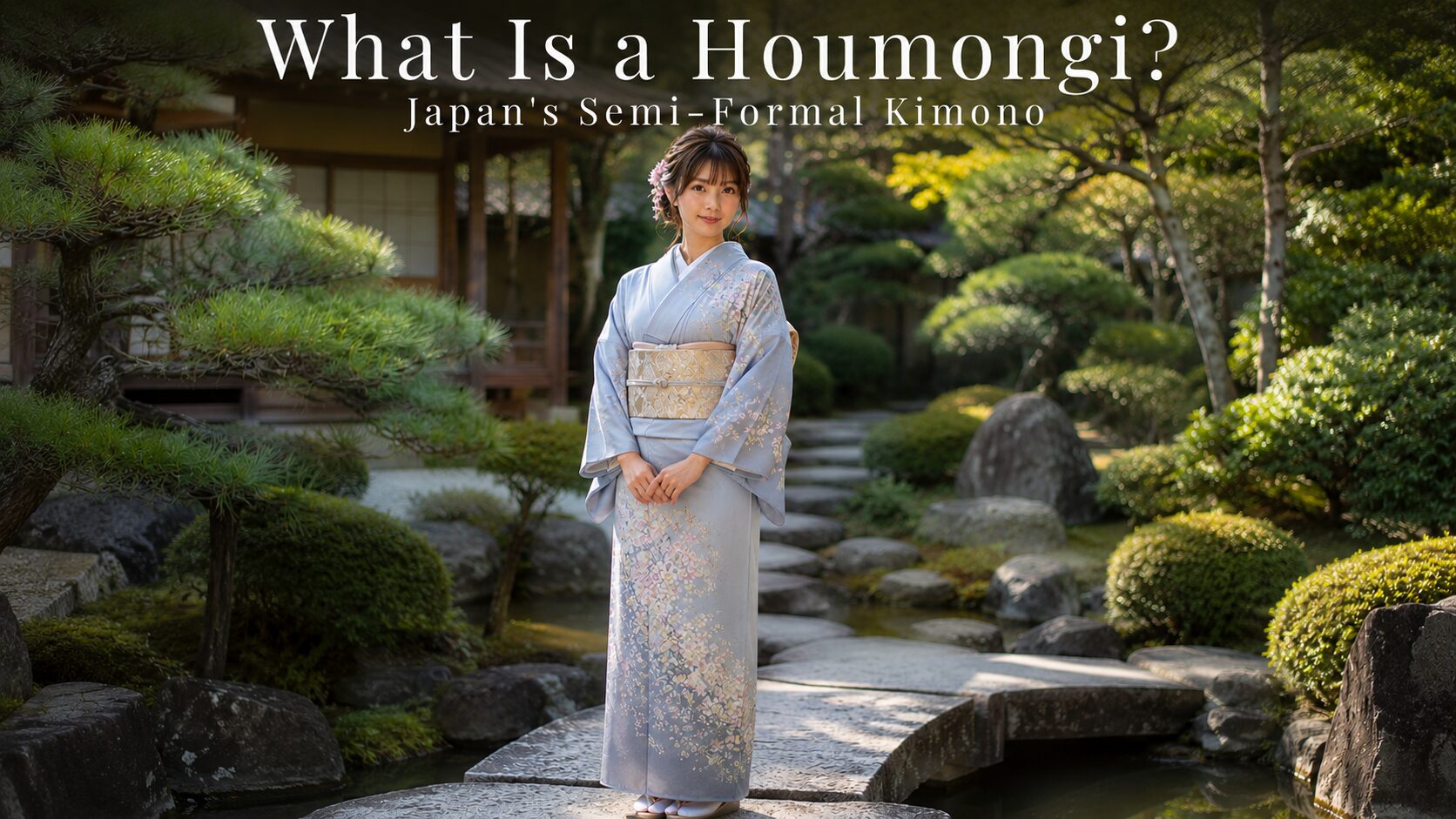
houmongi 訪問着 — “visiting wear”The houmongi is a relatively modern kimono. While Japanese women have always had garments for paying visits, the houmongi as we know it today took shape in the late Taisho to early Showa era (the 1920s–30s), developing as Japan’s answer to the Western “visiting dress.” It’s a semi-formal kimono — one step below ceremonial wear, several steps above everyday kimono — and unlike the furisode, which is reserved for unmarried women, the houmongi can be worn by anyone, married or not. That flexibility is a big part of its charm.
What truly sets a houmongi apart is its pattern, called eba moyo (絵羽模様). The fabric is temporarily stitched into kimono form first, and only then is the design painted across it. The result? When the kimono is finally sewn, the motif flows over the seams like a single continuous painting — drifting from the shoulder, across the chest and sleeves, down to the hem. A repeating small-print kimono simply can’t do that.
Most houmongi carry either no family crest or a single crest (kamon). Adding one crest is like an optional upgrade — it makes the kimono appropriate for even more formal occasions.
When to Wear a Houmongi
the kimono for life’s beautiful occasionsIf the furisode is a once-in-a-youth showstopper, the houmongi is the kimono you’ll actually reach for again and again. Here’s where it shines:
- Wedding guest — one of the most popular choices for attending a Japanese wedding or reception (think of it as the kimono equivalent of a beautiful cocktail dress).
- Tea gatherings — choose a pattern that isn’t too showy, and a houmongi suits most tea ceremony occasions gracefully.
- Children’s milestones — mothers wear houmongi to school entrance ceremonies, graduations, and Shichi-Go-San celebrations.
- Elegant outings — formal dinners, theater visits, garden parties, and cultural events.
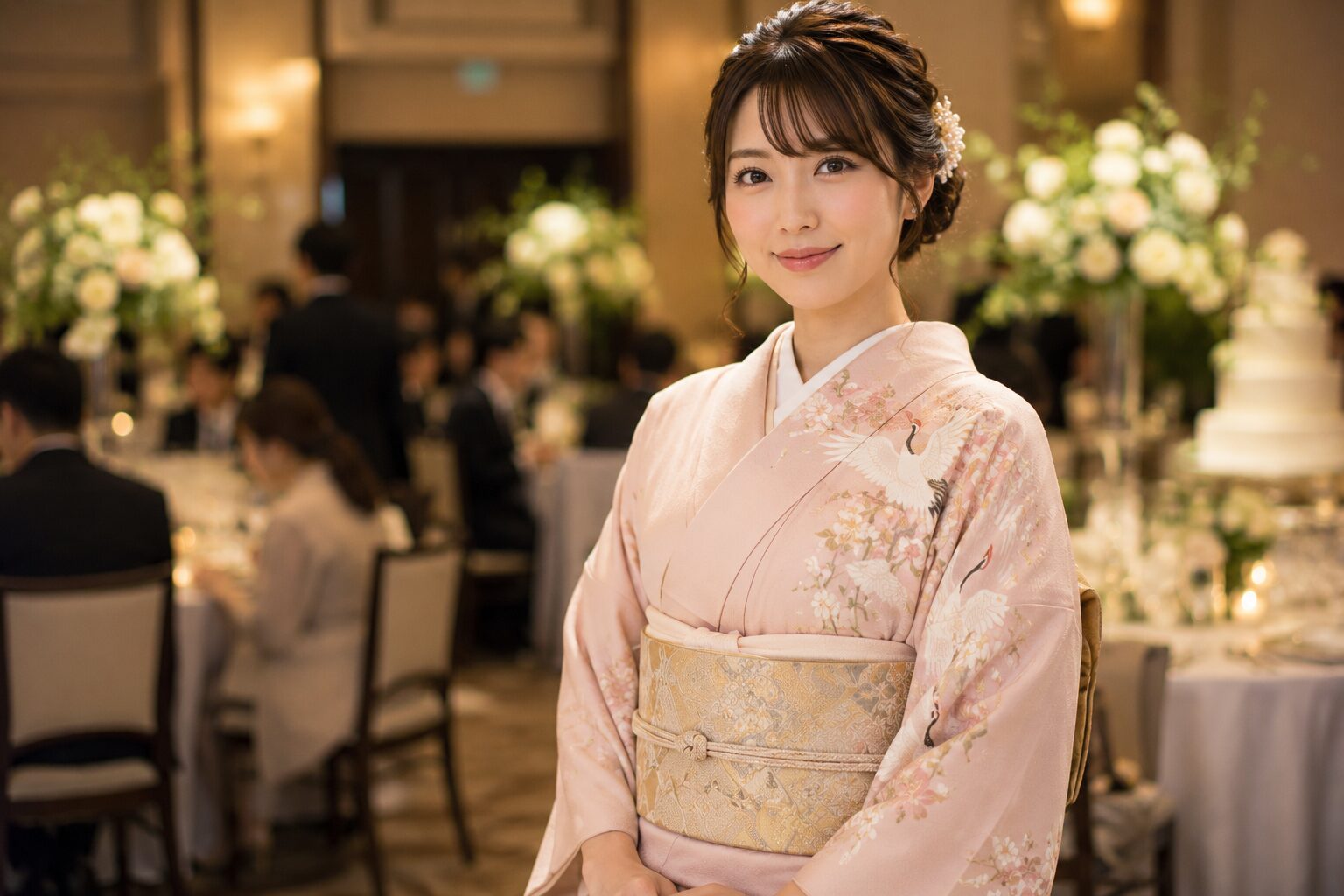
For readers in the US: picture the occasions where you’d wear a refined midi dress — a friend’s wedding, a gala dinner, a Japanese cultural festival. That’s houmongi territory. It says “I dressed up for you” without ever shouting.
Houmongi vs Tomesode vs Tsukesage: How to Tell Them Apart
the question everyone asksSemi-formal and formal kimono can look confusingly similar at first. The secret is to look at where the pattern sits and whether it flows across the seams. Here’s the cheat sheet:
| Kimono | Pattern | Formality | Who Wears It |
|---|---|---|---|
| Houmongi | Flows like one painting across shoulder, chest, sleeves, and hem | Semi-formal | Anyone, married or unmarried |
| Tomesode | Below the waist only; black tomesode is the most formal | Most formal | Married women — worn at weddings by mothers and close female relatives |
| Tsukesage | Similar placement to houmongi, but the motifs stay modest and rarely cross the seams | A step below houmongi | Anyone |
| Komon | Small repeating pattern over the entire fabric | Casual | Anyone, for everyday chic |
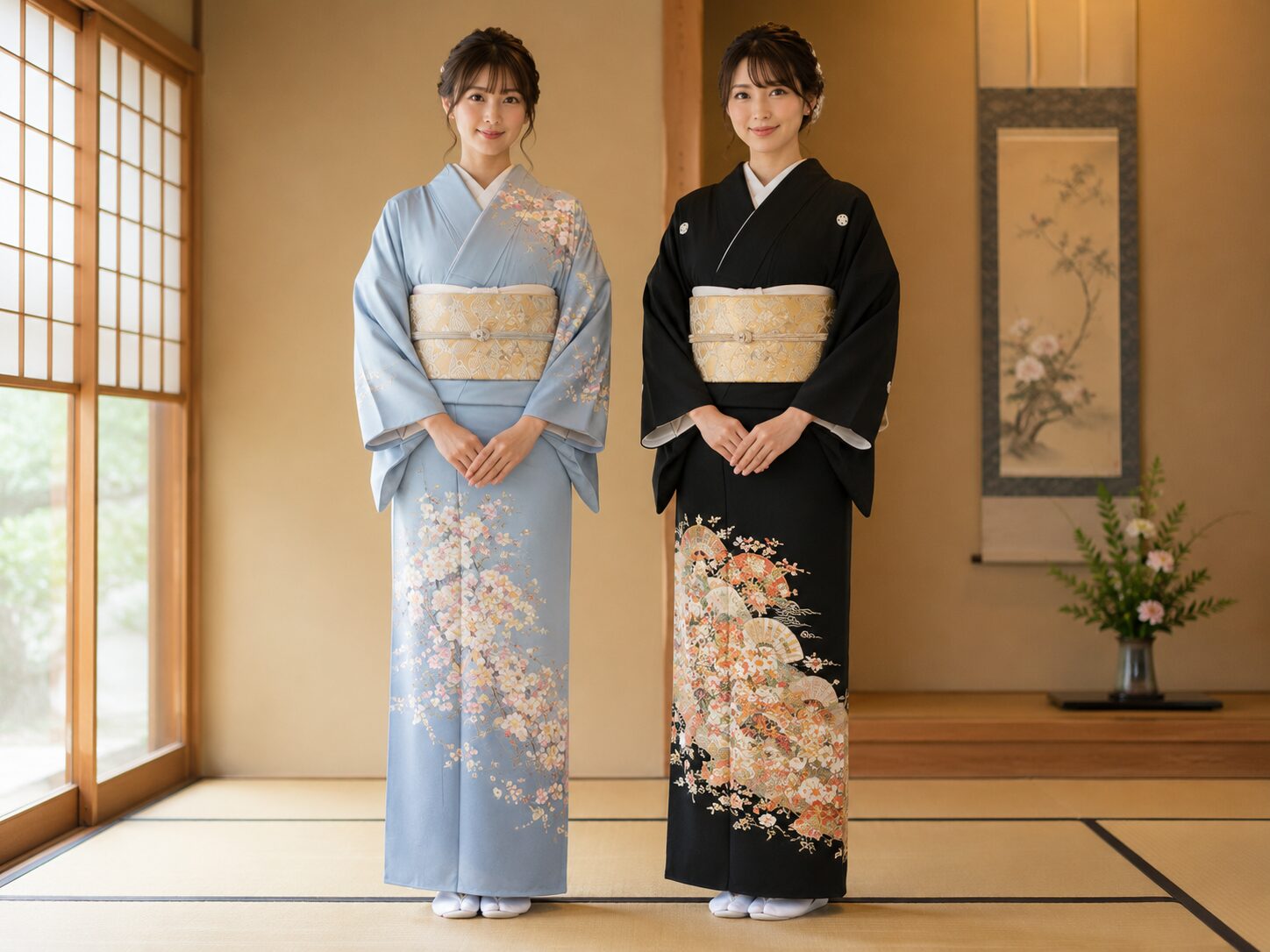
A quick memory trick: if the design appears on the shoulders and chest and connects like a landscape scroll, you’re looking at a houmongi. If everything is concentrated below the waist, it’s a tomesode. The tsukesage sits in between — it was created in the early Showa era as a simplified take on the houmongi, and it spread widely during wartime as a practical semi-formal option. And on the casual end of the spectrum lives the charming komon kimono, covered in small repeating motifs.
The tomesode has its own set of rules worth knowing — the five crests, the difference between the black and colored versions, and why it’s reserved for married women. We cover it all in Tomesode: Japan’s Most Formal Kimono.
How to Style a Houmongi
quiet luxury, kimono edition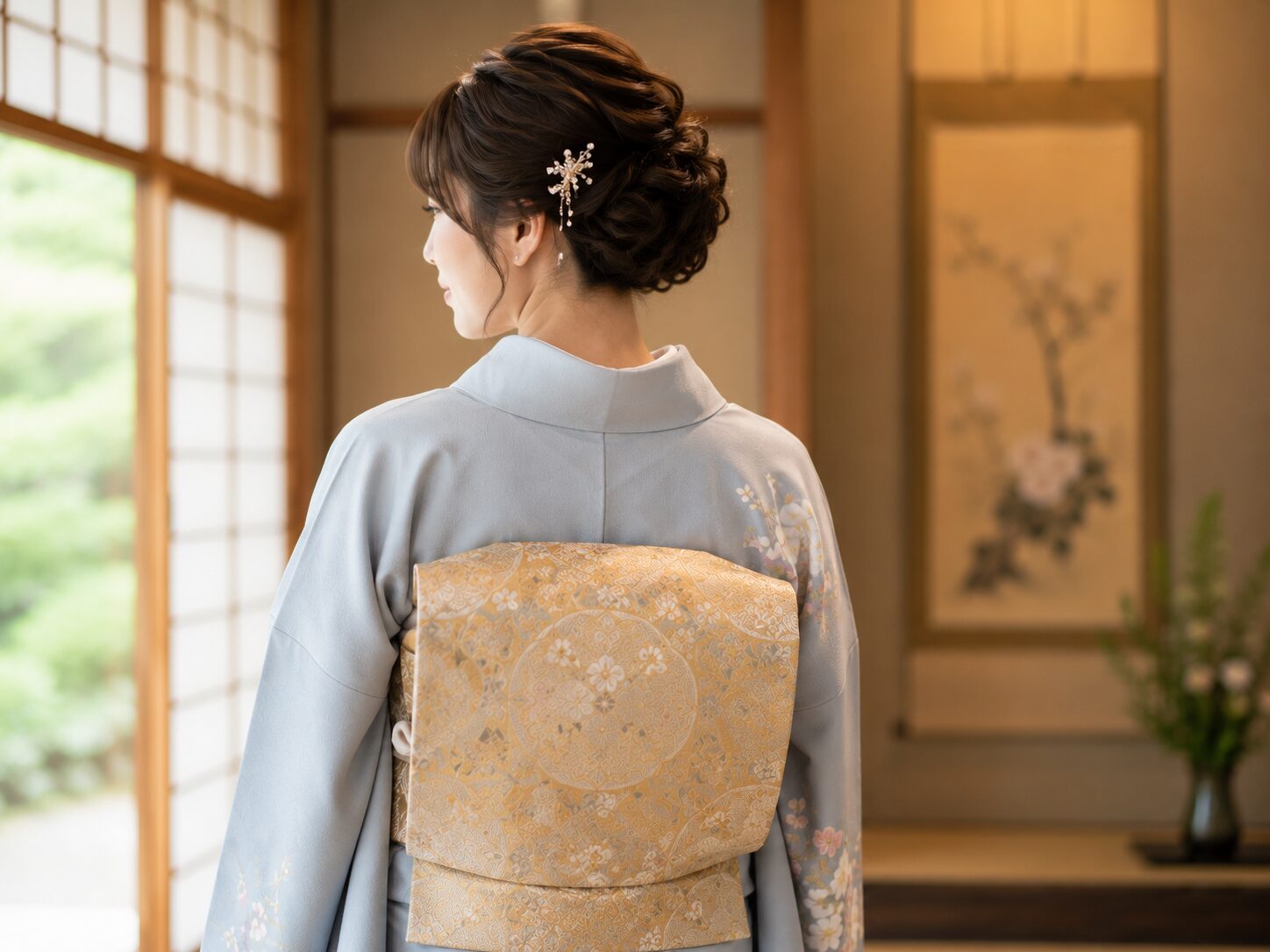
A houmongi calls for accessories that match its refined mood. The foundation of the look is the fukuro obi — a long formal sash tied in the double taiko knot (nijudaiko). The doubled fold isn’t just beautiful; it carries a lovely meaning of “happiness layered upon happiness,” which is exactly why it’s chosen for celebratory occasions.
- Obiage and obijime — keep the silk accents in soft, elegant tones that harmonize with the kimono.
- Han-eri (collar) — a clean white collar is the classic choice for semi-formal wear. Only the collar of the under-layer should peek out, framing the neckline.
- Zori and bag — formal sandals and a small bag in gold, silver, or pale tones complete the set.
- Hair — an elegant updo keeps the focus on the collar and the flowing pattern. Need ideas? See our kimono hairstyle guide.
Wondering how the whole ensemble actually goes on? Our step-by-step guide on how to wear a kimono walks you through every layer, from the under-robe to the final obi knot.
Renting or Buying a Houmongi
yes, you can actually wear one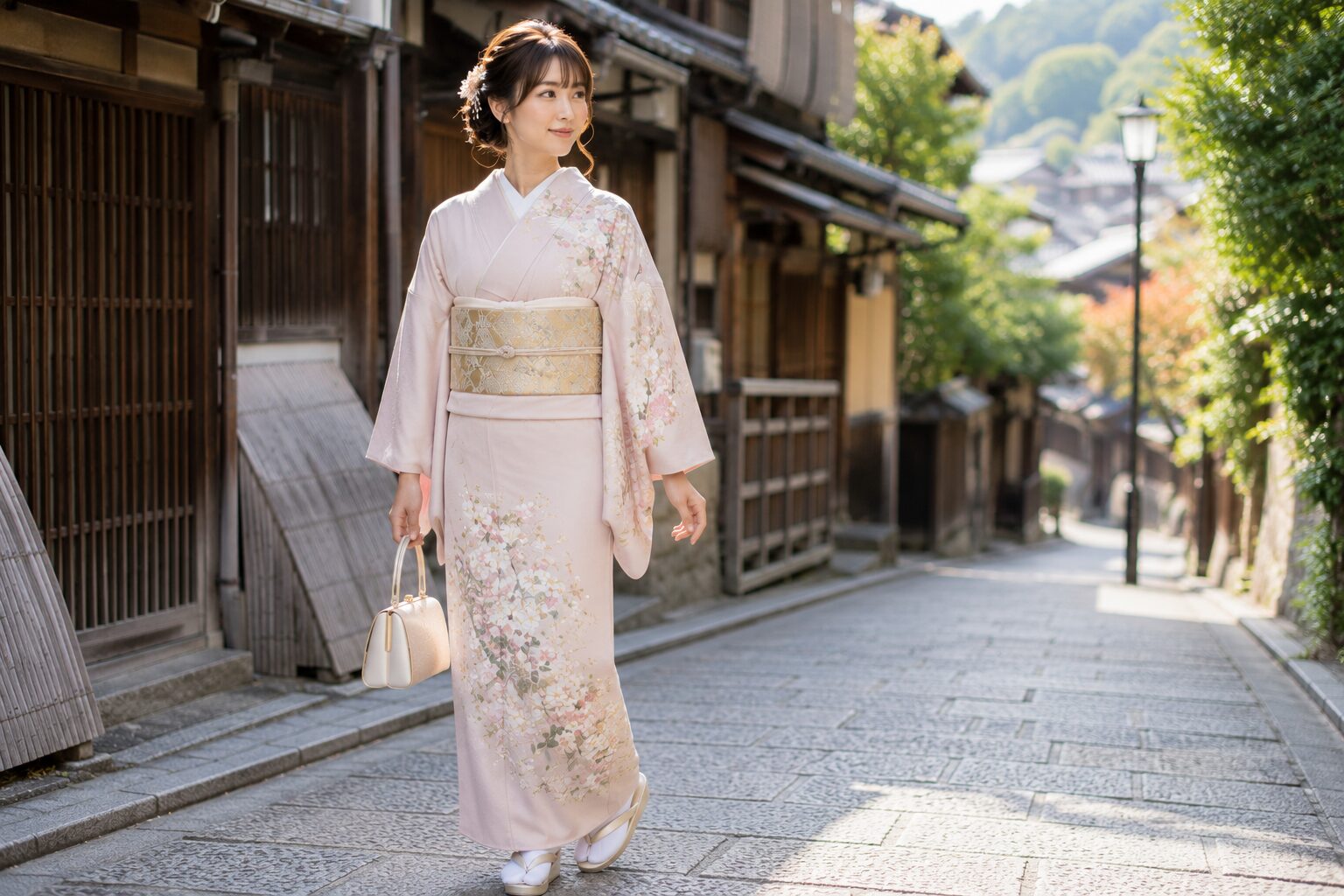
Visiting Japan? Renting is by far the easiest way to experience a houmongi. While most tourist rental shops focus on casual kimono and yukata, many also offer formal plans that include houmongi — perfect if you’re attending a wedding or a special dinner during your trip. Our Kyoto kimono rental guide covers how the process works, what’s included, and what to book ahead.
Thinking of owning one? A brand-new houmongi is a genuine investment — the eba pattern requires a painstaking dyeing process where the design is matched piece by piece, and that craftsmanship shows in the price. The good news: vintage and secondhand houmongi are widely available online and at kimono recycle shops, often at a fraction of the cost, and pre-loved silk kimono age beautifully.
Japanese cultural festivals, tea ceremony demonstrations, and Japanese-American weddings are all wonderful occasions to wear one stateside. Vintage kimono shops on Etsy and eBay regularly list authentic houmongi — search for “houmongi” plus “silk kimono” and check that the pattern flows across the seams.
The Kimono for Life’s Beautiful Moments
The houmongi doesn’t dazzle like a furisode or command a room like a black tomesode. Instead, it does something quieter and perhaps lovelier: it accompanies you to the moments worth dressing up for, and lets grace do the talking. Ready to meet the rest of the family? Step up the formality scale to the tomesode, or step down to the everyday komon.
Explore All Types of Kimono →Would you wear a houmongi as a wedding guest? Tell me in the comments below 🌸