Once you start reading about kimono formality, you will hit the word tsukesage — and most people stall right there.
It is not as dressed-up as a houmongi. It is not as casual as a komon. It sits quietly between them, and that in-between position is exactly why Japanese women reach for it so often.
Despite being one of the most practical kimono a woman can own, the tsukesage is barely explained in English. This guide covers what it actually is, how it differs from the kimono that sit either side of it, and when you would wear one.
What Is a Tsukesage Kimono?
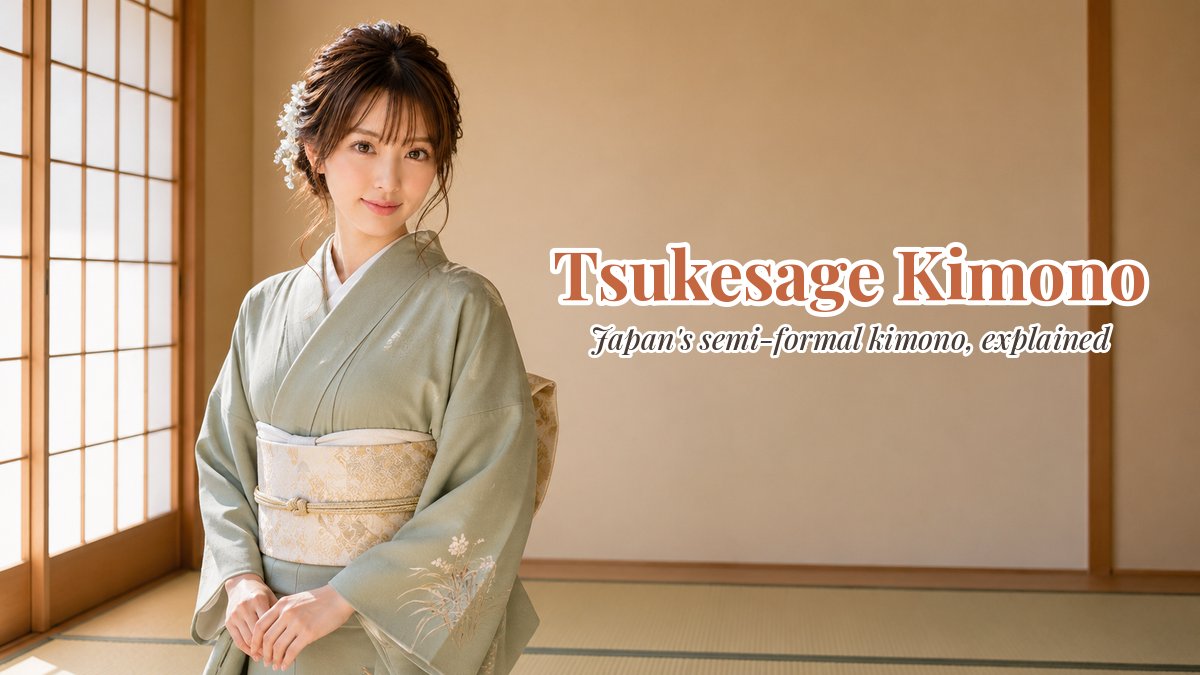
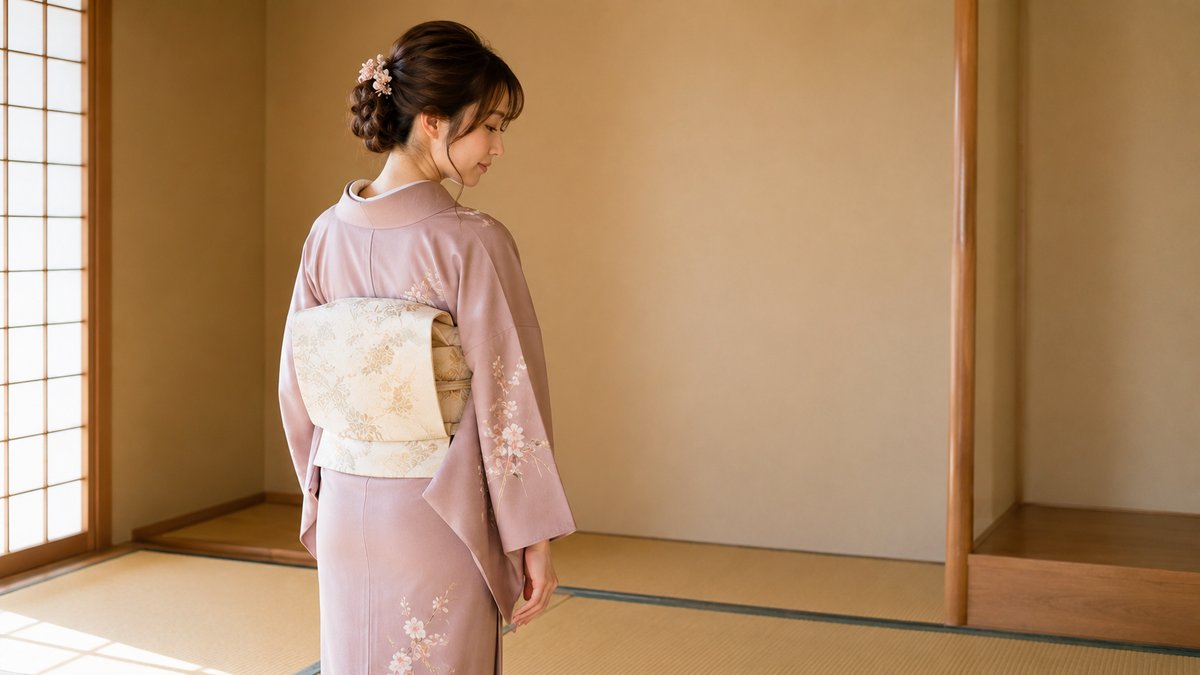
A tsukesage is a semi-formal kimono with a restrained, carefully placed design. The chest and shoulders are largely plain, and the pattern appears low on the skirt and on the sleeves.
The name comes from how that pattern is applied. A kimono changes direction at the shoulder line and the top of the sleeve, so a motif printed carelessly would end up upside down on one half of the garment. A tsukesage is dyed so that every motif points upward once the garment is worn. The name literally describes attaching the pattern so it hangs the right way up.
This is the clearest difference from a komon. A komon repeats the same small motif across the whole bolt of cloth, so once it is sewn, the pattern faces every direction at once. A tsukesage has order to it, and that order is what lifts it into semi-formal territory.
In one line: a tsukesage is a kimono whose modest pattern is deliberately positioned so that it always sits upright and never overwhelms the wearer.
Tsukesage vs Houmongi: The One Difference That Matters
This is the comparison that confuses almost everyone, and there is a single structural answer to it.
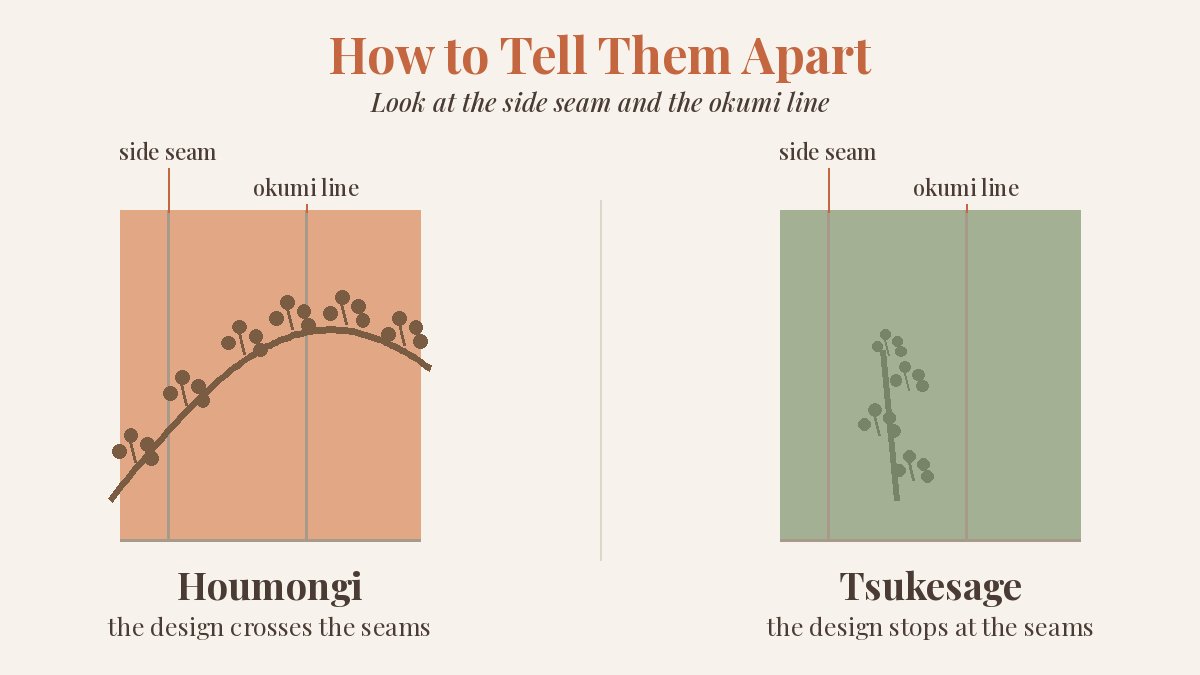
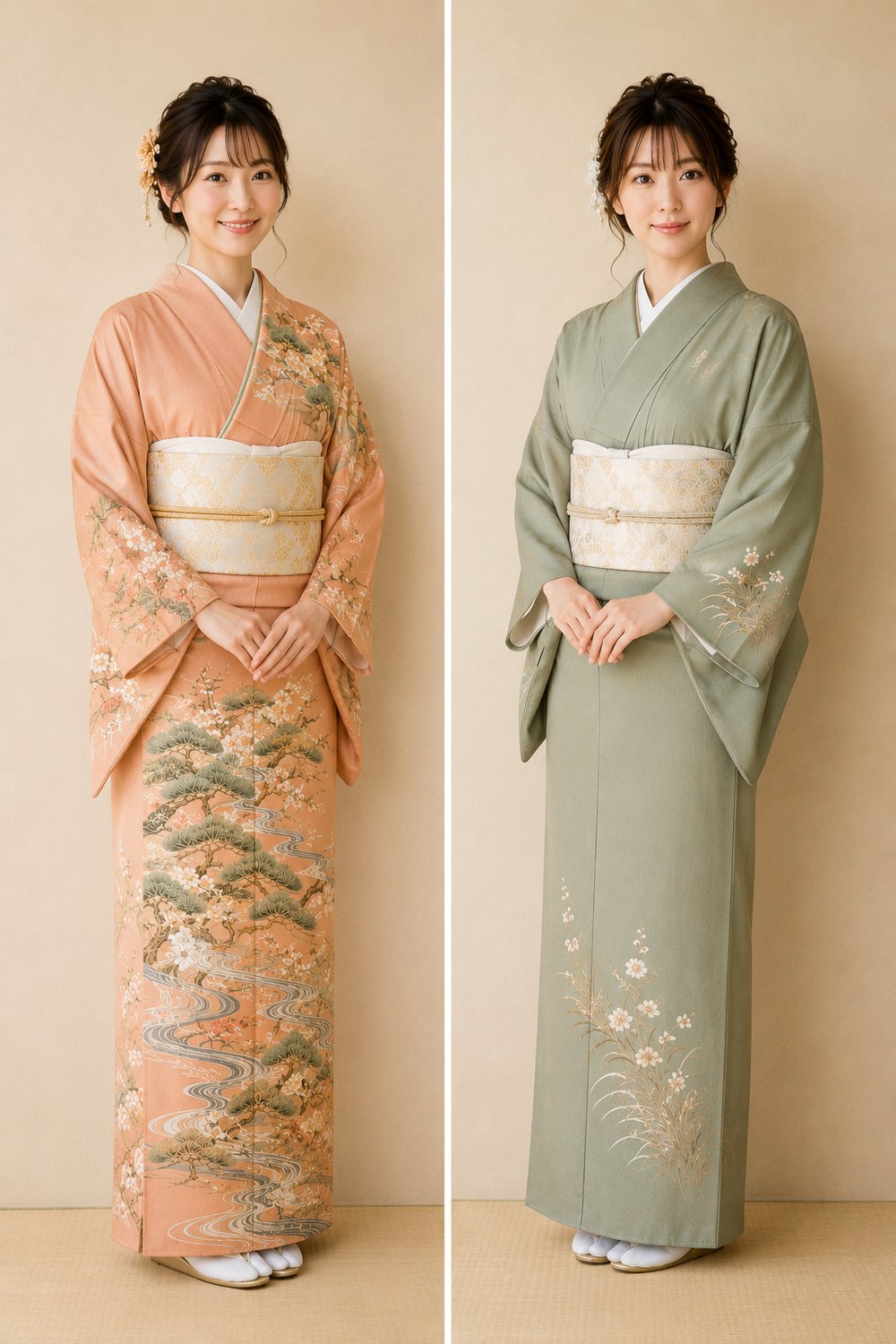
A houmongi is dyed using a technique called eba moyou. The bolt of cloth is first tacked together into the rough shape of a finished kimono, and the design is painted across that shape. When the garment is properly sewn, the pattern flows over the seams without a break, like one continuous picture wrapped around the body.
A tsukesage is dyed while the cloth is still a flat bolt. The design is planned to land in the right places, but it cannot cross a seam, because the seams do not exist yet. When the garment is sewn, the pattern stops at each seam.
How to Check It Yourself
Look at two lines on the front of the skirt: the side seam and the okumi line, which is the vertical seam of the front panel that runs down from the collar.
- If a branch, a wave, or a spray of flowers continues straight across those lines without interruption, you are looking at a houmongi.
- If the motifs sit neatly between the lines and never cross them, it is a tsukesage.
That difference in method is what produces the difference in rank. A houmongi takes more work, carries more visual weight, and ranks higher. A tsukesage sits one step below — and is far easier to wear without feeling overdressed.
One caveat. You will sometimes see garments sold as tsukesage houmongi. These are built like a tsukesage but have some motifs joined across the seams, landing somewhere between the two categories. The label is used loosely, so judge by the seams rather than the name on the tag.
Tsukesage vs Iromuji: Which Is More Formal?
An iromuji is a kimono dyed a single solid colour, with no pattern at all. It looks plainer than a tsukesage, so it seems obvious that the tsukesage would rank higher.
It is not that simple, because crests change the answer.
| Comparison | Which ranks higher |
|---|---|
| Tsukesage with no crest vs iromuji with no crest | The tsukesage — it carries more decoration |
| Tsukesage with no crest vs iromuji with one crest | The iromuji — the crest outranks the pattern |
A family crest, or kamon, is a formality device. Adding one lifts a garment above what its decoration alone would suggest. This trips up plenty of Japanese wearers too, so it is worth remembering.
Where a Tsukesage Sits in the Formality Scale
Ranked from most to least formal, the main categories run like this.
- Tomesode — the highest formal wear, black or coloured
- Furisode — the highest formal wear for unmarried women
- Houmongi
- Tsukesage
- Iromuji
- Komon
- Tsumugi
- Yukata
The tsukesage lands squarely in the middle, which is precisely its appeal. If you were building a kimono wardrobe and could only add one semi-formal piece, this is the one that would get the most use. For the full picture of how these categories relate, see our guide to kimono types.
When Do You Wear a Tsukesage?
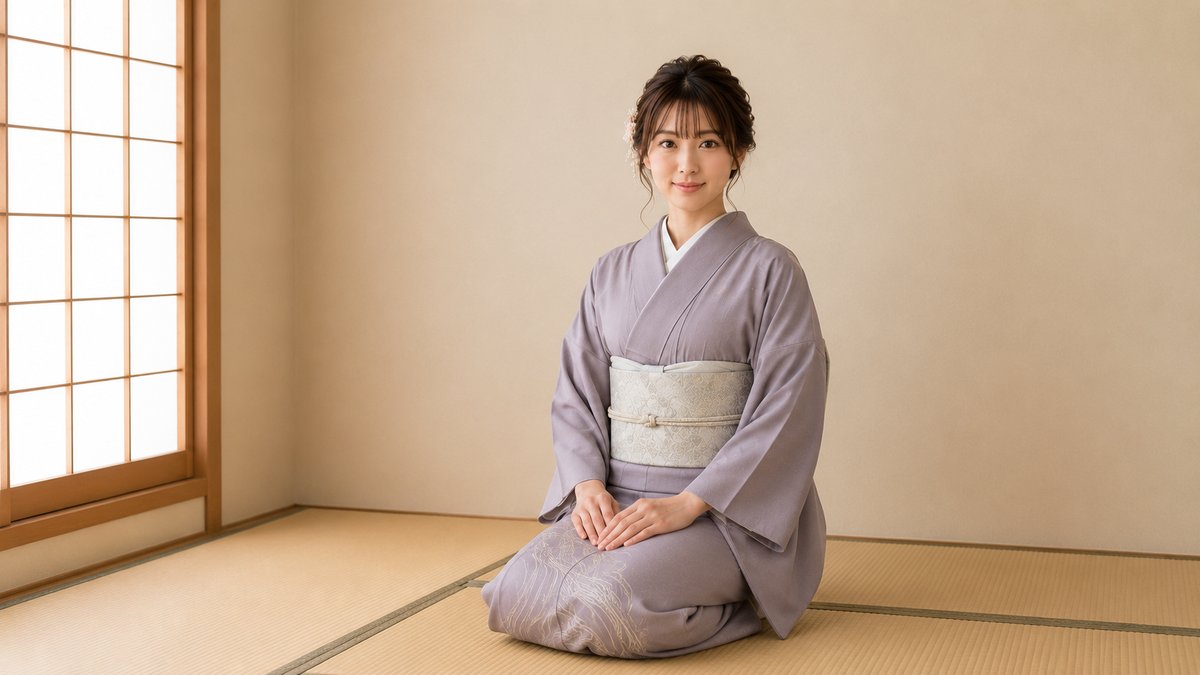
- Tea gatherings. The classic occasion. A tsukesage is respectful without competing with the setting.
- A friend’s wedding or reception. Perfect as a guest. Close family members wear tomesode instead.
- Children’s ceremonies. Shichi-go-san, entrance ceremonies, graduations. When the child is the focus, a mother’s outfit should stay quiet, and this is exactly the right register.
- Theatre, parties, and formal meals. Anywhere the dress code asks for polish rather than ceremony.
It is the wrong choice in two situations: attending a wedding as immediate family, where a tomesode is expected, and casual outings, where a komon or yukata makes more sense.
How to Style a Tsukesage
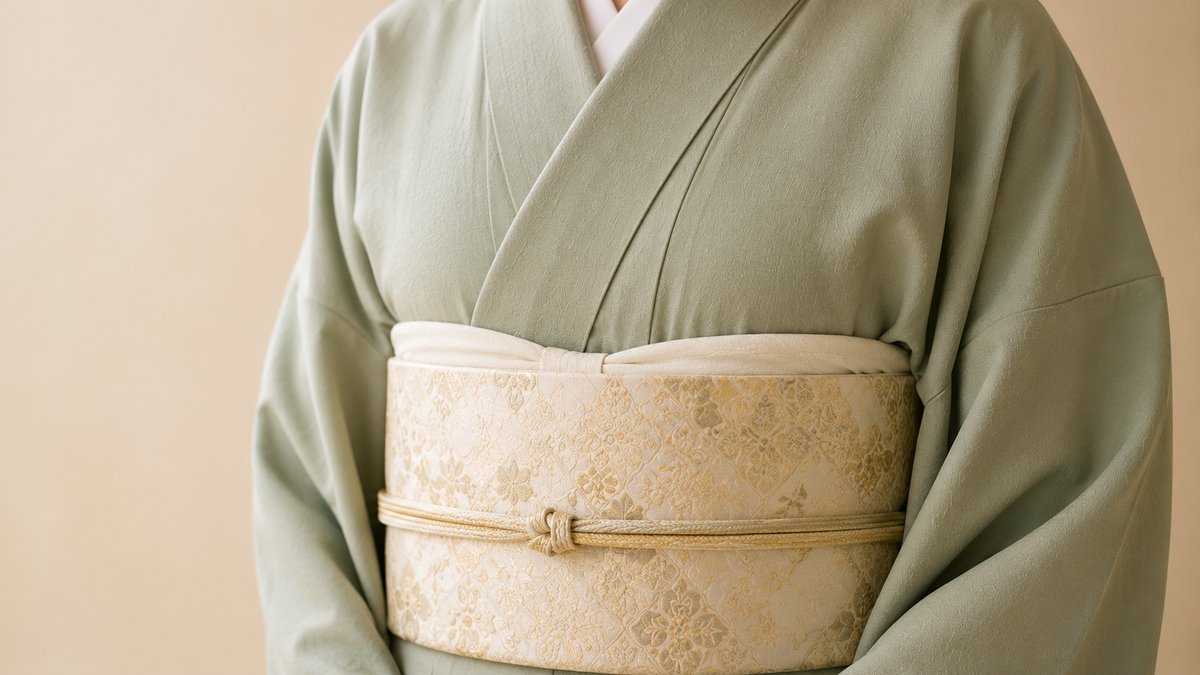
The same tsukesage can move up or down the formality scale depending on the obi you pair with it.
- Fukuro obi, tied in a double-drum knot. Dresses the outfit up. Right for weddings and tea gatherings.
- Nagoya obi. Brings it down a step. Right for theatre, lunches, and everyday outings.
Keep accessories restrained. A white half-collar, and an obiage and obijime in colours that support rather than compete. The entire point of a tsukesage is composure, and loud accessories work against it. If you are new to putting one on, our step-by-step kimono guide covers the basics.
How to Choose or Rent a Tsukesage
For a first tsukesage, choose a calm base colour. With the pattern kept small, the ground colour is what people actually see, so it does most of the work.
Renting typically starts in the low tens of thousands of yen, while buying generally starts in the six-figure range. If you need one for a single ceremony, rent. If you expect to wear it repeatedly over the years, buying is the better value.
Visitors to Japan will find rental packages that include professional dressing, which is the realistic option. A tsukesage is as demanding to put on as a houmongi, and self-dressing takes practice.
Frequently Asked Questions
- Can I wear a tsukesage to a wedding?
- Yes, if you are attending as a friend or acquaintance. If you are close family, a tomesode is the expected choice.
- Is a tsukesage more formal than a komon?
- Yes. The motifs are deliberately positioned and always sit upright, which places it a clear step above a komon.
- Does a tsukesage need a family crest?
- No. Most have none. Adding a single crest raises the formality, but it also narrows the range of occasions where the garment feels appropriate, so leave it uncrested if you want versatility.
- Where does the tsukesage come from?
- It is generally said to have emerged around the Second World War, when restrictions on luxury goods made the elaborate houmongi difficult to produce and a simpler alternative took hold. This account is repeated widely in Japanese sources, though it is worth treating as the accepted story rather than settled fact.
- I came here from Persona 4 — is this the same thing?
- Same word. The game describes its Tsukesage as a kimono with no pattern and no crest, which actually describes an iromuji. A real tsukesage does have a pattern.
The Short Version
A tsukesage is the semi-formal kimono that sits between a houmongi and an iromuji. Its motifs always point upward, and they stop at the seams instead of flowing across them.
It is formal enough for a tea gathering or a friend’s wedding, and quiet enough that you will not feel overdressed. If you are choosing one kimono to actually wear, rather than to admire, this is a strong place to start.