If you have ever looked closely at a Japanese kimono, an obi, or even a lacquer box and noticed a lattice of interlocking hexagons, you have met kikko — the tortoise-shell pattern. It is one of the oldest and most quietly meaningful designs in Japan, and its message is a warm one: long life, health, and a home that endures.
In this guide you will learn what kikko is, why the humble hexagon came to stand for good fortune, the elegant variations you can spot on formal garments, and where the pattern still turns up today — including on the shoulders of one very famous swordsman.
What Is the Kikko Pattern?
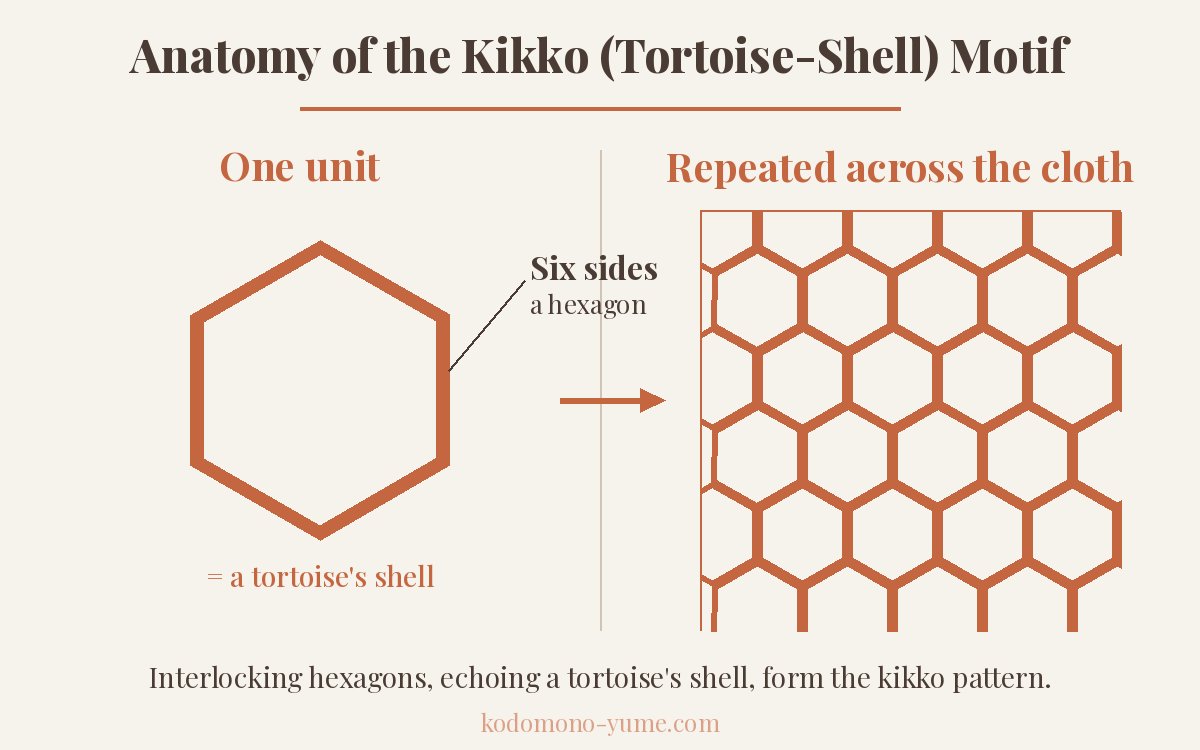
Kikko (亀甲, pronounced kee-koh) literally means “tortoise shell.” The design is built from a single shape — a six-sided hexagon — repeated edge to edge until it fills the cloth in a honeycomb lattice. That interlocking grid mirrors the natural plates on a tortoise’s back, which is exactly where the name comes from.
Because the hexagon is such a stable, self-repeating form, kikko reads as calm and orderly rather than busy. That balance is part of why it has stayed in fashion for well over a thousand years, moving easily between grand ceremonial robes and small everyday objects.
What Does Kikko Symbolize?
In Japan, the tortoise is a classic emblem of longevity. An old saying pairs it with the crane: the crane lives a thousand years, the tortoise ten thousand. Wearing the tortoise’s shell, then, is a gentle wish for a long, healthy, well-protected life.
There is a second layer, too. A hexagon is one of the sturdiest shapes in nature — think of a honeycomb holding its form under weight. That structural strength gave kikko an association with protection and resilience, making it a fitting choice for garments meant to shield and bless the wearer.
Beautiful Variations to Look For
Kikko is rarely left completely plain. Over the centuries, artisans developed refined variations that you can learn to recognize at a glance:
- Bishamon kikko — three hexagons joined into a single unit, named after Bishamonten, a guardian deity of warriors. It carries an especially strong sense of protection.
- Kikko hanabishi — each hexagon framing a small diamond-shaped flower (hanabishi) at its center, a softer, more feminine take often seen on formal kimono.
- Ko-mochi kikko — a “parent and child” version, where a smaller hexagon nests inside a larger one, quietly suggesting family and continuity.
Spotting which variation you are looking at is a lovely way to read a garment’s intended message — whether it leans toward strength, elegance, or family blessing.
Kikko Through History
Kikko belongs to a group of refined court designs known as yusoku monyo — patterns favored by Heian-era nobility more than a thousand years ago. It appears on treasured textiles and objects preserved from that period, and over time it spread from the aristocracy to samurai families and, eventually, to everyday craft.
Its link to Bishamonten, a warrior god, made it a natural choice for the military class, who liked patterns that signaled both prestige and protection. That long, layered history is why kikko still reads today as dignified and a little ceremonial.
Kikko in Modern Japan (and in Demon Slayer)
You will still find kikko everywhere in Japan: woven into obi, printed on formal kimono, tooled into leather goods, and pressed into traditional sweets and lacquerware. Its geometric calm also makes it a favorite in contemporary design, from stationery to interiors.
If the pattern looks familiar to you already, there may be a reason. In the hit series Demon Slayer, the Water Hashira Giyu Tomioka wears a haori that is split down the middle — one half a solid color, the other half a kikko tortoise-shell print. For many fans around the world, that coat is their very first encounter with this centuries-old motif.
How to Wear Kikko Today
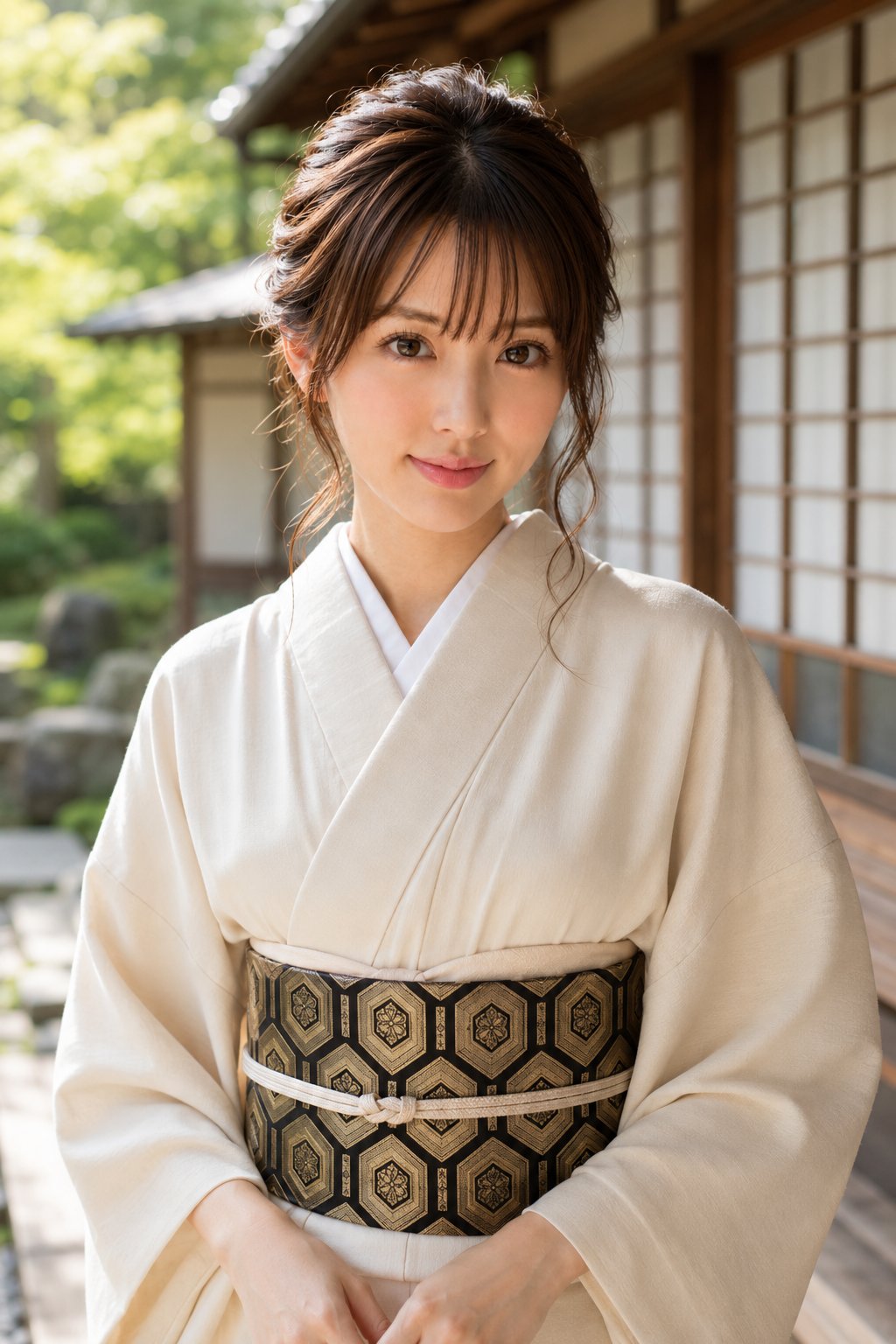
Because kikko carries wishes for long life and protection, it is a graceful choice for celebrations — think milestone birthdays, New Year, or a formal event. On a kimono or obi it feels elegant and grounded rather than loud, and it pairs beautifully with quieter solids that let the lattice do the talking.
If you are just starting to collect Japanese-inspired pieces, kikko is an easy pattern to love: it is timeless, meaningful, and versatile enough to wear again and again.