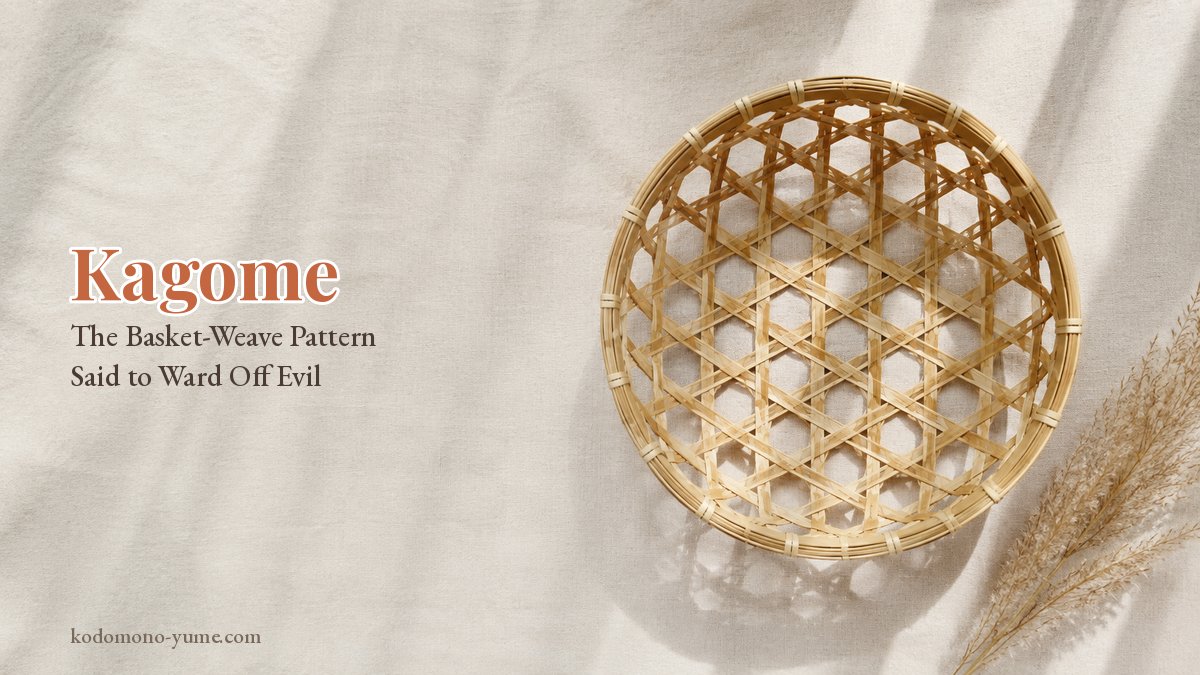
Kagome: The Japanese Basket-Weave Pattern Believed to Ward Off Evil
A hexagon born from woven bamboo, said for centuries to keep bad luck at bay.
Look closely at a hand-woven bamboo basket and you’ll notice something quietly beautiful happening at the intersections: rows of small triangles locking into hexagons, and within them, faint six-pointed stars. This is kagome (籠目), one of Japan’s oldest geometric patterns — and one that has long carried a second identity as a symbol of protection.
It’s a deceptively simple motif. But behind its clean lines is a tangle of folklore, craft history, and a case of visual coincidence that has confused more than a few people outside Japan. Let’s untangle it properly.
What Is the Kagome Pattern?
Kagome takes its name directly from its source: kago means basket, and me means “eye” or mesh — the small gaps left between woven strands. The pattern is a stylized version of that weave, most commonly based on mutsume-ami, a “six-eye” weaving technique in which strips of bamboo cross diagonally over one another.
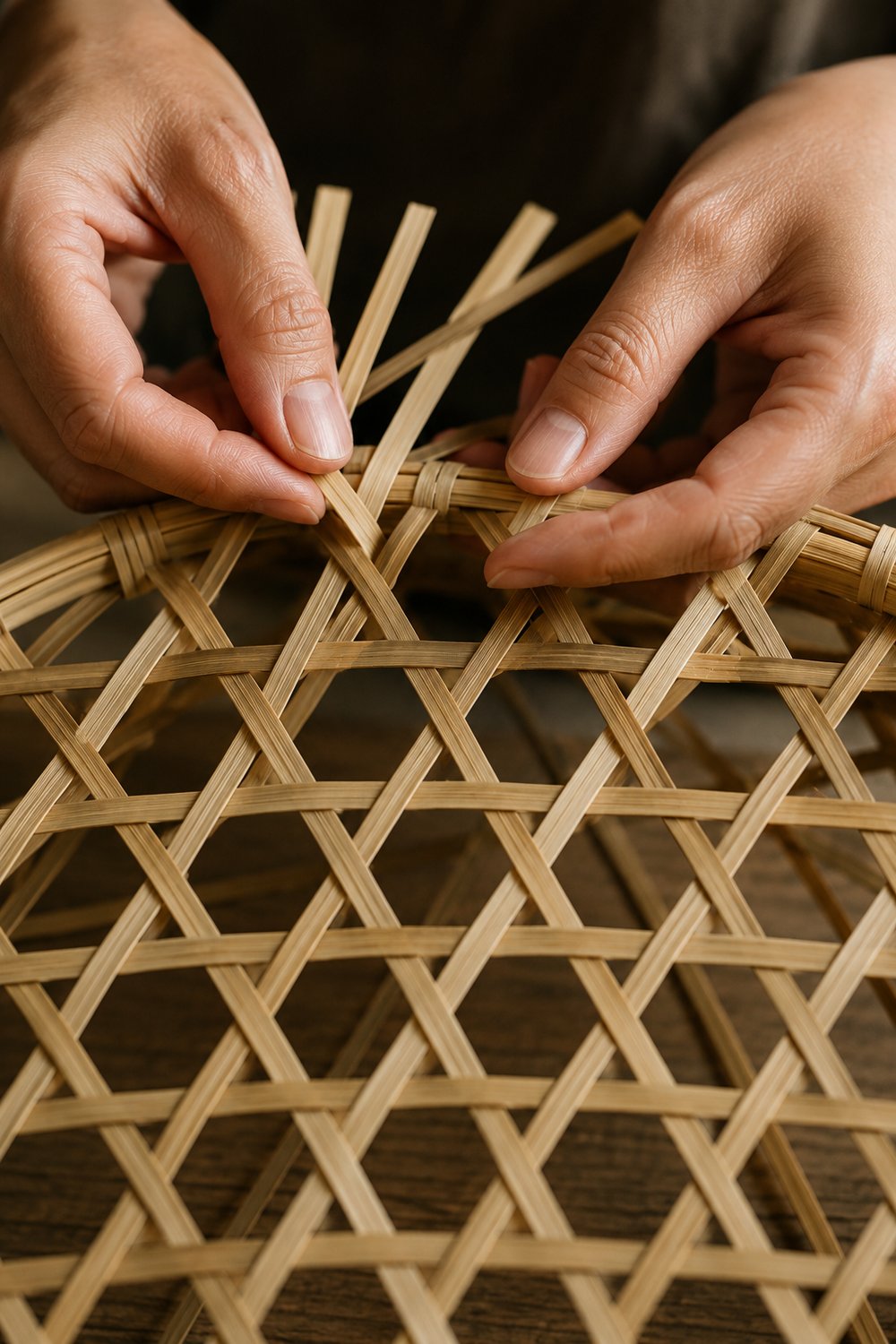
The kagome pattern forms naturally as bamboo strips cross in a six-eye weave.
Woven this way, the strips naturally form a lattice of triangles that interlock into hexagons — and if you trace the outline closely, a six-pointed star shape emerges where the triangles overlap. It’s worth being precise about this: the star wasn’t designed on purpose. It’s a natural byproduct of a practical weaving technique, one that basket makers had been using for everyday purposes long before anyone thought of it as a “pattern” at all.
Why Is Kagome Considered a Symbol of Protection?
This is where kagome gets more interesting — and where the historical record gets a little less tidy. There isn’t one single, agreed-upon reason kagome came to be seen as a ward against evil. Instead, several overlapping beliefs have been passed down, and most sources today present them side by side rather than settling on one.
The earliest documented reference comes from Yōshabako, a Japanese essay collection from the late Edo period, which records the saying: “since ancient times, it has been said that demons fear the eye-basket.” This tells us the belief was already established by the 1800s, even if its true origins reach further back and remain unclear. Alongside this, there are accounts of a folk custom in which households hung a coarsely woven bamboo basket near their entrance as a form of protection.
As for why a basket might ward off evil, a few explanations have been passed down over time, none of which can be confirmed as the definitive answer:
One idea holds that evil spirits dislike being watched, and a basket covered in countless small “eyes” was thought to make them uneasy. Another version of the story suggests spirits would become distracted trying to count the many holes in the weave, forgetting their original purpose. A related interpretation focuses simply on the density and complexity of the pattern itself as unsettling to malevolent forces. These are best understood as layered folk explanations rather than a single historical fact.
Now, about that six-pointed star. Because kagome’s hexagram shape closely resembles the six-pointed star known in the West as the Star of David, it’s tempting to draw a line between the two. It’s worth being clear here: there is no confirmed historical or cultural connection between them. The Star of David is generally understood to have become established as a Jewish symbol in Prague around the 17th century, an entirely separate lineage from a bamboo-weaving technique practiced in Japan. The resemblance is visual, not historical — and while it’s a striking coincidence, no credible evidence links the two traditions. Kagome’s meaning as a protective symbol grew out of its own, distinctly Japanese folk beliefs, independent of anything happening in Europe centuries later.
Kagome in Kimono and Traditional Craft
Beyond its protective associations, kagome has simply been appreciated as an elegant geometric motif in its own right. In kimono and obi design, it appears as a komon (fine repeating pattern), where the evenly spaced hexagons create a crisp, refined visual rhythm. Because the pattern evokes the airy, breathable quality of a woven basket, it’s sometimes chosen for lighter, warm-weather kimono — though this is better understood as a design association drawn from the material’s texture, rather than a strict traditional rule.
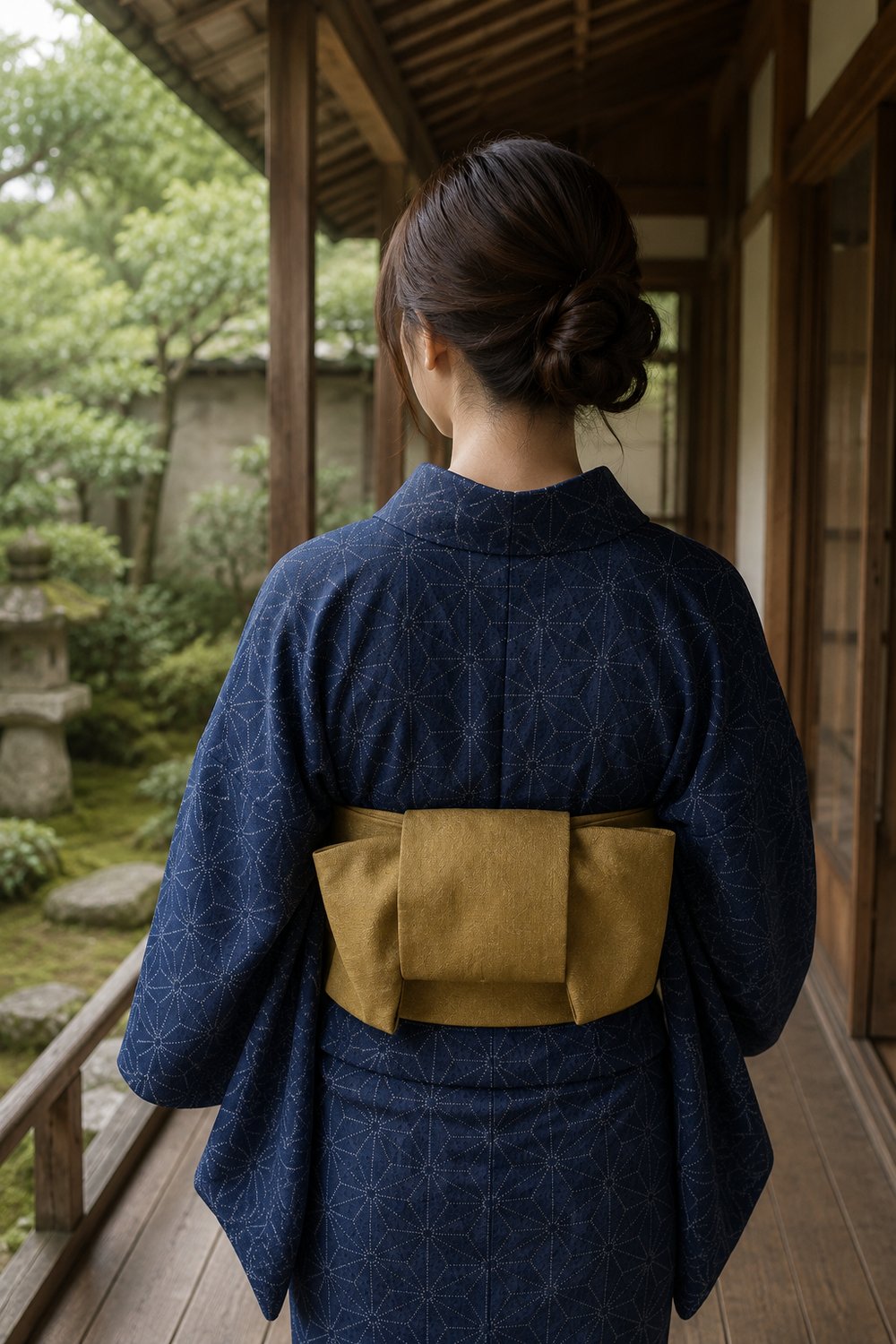
Geometric hexagon and star motifs like kagome appear as fine repeating patterns in kimono textiles.
In craft, kagome shows up everywhere bamboo and rattan weaving does — baskets, sieves, trays — as well as in ceramics and small everyday objects. That it has quietly persisted across so many different mediums, functional and decorative alike, says something about how deeply the pattern is woven into Japanese material culture.
Kagome in Modern Design
Kagome hasn’t stayed confined to history. The pattern lives on in contemporary kumiko woodworking (the delicate latticework seen in Japanese joinery and screens), in textile design, and increasingly in fashion, interiors, and graphic design, where its clean repetition translates easily into a modern aesthetic. It manages to hold both identities at once — an old symbol of protection, and a geometric pattern that still feels entirely current.
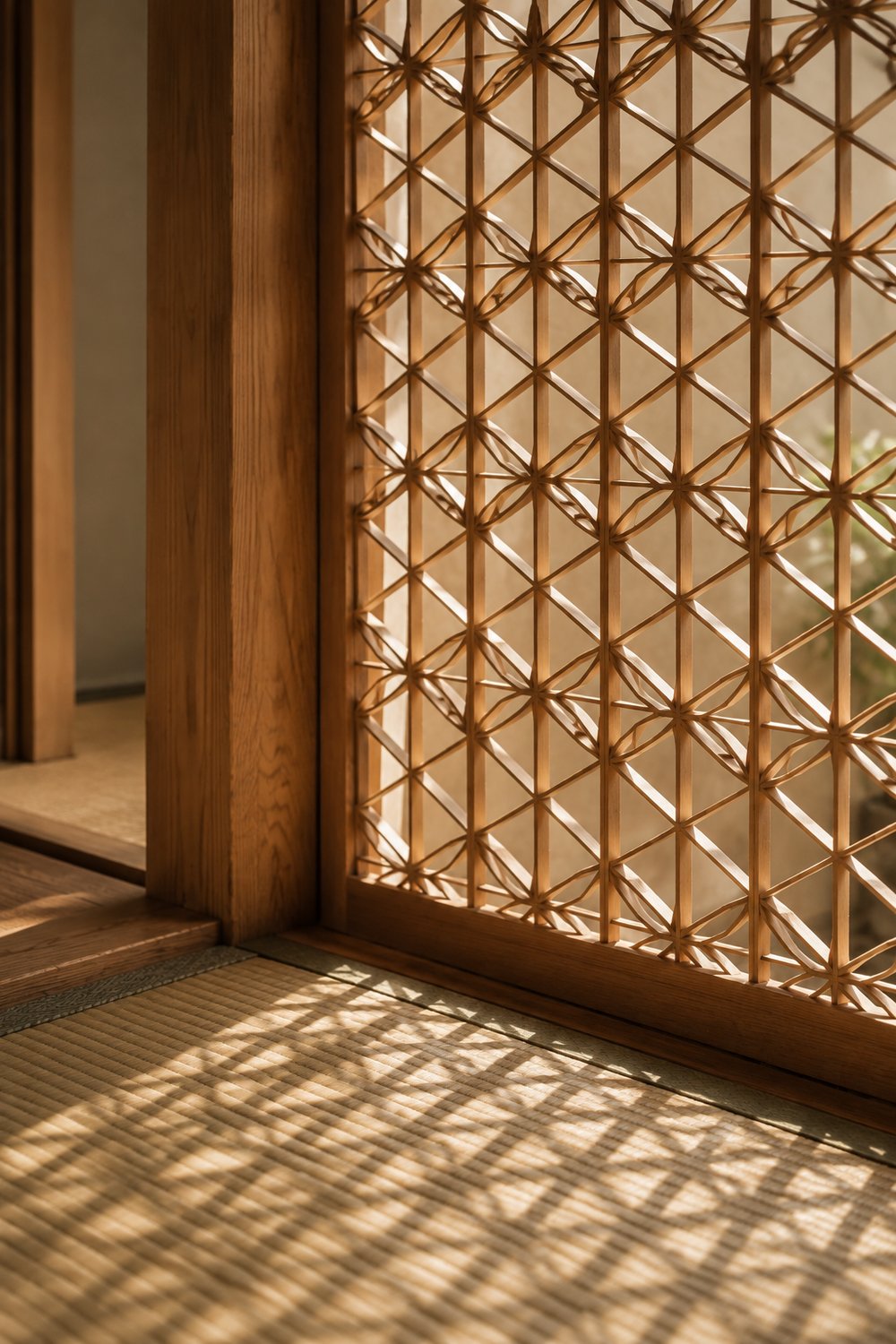
The kagome lattice lives on today in kumiko woodworking and modern interior design.
A Pattern Worth Carrying Forward
Kagome began as something purely practical: the natural result of weaving bamboo into a basket. Somewhere along the way, that humble crosshatch of triangles picked up a second meaning, layered with folklore about protection and warding off harm, and carried forward through kimono, craft, and everyday objects for generations.
Traditional patterns like this one aren’t meant to live only in museums. A kimono, an obi, a small woven piece for the home — wearing or displaying kagome is a quiet way to carry a bit of that history with you, star-shaped gaps and all.